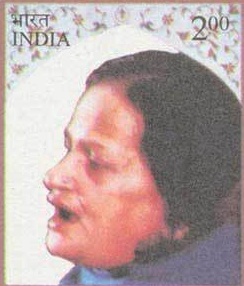
Hindustani classical · 1914–1974
Begum Akhtar
Mallika-e-Ghazal — the singer who carried the ghazal, thumri and dadra from the mehfil to the concert stage, with a voice whose famous break became part of its beauty.
- Instrument
- Thumri
- Born
- 7 October 1914, Faizabad, Uttar Pradesh
- Died
- 30 October 1974, Ahmedabad
Official website & social links
We have no checked official pages for Begum Akhtar yet. Suggest an official link.
Where to start
Begin listening
Ae mohabbat tere anjaam pe rona aaya
Saregama Ghazal
Her best-known ghazal.
Ghazal by Shakeel Badayuni; Saregama.
Hamari atariya pe aao — dadra
Saregama Hindustani Classical
Her classic dadra.
Saregama (HMV) recording.
Anugoonj, episode 47 — Begum Akhtar
Prasar Bharati Archives
Archival television on her life and music.
Doordarshan archive programme.
Recordings are embedded from official or authorised channels and never rehosted. Nothing plays on its own, and starting one closes another. Where an editor has added a note, it explains why that recording was chosen — not what happens inside it.
Biography
Life
Akhtari Bai was born on 7 October 1914 in Faizabad, one of twin daughters of Mushtari and the lawyer Asghar Hussain, who later disowned the family. Her twin, Zohra, died in early childhood.
As a small girl she was drawn to the singing of Chandra Bai, a performer with a touring theatre company. Her family sent her to study with the sarangi master Imdad Khan of Patna and then with Ata Mohammad Khan of Patiala. In Calcutta she learned from Mohammad Khan and from Abdul Wahid Khan of the Kirana gharana, and finally became a disciple of Jhande Khan.
She first sang in public at about fifteen, at a concert for victims of the 1934 Bihar–Nepal earthquake, where Sarojini Naidu praised her. She recorded ghazals, dadras and thumris for the Megaphone company, and in the 1930s acted and sang in Calcutta films beginning with Ek Din Ka Badshah (King for a Day, 1933). In 1942 she sang in Mehboob Khan's Roti. She is credited variously as Akhtaribai Faizabadi, Akhtari and Begum Akhtar.
In 1945 she married the Lucknow barrister Ishtiaq Ahmed Abbasi and became Begum Akhtar. For about five years after her marriage she did not sing; in 1949 she returned to recording and to All India Radio in Lucknow, and from then on sang in concerts for the rest of her life. In 1958 she appeared in Satyajit Ray's Jalsaghar. She set many of the ghazals she sang to her own raga-based tunes and left some four hundred recorded songs. Her students included Shanti Hiranand, who later wrote Begum Akhtar: The Story of My Ammi, and Rita Ganguly.
She received the Padma Shri in 1968 and the Sangeet Natak Akademi Award in 1972. She fell ill after a concert near Thiruvananthapuram in 1974 and died in Ahmedabad on 30 October 1974. She is buried beside her mother at Pasand Bagh in Lucknow. The Padma Bhushan was conferred on her after her death, and India Post issued a stamp in her memory in 1994.
Musical contribution
What they brought to music
Her repertoire rested on raga: ghazals set in classical modes, and thumri and dadra in the Purab manner. Her student Rita Ganguly described a voice of about one octave that cracked at the top, a flaw she turned into her signature by shaping the music around it.
In pictures
Photographs
Lineage & company
Teachers, students and musical connections
In the documented teaching trees
Where the archive's lineage research places Begum Akhtar, and the teaching links recorded around them inside each tree.
Lucknow thumri lineage1914–1974
The defining ghazal and thumri voice of twentieth-century north India.
Taught in this tree by: Abdul Waheed Khan
Recorded as teaching: Shanti Hiranand
People
Grouped by the kind of relationship the sources record — who taught this musician, who they taught, family, and the people they played with.
Teachers and gurus
- Ustad Imdad Khan (Patna)Guru
Sarangi master; one of her early teachers
Wikipedia — Begum Akhtar - Ustad Ata Mohammad KhanGuru
Of Patiala; an early teacher
Wikipedia — Begum Akhtar - Ustad Abdul Wahid KhanGuru
Studied with him in Calcutta
Wikipedia — Begum Akhtar - Ustad Jhande KhanGuru
Her final teacher
Wikipedia — Begum Akhtar
Students and disciples
- Shanti HiranandDisciple
Later wrote Begum Akhtar: The Story of My Ammi (2005)
Wikipedia — Begum Akhtar - Rita GangulyDisciple
Student and companion; author of Ae Mohabbat…Reminiscing Begum Akhtar
Mint — "What a life"
Collaborators and accompanists
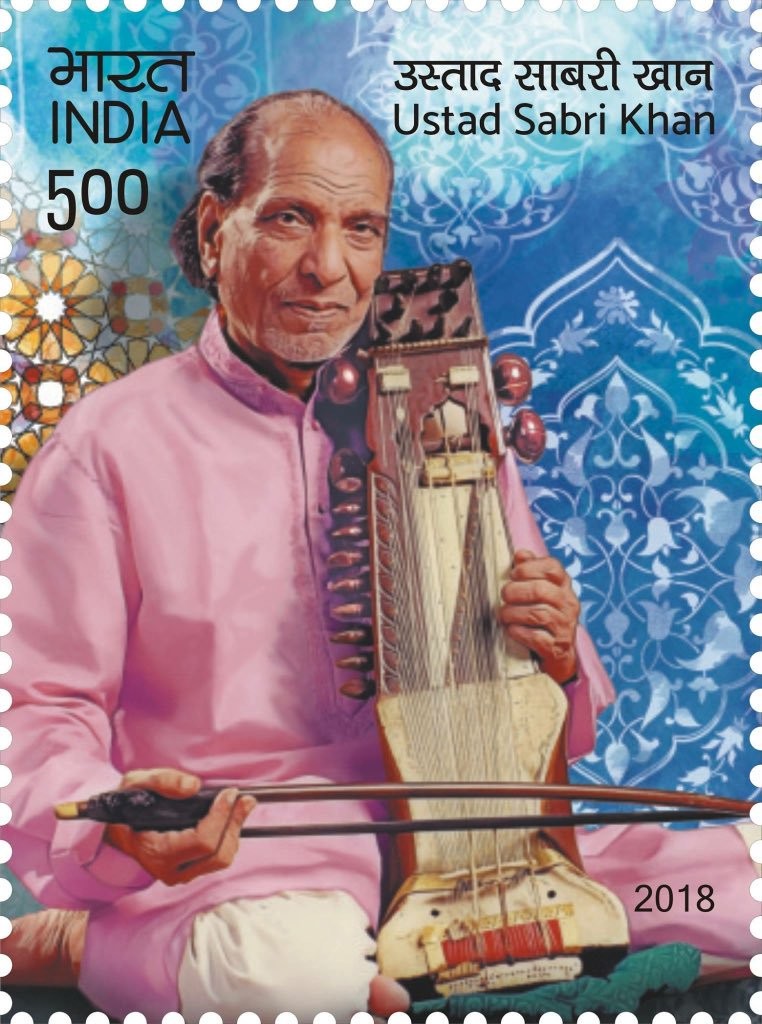 Ustad Sabri KhanAccompanist
Sarangi; named among the vocalists he accompanied
The Times of India obituary of Sabri Khan
Recognition
Honours and recognition
Highest national honour first, then by year.
- 1975Padma BhushanGovernment of India, posthumous
- 1968Padma ShriGovernment of India
- 1972Sangeet Natak Akademi AwardHindustani vocal music
- 1994Commemorative postage stampIssued by India Post
Community
Memories from the community
Personal recollections, not verified history
These are memories shared by listeners and musicians. They sit apart from the sourced biography above, and an editor reads each one before it appears.
- No memories have been shared yet.
Members can share a memory of Begum Akhtar. Sign in or create an account.
Provenance
Sources and image credits
- Wikipedia — Begum Akhtar
- Sangeet Natak Akademi — List of Akademi awardees, Hindustani vocal (archived)
- Mint — "What a life", on Rita Ganguly's book Ae Mohabbat…Reminiscing Begum Akhtar
- Hindustan Times — Begum Akhtar birth anniversary
Photograph: Detail of the 1994 India Post commemorative stamp; Government Open Data Licence – India, via Wikimedia Commons
Continue exploring