Hindustani classical · 1936–2025
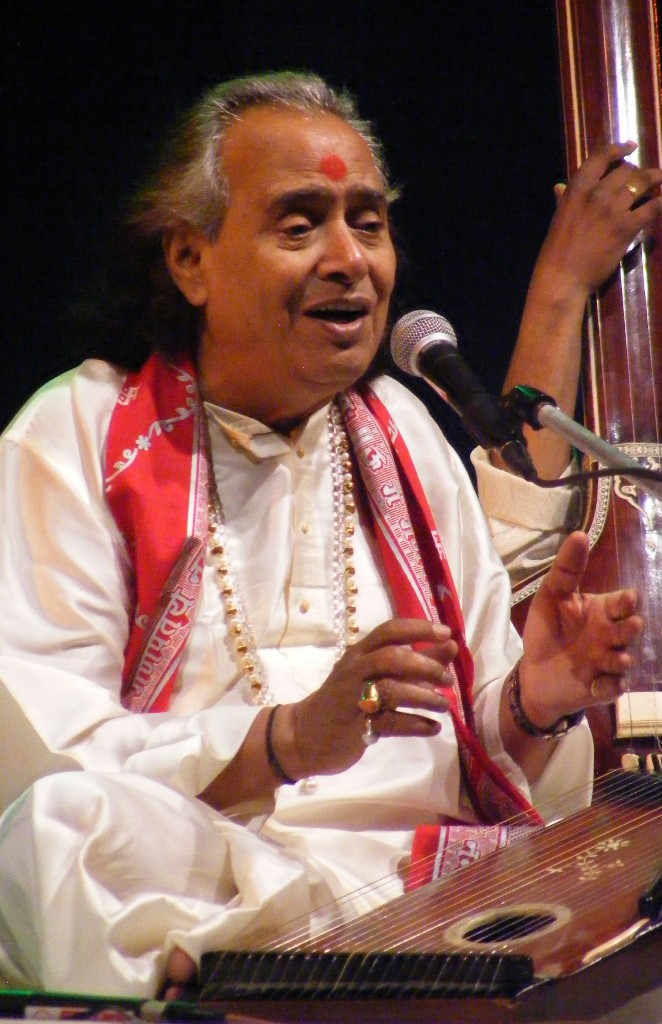
Pandit Chhannulal Mishra
The voice of Banaras thumri, kajri, chaiti and bhajan for half a century — a Kirana-trained khayal singer who became the city's most beloved purab ang singer.
- Instrument
- ThumriKhayal vocal
- Born
- 3 August 1936, Hariharpur, Azamgarh district, Uttar Pradesh
- Died
- 2 October 2025, Mirzapur, Uttar Pradesh
Official website & social links
We have no checked official pages for Pandit Chhannulal Mishra yet. Suggest an official link.
Where to start
Begin listening
Sankat Mochan Sangeet Samaroh, 2006
Sankat Mochan Mandir
Singing at the great Varanasi temple festival.
Official temple festival channel.
Suprabhat, episode 72 — Raag Lalit and Bhairavi
Prasar Bharati Archives
His morning-raga khayal side.
Doordarshan archive.
Live at Swarutsav 2000 — thumri
Music Today
A full live thumri set.
Music Today release.
Recordings are embedded from official or authorised channels and never rehosted. Nothing plays on its own, and starting one closes another. Where an editor has added a note, it explains why that recording was chosen — not what happens inside it.
Biography
Life
Chhannulal Mishra was born on 3 August 1936 in Hariharpur, in Azamgarh district of Uttar Pradesh. He learnt music first from his father, Badri Prasad Mishra, then from Ustad Abdul Ghani Khan of the Kirana gharana, and later from Thakur Jaidev Singh.
Based in Varanasi, he became one of the best-known exponents of the Banaras gharana and its purab ang style of thumri. His concerts moved between khayal and the lighter forms of the region — thumri, dadra, chaiti, kajri and hori — and he recorded widely in devotional music, from bhajans of Kabir to excerpts of Tulsidas's Ramcharitmanas sung in different ragas. He also sang for the Hindi film "Aarakshan" (2011).
He received the Sangeet Natak Akademi Award (2010), the Padma Bhushan (2010) and the Padma Vibhushan (2020). In his last years he lived in Mirzapur with his youngest daughter's family, and he died there on 2 October 2025, aged 89, after a prolonged illness. He was survived by his son, the tabla player Ramkumar Mishra, and three daughters.
Musical contribution
What they brought to music
Earthy, theatrical purab ang singing — thumri, dadra, chaiti, kajri and hori — full of Banarasi wit and storytelling, built on Kirana-trained khayal. Much loved for Tulsidas and Kabir bhajans.
In pictures
Photographs
Lineage & company
Teachers, students and musical connections
People
Grouped by the kind of relationship the sources record — who taught this musician, who they taught, family, and the people they played with.
Teachers and gurus
- Ustad Abdul Ghani KhanGuru
Of the Kirana gharana
All India Radio News; PTI - Thakur Jaidev SinghGuruAll India Radio News; PTI
Family
- Badri Prasad MishraFather and guru
His first teacher
All India Radio News; PTI - Ramkumar MishraSon
Tabla player
All India Radio News; PTI
Recognition
Honours and recognition
Highest national honour first, then by year.
- 2020Padma Vibhushan
- 2010Padma Bhushan
- 2010Sangeet Natak Akademi Award
Community
Memories from the community
Personal recollections, not verified history
These are memories shared by listeners and musicians. They sit apart from the sourced biography above, and an editor reads each one before it appears.
- No memories have been shared yet.
Members can share a memory of Pandit Chhannulal Mishra. Sign in or create an account.
Provenance
Sources and image credits
- All India Radio News — Padma Vibhushan vocalist Pandit Chhannulal Mishra dies at 89
- The Federal / PTI — Classical singer Pandit Channulal Mishra dies at 89 (2 October 2025)
- Sangeet Natak Akademi — Chhannu Lal Mishra, Akademi Award 2010 citation (archived)
- Wikipedia — Chhannulal Mishra
Photograph by Aparna Subramanian, Pune, 2009 — CC BY 2.0, via Wikimedia Commons
Continue exploring
- Kirana gharanaThe lineage Pandit Chhannulal Mishra is associated with, and the other musicians documented within it.
- Benares gharana (vocal)The lineage Pandit Chhannulal Mishra is associated with, and the other musicians documented within it.
- The thumriHow the instrument works, and who else in the archive plays it.
- The khayal vocalHow the instrument works, and who else in the archive plays it.
- All musiciansBrowse the archive by name, instrument or discipline.