Hindustani classical · 1921–1955
Pandit D. V. Paluskar
Vishnu Digambar Paluskar's prodigy son, who made the complex Gwalior gayaki simple and moving — and whose bhajans and Baiju Bawra duet still sound fresh — before dying at thirty-four.
- Instrument
- Khayal vocal
- Gharana
- Gwalior gharana
- Born
- 28 May 1921, Nashik
- Died
- 26 October 1955, Bombay
Official website & social links
We have no checked official pages for Pandit D. V. Paluskar yet. Suggest an official link.
Where to start
Begin listening
Kaisku — Marwa
Saregama Hindustani Classical
His Gwalior khayal.
Saregama (HMV).
Nike ghunghariya
Saregama Hindustani Classical
A rare classical piece.
Saregama (HMV).
Thumak chalat Ramchandra — bhajan
AIR Raagam
One of his best-loved bhajans.
All India Radio.
Recordings are embedded from official or authorised channels and never rehosted. Nothing plays on its own, and starting one closes another. Where an editor has added a note, it explains why that recording was chosen — not what happens inside it.
Biography
Life
Dattatreya Vishnu Paluskar was born in Nashik on 28 May 1921, the son of Vishnu Digambar Paluskar. The family name was originally Gadgil; they became known as Paluskar after their village, Palus, near Sangli.
He was ten when his father died in 1931. He was then trained by his father's disciples Vinayakrao Patwardhan and Narayanrao Vyas, and also learned from Chintamanrao Paluskar and Mirashi Buwa. He gave his first concert at fourteen, at the Harivallabh Sangeet Sammelan in Punjab, and was regarded as a child prodigy.
His khayal kept the Gwalior emphasis on bandish but stripped it of complexity, and his bhajans — "Payoji maine Ram ratan dhan", "Thumak chalat Ramchandra" — became widely loved. He recorded 78 rpm discs for Columbia and HMV and broadcast on All India Radio. He sang for only two films: the classical duet with Amir Khan in Baiju Bawra (1952) and the Bengali film Shap Mochan. He appears in the 1948 photograph of leading musicians at the first music conference after independence. His disciples included Sharad Sathe, who travelled and performed with him.
He died of encephalitis in Bombay on 26 October 1955, aged thirty-four. His tanpura is preserved at the Raja Dinkar Kelkar Museum in Pune.
Musical contribution
What they brought to music
SwarGanga credits him with simplifying the highly complex Gwalior gayaki and giving it depth of feeling; his music, like his personality, was straightforward and touched listeners directly.
In pictures
Photographs
Lineage & company
Teachers, students and musical connections
People
Grouped by the kind of relationship the sources record — who taught this musician, who they taught, family, and the people they played with.
Teachers and gurus
- Pandit Vinayakrao PatwardhanGuru
His father's disciple
Wikipedia — D. V. Paluskar - Pandit Narayanrao VyasGuru
His father's disciple
Wikipedia — D. V. Paluskar - Pandit Chintamanrao PaluskarTeacherWikipedia — D. V. Paluskar
- Mirashi BuwaTeacherWikipedia — D. V. Paluskar
Students and disciples
- Pandit Sharad SatheDisciple
Travelled and performed with him until 1955
The Hindu — "Scion of a regal style"
Family
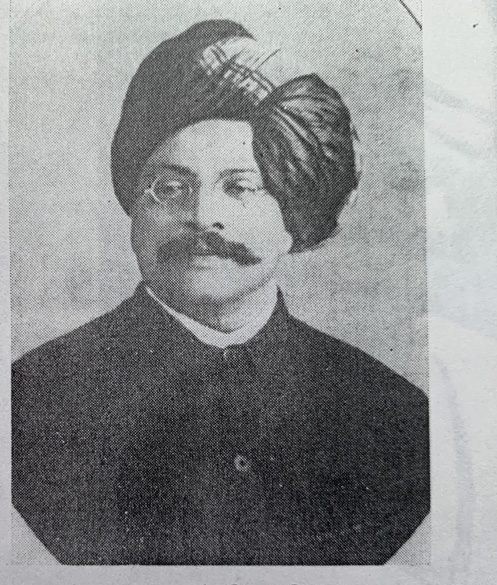 Pandit Vishnu Digambar PaluskarFather
Died when he was ten
Wikipedia — D. V. Paluskar
Collaborators and accompanists

Community
Memories from the community
Personal recollections, not verified history
These are memories shared by listeners and musicians. They sit apart from the sourced biography above, and an editor reads each one before it appears.
- No memories have been shared yet.
Members can share a memory of Pandit D. V. Paluskar. Sign in or create an account.
Provenance
Sources and image credits
- Wikipedia — D. V. Paluskar
- SwarGanga — D V Paluskar
- The Hindu — "Scion of a regal style" (on his disciple Sharad Sathe, 30 December 2005, archived)
No photograph of this musician is published here yet; we use only images we are permitted to show, with credit.
Continue exploring