Hindustani classical · 1892–1977
Kesarbai Kerkar
The voice India sent into interstellar space.
- Instrument
- Khayal vocal
- Gharana
- Jaipur-Atrauli gharana
- Born
- 13 July 1892, Keri, Keri, Ponda, Goa
- Died
- 16 September 1977, Bombay, Bombay (Mumbai)
Official website & social links
We have no checked official pages for Kesarbai Kerkar yet. Suggest an official link.
Where to start
Begin listening
Raga Nat Kamod
Nat Kamod · Saregama · 10:57 · Saregama Hindustani Classical
Label publication of a Kesarbai Kerkar khayal recording. The original recording date is not given by the label, so no performance year is recorded.
Watch on YouTubeUploaded 2025-07-28
Tilak Kamod
Tilak Kamod · Saregama · 3:40 · Saregama Hindustani Classical
Short 78rpm-era khayal published by the label. Upload month taken from the listing; original recording date not documented by the label.
Watch on YouTubeUploaded 2024-10-01
Recordings are embedded from official or authorised channels and never rehosted. Nothing plays on its own, and starting one closes another. Where an editor has added a note, it explains why that recording was chosen — not what happens inside it.
Biography
Life
Kesarbai Kerkar was born on 13 July 1892 at Keri in Ponda, Goa. She began learning at about eight, and then — by her own account and that of later writers — spent close to two decades moving between teachers before she found the one she wanted.
That was Ustad Alladiya Khan, founder of the Jaipur-Atrauli gharana, with whom she studied for many years and became the leading disciple. Earlier, briefer periods of study are attributed to Abdul Karim Khan, Ramkrishnabuwa Vaze and Bhaskarbuwa Bakhle, though these rest on specialist rather than first-rank sources.
She performed publicly from around 1930. She was famously selective about where she sang, who heard her, and what was recorded, and she guarded her recordings closely — a reputation for severity that went with an equally strong reputation for perfection.
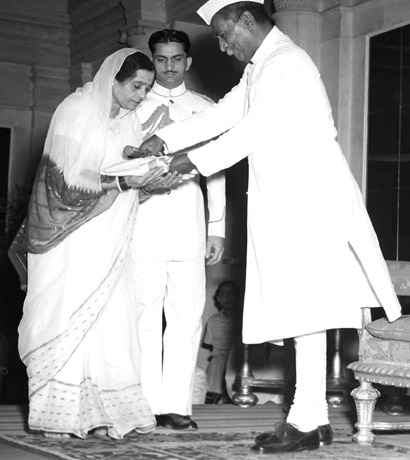
Rabindranath Tagore, having heard her sing, is credited with the praise that gave her the title Surashri. In March 1953 she received the Sangeet Natak Akademi Award from President Rajendra Prasad, and in 1969 the Padma Bhushan.
She died in Bombay on 16 September 1977. That same year her recording of the Bhairavi bandish "Jaat Kahan Ho" was placed on the Voyager Golden Record — the only Hindustani vocal music aboard the two Voyager spacecraft, and now the furthest-travelled Indian music there is.
Musical contribution
What they brought to music
The Jaipur-Atrauli style Kesarbai inherited from Alladiya Khan is among the most demanding in Hindustani music: uncommon and compound ragas, long-breathed phrases that cut across the tala rather than settling into it, and taans of considerable intricacy delivered without visible effort. She sang it with a firmness of pitch that later musicians still cite.
Her refusal to be recorded freely means the surviving body of her work is small, which makes each item of it heavily studied. Her lasting contribution is a standard rather than a repertoire — an insistence that the raga be presented complete and exactly, and that the audience come to the music rather than the music to the audience.
Life in dates
Timeline
1892
Born in Goa
Born on 13 July at Keri, Ponda.
c. 1900
Begins learning music
Starts training at about eight years old.
c. 1920s
Becomes a disciple of Alladiya Khan
Settles with the founder of the Jaipur-Atrauli gharana after years of searching for a guru.
1930s
Performing career
Recognised as one of the leading vocalists of her generation.
1953
Sangeet Natak Akademi Award
Presented by President Rajendra Prasad in March.
1969
Padma Bhushan
Awarded by the Government of India.
1977
Dies in Bombay
Dies on 16 September, aged eighty-five.
1977
Voyager Golden Record
Her Bhairavi "Jaat Kahan Ho" is included on the record carried by the Voyager spacecraft.
In pictures
Photographs
Lineage & company
Teachers, students and musical connections
Documented teaching lineage
Taught by Ustad Alladiya Khan
Kesarbai Kerkar was among Alladiya Khan's foremost students.
Kesarbai Kerkar — Wikipedia
Teaching, family, collaboration and influence are recorded separately here; none is ever inferred from another.
In the documented teaching trees
Where the archive's lineage research places Kesarbai Kerkar, and the teaching links recorded around them inside each tree.
Jaipur-Atrauli gharana1892–1977
Alladiya Khan's most celebrated student; her recording travels on the Voyager Golden Record.
Taught in this tree by: Alladiya Khan
Recorded as teaching: Dhondutai Kulkarni
People
Grouped by the kind of relationship the sources record — who taught this musician, who they taught, family, and the people they played with.
Teachers and gurus
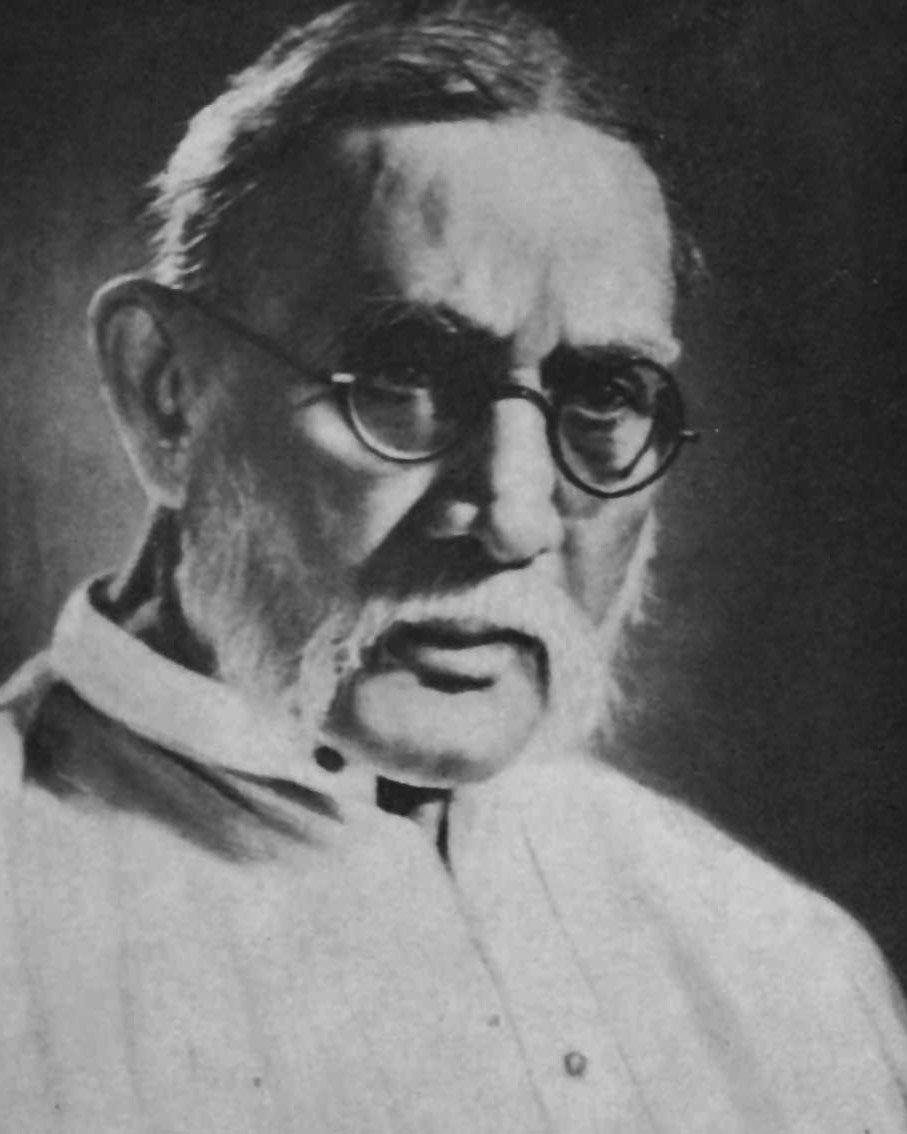 Ustad Alladiya KhanPrincipal teacher
Founder of the Jaipur-Atrauli gharana; she was his foremost disciple.
Kesarbai Kerkar — Wikipedia Ustad Abdul Karim KhanTeacherWikipedia — Abdul Karim Khan
Students and disciples
Other recorded connections
- Rabindranath TagoreAdmirer
His praise is associated with her title Surashri.
How Kesarbai Kerkar earned the title Surashri — Scroll.in
Named on other pages
Musicians whose own pages record a connection with this one, in the words their sources use.
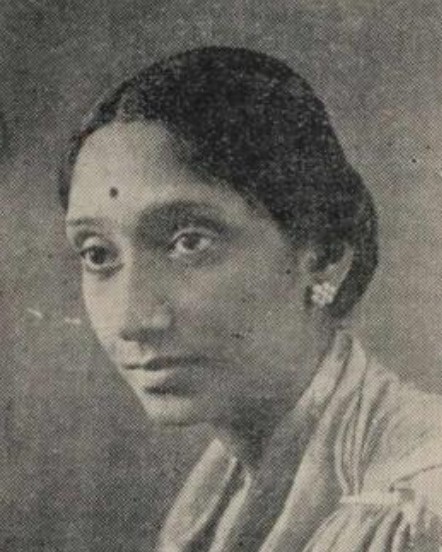 Vidushi Hirabai BarodekarTheir page records: Patron of her first concert
"Hirabai appeared in her first public performance under patronage of Kesarbai Kerkar at the age of 15." Not a teaching relationship.
Recognition
Honours and recognition
Highest national honour first, then by year.
- 1969Padma Bhushan
- 1953Sangeet Natak Akademi Award
- SurashriA title associated with praise from Rabindranath Tagore; the year is not documented.
Community
Memories from the community
Personal recollections, not verified history
These are memories shared by listeners and musicians. They sit apart from the sourced biography above, and an editor reads each one before it appears.
- No memories have been shared yet.
Members can share a memory of Kesarbai Kerkar. Sign in or create an account.
Provenance
Sources and image credits
- Kesarbai Kerkar — Wikipedia
- Tagore called her Surashree — The Hindu
- How Kesarbai Kerkar earned the title Surashri — Scroll.in
Photo Division, Government of India, via Wikimedia Commons — public domain
Continue exploring