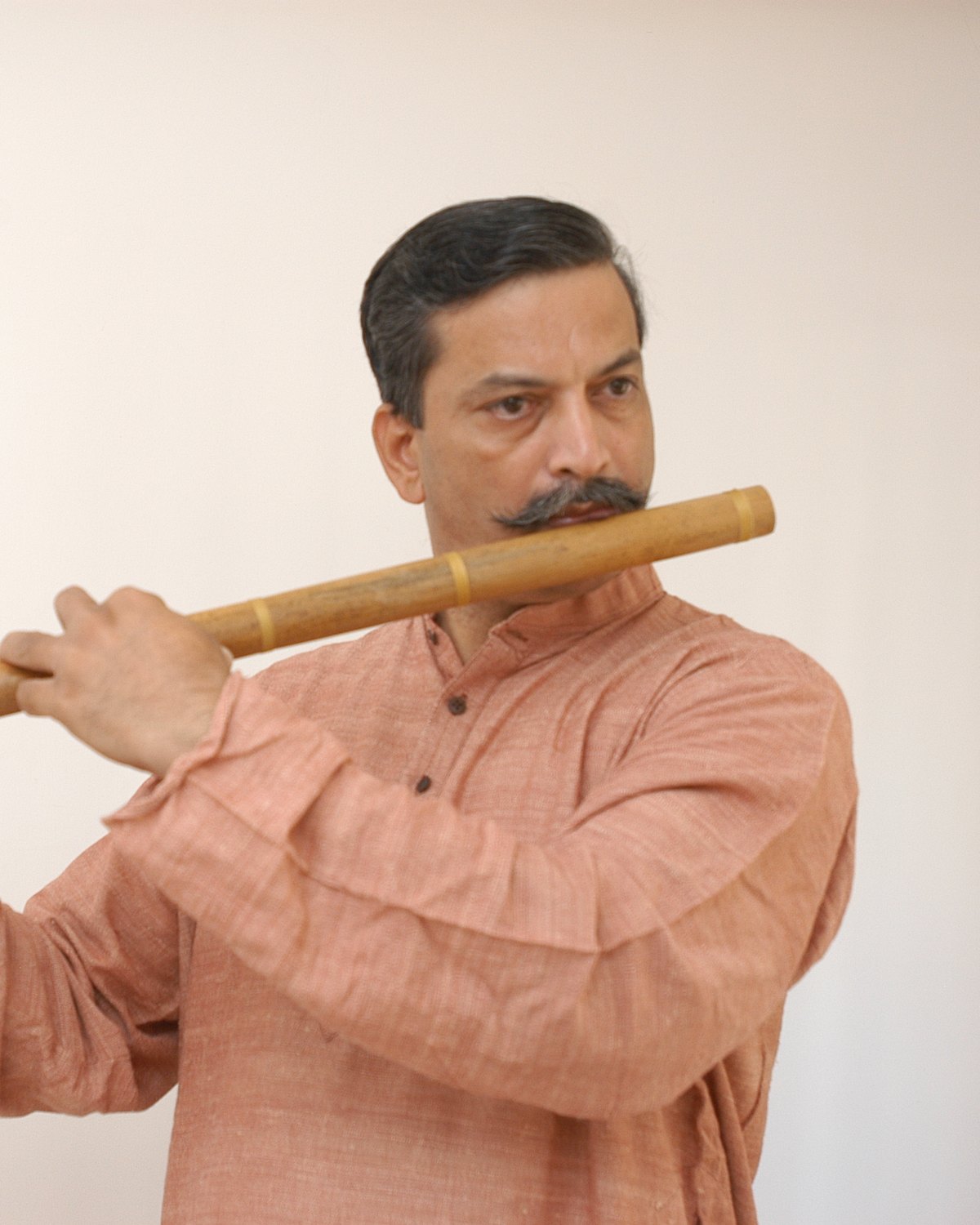
Hindustani classical · born 1948
Pandit Nityanand Haldipur
A bansuri player who spent thirty years inside Annapurna Devi's teaching room.
- Instrument
- Bansuri
- Born
- 7 May 1948, Bombay (Mumbai)
Official website & social links
Pandit Nityanand Haldipur's own pages elsewhere on the web.
These destinations belong to Pandit Nityanand Haldipur or to those who look after their work, and are checked by an editor before they are listed. They leave the archive. Suggest a link or a correction.
Where to start
Begin listening
Start here
Raag Mishra Kafi
Mishra Kafi · darbarfestival
Recorded at Darbar Festival and published on the festival's own channel.
Explore further
Hindustani classical flute — Grishmotsav 2026
Nad Ninad
A full recent concert.
Recordings are embedded from official or authorised channels and never rehosted. Nothing plays on its own, and starting one closes another. Where an editor has added a note, it explains why that recording was chosen — not what happens inside it.
Biography
Life
He was born in Bombay on 7 May 1948 into a musical household. His father, Niranjan Haldipur, a senior disciple of Pandit Pannalal Ghosh, gave him his first training in the flute. At nine he received instruction from Pannalal Ghosh himself. Over the following two decades he studied with Pandit Chidanand Nagarkar and then with Pandit Devendra Murdeshwar, the senior-most disciple of Pannalal Ghosh, under whom he worked on technique.
In 1986 Annapurna Devi — daughter of Ustad Allauddin Khan, and by then long withdrawn from performance — accepted him as a disciple. His training with her continued for the rest of her life, and the Ali Akbar Khan Centennial describes his mature playing as the result of that work. He cared for her in her later years.
All India Radio rates him a Top Grade artist. He teaches in his guru's manner, taking students on flute but also on saxophone, violin, guitar and voice, and holds listening sessions on the recordings of the Maihar musicians.
Musical contribution
What they brought to music
Darbar describes his style as a fusion of the ideas of Ustad Wazir Khan and Pandit Pannalal Ghosh — the beenkari line that reached him through Annapurna Devi, set on an instrument whose modern classical idiom Pannalal Ghosh largely invented. In performance the raga is unhurried, weighted toward alaap, and closer to the surbahar than to the flute's lighter repertoire.
Life in dates
Timeline
1948
Born in Bombay
7 May.
1957
Instruction from Pannalal Ghosh
At the age of nine.
1986
Accepted as a disciple by Annapurna Devi
The training continued for the rest of her life.
2010
Sangeet Natak Akademi Award
Lineage & company
Teachers, students and musical connections
In the documented teaching trees
Where the archive's lineage research places Pandit Nityanand Haldipur, and the teaching links recorded around them inside each tree.
Bansuri concert lineageborn 1948
Flute player with training in both main bansuri lines.
Taught in this tree by: Annapurna Devi, Devendra Murdeshwar
Maihar (Senia-Maihar) gharanaborn 1948
Flute player trained in the Maihar manner by Annapurna Devi.
Taught in this tree by: Annapurna Devi, Devendra Murdeshwar
People
Grouped by the kind of relationship the sources record — who taught this musician, who they taught, family, and the people they played with.
Teachers and gurus
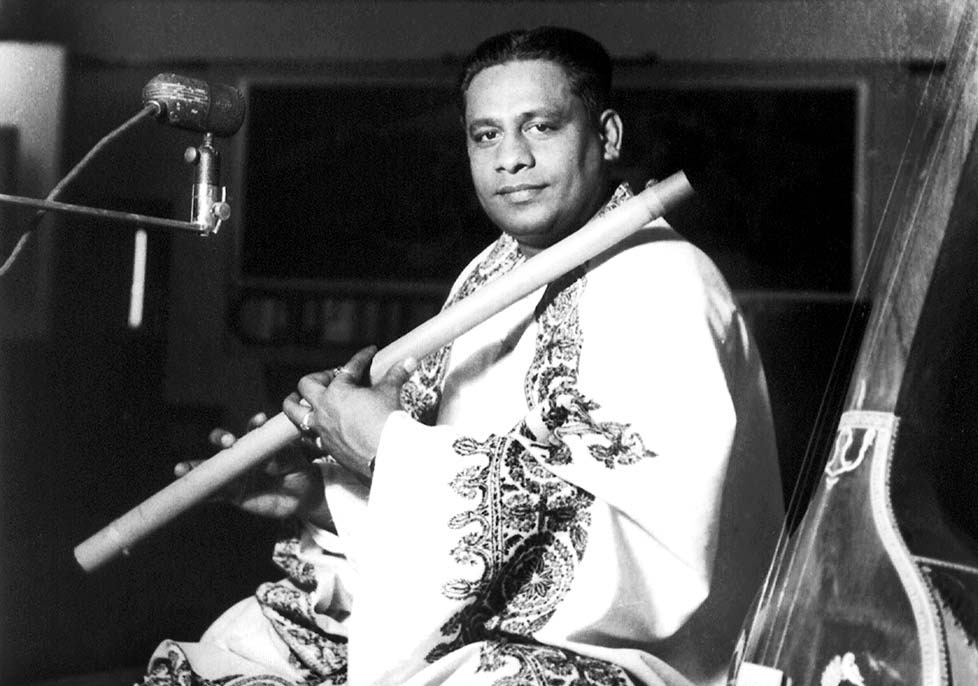 Pandit Pannalal GhoshTeacher
He received instruction from him at the age of nine.
Nityanand Haldipur — Ali Akbar Khan Centennial- Pandit Chidanand NagarkarTeacherNityanand Haldipur — Wikipedia
- Pandit Devendra MurdeshwarTeacher
Senior-most disciple of Pannalal Ghosh; he perfected his technique under him.
Nityanand Haldipur — Ali Akbar Khan Centennial - Annapurna DeviGuru
Accepted him as a disciple in 1986; the training continued for the rest of her life.
Nityanand Haldipur — Ali Akbar Khan Centennial
Family
- Niranjan HaldipurFather and first teacher
A senior disciple of Pannalal Ghosh, who initiated him into flute playing.
Nityanand Haldipur — Ali Akbar Khan Centennial
Recognition
Honours and recognition
Highest national honour first, then by year.
- 2010Sangeet Natak Akademi Award
- 2021Tansen SanmanGovernment of Madhya Pradesh.
- 2024SaMaPa Vitasta Award
Community
Memories from the community
Personal recollections, not verified history
These are memories shared by listeners and musicians. They sit apart from the sourced biography above, and an editor reads each one before it appears.
- No memories have been shared yet.
Members can share a memory of Pandit Nityanand Haldipur. Sign in or create an account.
Provenance
Sources and image credits
- Nityanand Haldipur — Ali Akbar Khan Centennial
- Pandit Nityanand Haldipur — Darbar
- Nityanand Haldipur — Wikipedia
Photograph by Krish240574, 2008 — public domain, via Wikimedia Commons
Continue exploring