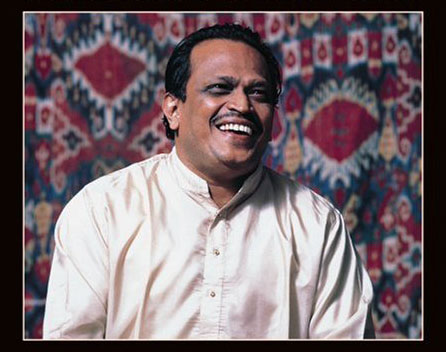
Hindustani classical · 1944–2025
Pandit Prabhakar Karekar
A Goan voice that carried khayal, natya sangeet and bhajan with equal ease.
- Instrument
- Khayal vocal
- Gharana
- Agra and Gwalior training
- Born
- 1944, Goa (then Portuguese India)
- Died
- 12 February 2025, Mumbai, Maharashtra
Official website & social links
We have no checked official pages for Pandit Prabhakar Karekar yet. Suggest an official link.
Where to start
Begin listening
Sujan Gun Gaun — Raga Malkauns
Malkauns · Saregama · Saregama Hindustani Classical
Published by the record label that issued the recording.
Raag Madhukauns
Madhukauns · Alurkar Music House · Alurkar Music House
Published by the Pune music label that issued the recording.
Recordings are embedded from official or authorised channels and never rehosted. Nothing plays on its own, and starting one closes another. Where an editor has added a note, it explains why that recording was chosen — not what happens inside it.
Biography
Life
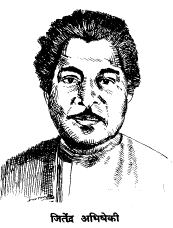
Prabhakar Janardan Karekar was born in 1944 into a Daivadnya family in Goa, then still under Portuguese rule, and made his life and career in Mumbai. His training came from three senior musicians — Pandit Suresh Haldankar, Pandit Jitendra Abhisheki and Pandit C. R. Vyas. He began learning from Vyas in the early 1970s, an association his teacher's son, the santoor player Satish Vyas, described after Karekar's death as more than fifty years long and as close as family. The three influences together shaped a style that moved comfortably between concert khayal and the lighter Marathi forms that made him a household name: abhangs, bhajans and natya sangeet, sung with a clear carrying voice.
He was a graded artist of All India Radio and Doordarshan, and was known as much for teaching as for performing. He founded and chaired the Swarprabha Trust, through which he trained younger musicians and organised lectures, workshops and concerts in India and abroad. He also took part in cross-genre work, recording with the American saxophonist Ornette Coleman and the sarangi player Ustad Sultan Khan.
His honours include the Tansen Samman (2014), the Sangeet Natak Akademi Award for Hindustani vocal music (2016) and Goa's highest civilian award, the Gomant Vibhushan (2021). A biography of him was written by Shakuntala Bharne. He died at his home in Mumbai on 12 February 2025, aged 80; his last rites were performed at the Shivaji Park crematorium in Dadar.
Musical contribution
What they brought to music
Best known for abhangs, natya sangeet and bhajans sung with a clear, carrying voice, alongside a concert khayal repertoire.
In pictures
Photographs
Lineage & company
Teachers, students and musical connections
People
Grouped by the kind of relationship the sources record — who taught this musician, who they taught, family, and the people they played with.
Teachers and gurus
Collaborators and accompanists
- Ustad Sultan KhanCollaborator
Took part with Karekar in a cross-genre recording alongside the American saxophonist Ornette Coleman.
Classical vocalist Karekar no more — The Times of India - Ornette ColemanCollaborator
American saxophonist; collaborated with Karekar and Sultan Khan on a fusion recording.
Prabhakar Karekar — Wikipedia
Recognition
Honours and recognition
Highest national honour first, then by year.
- 2016Sangeet Natak Akademi AwardFor Hindustani vocal music.
- 2014Tansen Samman
- 2021Gomant Vibhushan
Community
Memories from the community
Personal recollections, not verified history
These are memories shared by listeners and musicians. They sit apart from the sourced biography above, and an editor reads each one before it appears.
- No memories have been shared yet.
Members can share a memory of Pandit Prabhakar Karekar. Sign in or create an account.
Provenance
Sources and image credits
- Prabhakar Karekar — Wikipedia
- Renowned vocalist Prabhakar Karekar passes away at 80 — The Times of India
- Sangeet Natak Akademi Annual Report 2017–18 (Akademi Awards 2016)
- Classical vocalist Karekar no more — The Times of India
Photograph by Wikimedia Commons user Swarintfrance, CC BY-SA 3.0, via Wikimedia Commons
Continue exploring