Hindustani classical · 1917–1982
Roshan Ara Begum
Malika-e-Mauseeqi — the "Queen of Music" — Abdul Karim Khan's outstanding Kirana disciple, who sang from Bombay to Lahore and became Pakistan's first great woman of classical music.
- Instrument
- Khayal vocalThumri
- Gharana
- Kirana gharana
- On these dates
- Sources differ on the death date (6 or 12 December 1982) and on award years (Pride of Performance 1960; Sitara-e-Imtiaz given as 1960 or 1962), so only the month and year are shown.
Official website & social links
We have no checked official pages for Roshan Ara Begum yet. Suggest an official link.
Where to start
Begin listening
Aaye balam rangeele — Raga Kamod
Saregama Hindustani Classical
The Kamod Baithak singles out as typical of her style.
Saregama.
Rasiya na jao — Raga Maru Bihag
Saregama Hindustani Classical
One of the ragas she was most praised for.
Saregama.
Raag Hansadhwani
AIR Raagam
A radio archive recording.
All India Radio.
Recordings are embedded from official or authorised channels and never rehosted. Nothing plays on its own, and starting one closes another. Where an editor has added a note, it explains why that recording was chosen — not what happens inside it.
Biography
Life
Roshan Ara Begum was born Waheed-un-Nisa in Calcutta in 1917, the daughter of Ustad Abdul Haq Khan and the singer Chanda Begum, who recognised her talent early. Her family was related to Ustad Abdul Karim Khan of the Kirana gharana. She first trained with Mumtaz Hussain and Laddan Khan, and after hearing her sing Multani, Abdul Karim Khan took her as his disciple; ten years of rigorous practice preceded her career. In her teens she sang at house concerts in Lahore, and All India Radio broadcasts from 1936 made her famous as "Bombaywali" Roshan Ara Begum.
In 1944 she married Chaudhry Ahmed Khan, a Bombay police officer, on condition that she could keep singing. After Partition the couple settled in 1948 in Lalamusa, his hometown in Punjab, and she travelled to Lahore for concerts, radio and television. The news that she might stop singing helped spur the first All Pakistan Music Conference in 1960, where she sang as its star through to dawn. She recorded for films including "Jugnu" (1947), "Qismat" (1956) and "Roopmati Baz Bahadur" (1960), and in 1977 she was a guest of All India Radio's golden jubilee in Delhi alongside Malika Pukhraj.
Pakistan honoured her with the Pride of Performance and the Sitara-e-Imtiaz; she was the first woman vocalist to receive the latter. Her last years in Lalamusa were lonely and secluded. She died in December 1982.
Musical contribution
What they brought to music
Full-throated, mature Kirana voice with delicate sur passages, swift and intricate sargam taans and layakari; ragas such as Shankara, Shuddh Kalyan, Maru Bihag and Kedar were celebrated, as were her dadras.
Lineage & company
Teachers, students and musical connections
People
Grouped by the kind of relationship the sources record — who taught this musician, who they taught, family, and the people they played with.
Teachers and gurus
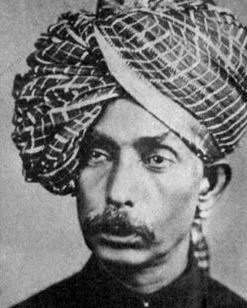 Ustad Abdul Karim KhanGuru and relative
Took her as a disciple after hearing her Multani; sources describe him as her or her father's cousin
Baithak Foundation; Youlin Magazine- Mumtaz HussainEarly teacherBaithak Foundation
- Laddan KhanEarly teacherBaithak Foundation
Family
- Ustad Abdul Haq KhanFatherYoulin Magazine
- Chanda BegumMother
Singer who arranged her training
Baithak Foundation
Recognition
Honours and recognition
Highest national honour first, then by year.
- 1960Pride of PerformancePresident of Pakistan
- Sitara-e-ImtiazFirst woman vocalist to receive it; year given as 1960 or 1962
Community
Memories from the community
Personal recollections, not verified history
These are memories shared by listeners and musicians. They sit apart from the sourced biography above, and an editor reads each one before it appears.
- No memories have been shared yet.
Members can share a memory of Roshan Ara Begum. Sign in or create an account.
Provenance
Sources and image credits
- Youlin Magazine — "Khawaja Najamul Hassan and Roshan Ara Begum: The Queen of Classical Music" (2022)
- Baithak Foundation — Mallika-e-Mauseequi Roshan Ara Begum
- Daily Times (Pakistan) — Roshan Ara Begum, the queen of sub-continent's classical music (archived)
- Wikipedia — Roshan Ara Begum
No photograph of this musician is published here yet; we use only images we are permitted to show, with credit.
Continue exploring
- Kirana gharanaThe lineage Roshan Ara Begum is associated with, and the other musicians documented within it.
- The khayal vocalHow the instrument works, and who else in the archive plays it.
- The thumriHow the instrument works, and who else in the archive plays it.
- All musiciansBrowse the archive by name, instrument or discipline.