Hindustani classical · died c. 1880
Behram Khan
The teacher credited with giving the Dagar tradition of dhrupad its present shastra-based form and its system of training.
- Instrument
- Dhrupad vocal
- Gharana
- Dagar vani (Dagarbani)
- Died
- c. 1880
- On these dates
- His birth year is not documented in the available sources; dhrupad.info gives his dates as "? – ca. 1880".
Official website & social links
We have no checked official pages for Behram Khan yet. Suggest an official link.
Biography
Life
Behram Khan was the son of Gopal Das, also known as Imam Baksh. In his youth he travelled to Benares to learn music and its shastra from Kalidas Dagur, who accepted him as a disciple after subjecting him to many tests and trained him as both musician and scholar.
He later served in the royal courts of Lahore, Alwar, Delhi, Suket Mandi and Jaipur, and won renown as a teacher, receiving many rewards and titles from his patrons. He is said to have owned an elephant, which he rode when visiting his patron Maharaja Sawai Ram Singh of Jaipur.
His nephew Mohammad Jan Khan, son of his elder brother Hyder Khan, was among his exceptional students, but left home after a disagreement with Behram Khan at a public performance. Behram Khan afterwards took up the teaching of Mohammad Jan Khan's sons, Zakiruddin and Allabande Khan, who became the most renowned dhrupad singers of their generation, and through whom the tradition passed to the modern Dagar family. He died around 1880.
Musical contribution
What they brought to music
He is credited with developing the elaborate, methodical and grammar-bound system of alap associated with the Dagars, and with an approach to teaching built on a long initial period of technical training through exercises. He taught widely outside his family, including a number of khayal singers.
Life in dates
Timeline
c. 1880
Died
Sources give his death as around 1880; his birth year is undocumented.
Lineage & company
Teachers, students and musical connections
In the documented teaching trees
Where the archive's lineage research places Behram Khan, and the teaching links recorded around them inside each tree.
Dagar vani (Dagarbani)c. 1753–1878
The earliest documented Dagar ancestor, a court musician at Jaipur.
Recorded as teaching: Zakiruddin Khan Dagar
People
Grouped by the kind of relationship the sources record — who taught this musician, who they taught, family, and the people they played with.
Teachers and gurus
- Kalidas DagurTeacher
"He travelled to Benares in his youth to learn music and its shastra from Kalidas Dagur, who accepted him as his disciple after subjecting him to many tests, and trained him to be an outstanding musician and a scholar."
dhrupad.info — Baba Behram Khan
Students and disciples
- Zakiruddin KhanDisciple
"A repentant Behram Khan then took up the task of teaching Mohammad Jan Khan's sons Zakiruddin and Allabande Khan."
dhrupad.info — Baba Behram Khan - Allabande KhanDisciple
"A repentant Behram Khan then took up the task of teaching Mohammad Jan Khan's sons Zakiruddin and Allabande Khan."
dhrupad.info — Baba Behram Khan 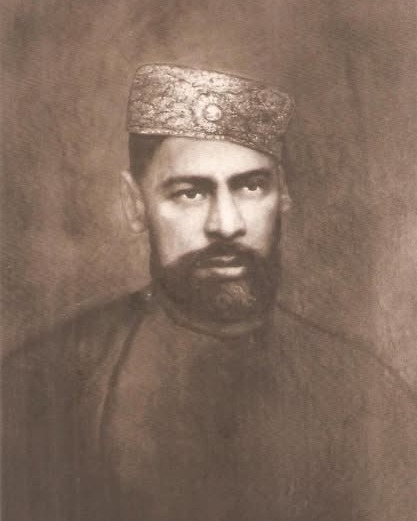 Ustad Bande Ali KhanStudent
The beenkar Bande Ali Khan is recorded as having trained with him; the family relationship between them is reported inconsistently.
Wikipedia: Bande Ali Khan
Family
- Mohammad Jan KhanDisciple (nephew)
"His nephew Mohammad Jan Khan - son of his elder brother Hyder Khan. was one of his exceptional students."
dhrupad.info — Baba Behram Khan - Saddu KhanDisciple (son)
"He was renowned as a great scholar, and trained many students including his sons Saddu Khan and Akbar Khan, his grandson Inayat Khan and several nephews."
dhrupad.info — Baba Behram Khan - Akbar KhanDisciple (son)
"He was renowned as a great scholar, and trained many students including his sons Saddu Khan and Akbar Khan, his grandson Inayat Khan and several nephews."
dhrupad.info — Baba Behram Khan - Inayat KhanDisciple (grandson)
"He was renowned as a great scholar, and trained many students including his sons Saddu Khan and Akbar Khan, his grandson Inayat Khan and several nephews."
dhrupad.info — Baba Behram Khan
Community
Memories from the community
Personal recollections, not verified history
These are memories shared by listeners and musicians. They sit apart from the sourced biography above, and an editor reads each one before it appears.
- No memories have been shared yet.
Members can share a memory of Behram Khan. Sign in or create an account.
Provenance
Sources and image credits
No photograph of this musician is published here yet; we use only images we are permitted to show, with credit.
Continue exploring