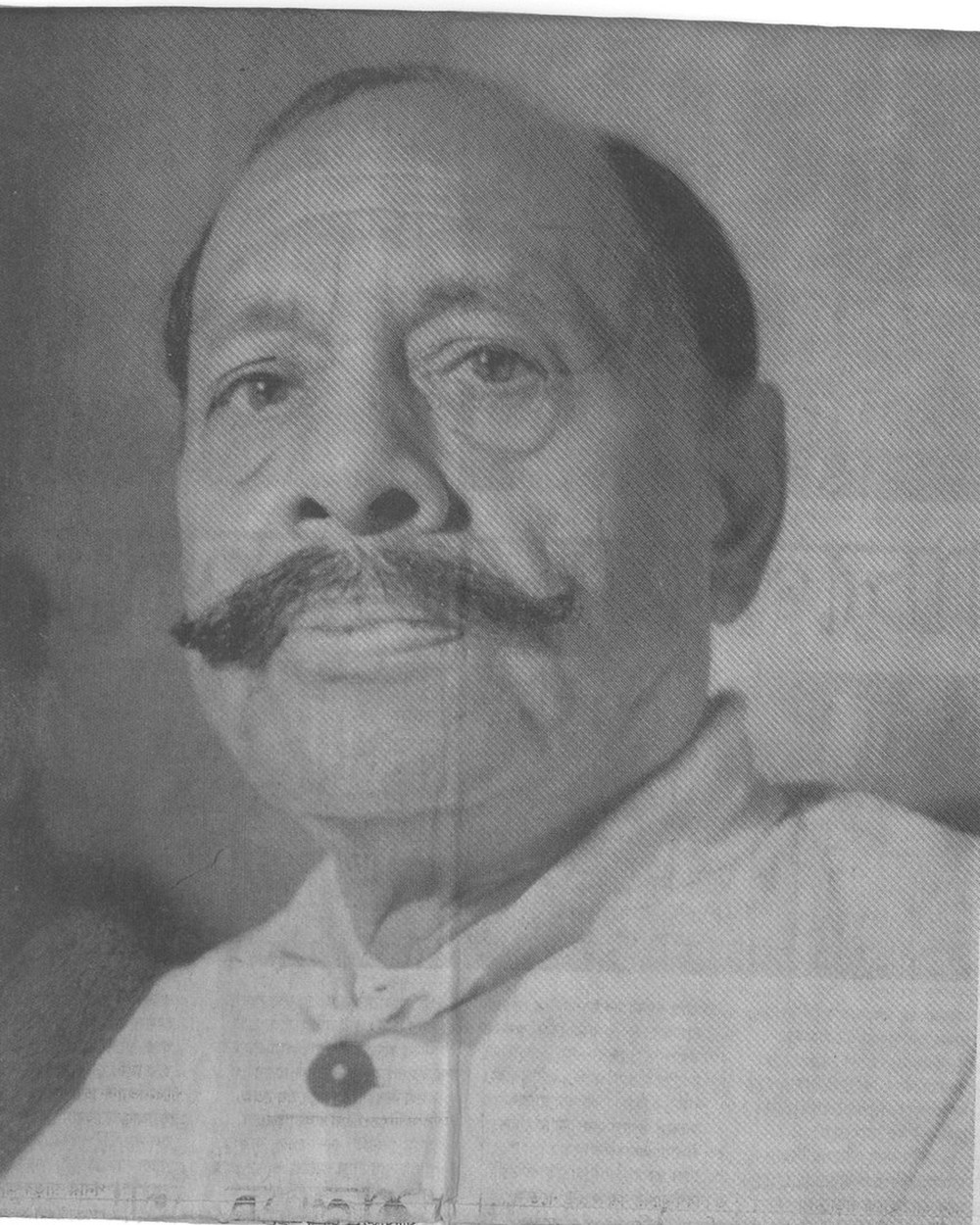
Hindustani classical · 1886–1950
Faiyaz Khan
The Agra gharana's most celebrated twentieth-century voice, known as Aftab-e-Mausiqi, the sun of music.
- Instrument
- Khayal vocal
- Gharana
- Agra gharana
- Born
- 8 February 1886, Sikandara, near Agra
- Died
- 5 November 1950, Baroda (Vadodara), Gujarat
Official website & social links
We have no checked official pages for Faiyaz Khan yet. Suggest an official link.
Where to start
Begin listening
Start here
Bajuband Khul Khul Jaye
Ahir Bhairav · Saregama Hindustani Classical
Published on the label's own channel.
Recordings are embedded from official or authorised channels and never rehosted. Nothing plays on its own, and starting one closes another. Where an editor has added a note, it explains why that recording was chosen — not what happens inside it.
Biography
Life
Faiyaz Khan was born at Sikandara, near Agra, on 8 February 1886. His father, Safdar Hussain, died four months before his birth, and he was brought up by his maternal grandfather, Ghulam Abbas, who taught him music until he was twenty-five. He also studied with Mehboob Khan "Daraspiya", who was his father-in-law, with Natthan Khan, and with his uncle Fida Hussain Khan.
He served for many years as a court musician to Sayajirao Gaekwad III, the Maharaja of Baroda, where he received the title "Gyan Ratna". In 1908 the Maharaja of Mysore gave him the title "Aftab-e-Mausiqi", the sun of music. He performed widely at the music conferences of Lucknow, Allahabad, Calcutta, Gwalior, Bombay and Mysore, and at Jorasanko Thakurbari, the Tagore household in Calcutta.
An attack of typhoid in 1945, followed by tuberculosis, forced him to lower his singing pitch, and almost all surviving recordings date from these later years. He died of tuberculosis at Baroda on 5 November 1950.
He composed bandishes under the pen-name Prem Piya, among them the thumri Baaju band khul khul jaye that remains his best-known piece. Contemporaries called him Mehfil ka Badshah, and the musicologist Ashok Ranade said of his singing that "there was no chink in his armour"; he is generally credited with blending the manners of his several teachers into a new direction for the Agra gayaki. In 1912 the Baroda court seated him at the Maharaja's right hand during official functions. His tomb at Vadodara was attacked and badly damaged during the riots of 2002.
Musical contribution
What they brought to music
His specialities were dhrupad and khayal, and he also sang thumri and ghazal; his best-known thumri is "Baaju band khul khul jaye". He is described as having blended the styles of his teachers and given the Agra gayaki a new direction. He composed bandishes under the pen-name "Prem Piya".
Life in dates
Timeline
1886
Born
Born on 8 February at Sikandara, near Agra; raised and taught by his maternal grandfather, Ghulam Abbas.
1908
Titled Aftab-e-Mausiqi
The Maharaja of Mysore conferred the title, meaning the sun of music.
1945
Illness
A bout of typhoid, followed by tuberculosis, obliged him to lower his singing pitch.
1950
Died
Died of tuberculosis on 5 November at Baroda.
Lineage & company
Teachers, students and musical connections
In the documented teaching trees
Where the archive's lineage research places Faiyaz Khan, and the teaching links recorded around them inside each tree.
Agra gharana1886–1950
The towering Agra voice of the recording era and the reference point for the gharana's sound.
Recorded as teaching: S. N. Ratanjankar, Sharafat Hussain Khan
People
Grouped by the kind of relationship the sources record — who taught this musician, who they taught, family, and the people they played with.
Teachers and gurus
- Mehboob Khan "Daraspiya"Teacher
"He was also a student of Ustad Mehboob Khan \"Daraspiya\", his father-in-law, Natyan Khan and his uncle Fida Hussain Khan."
Wikipedia — Faiyaz Khan - Natthan KhanTeacherWikipedia — Faiyaz Khan
- S. N. RatanjankarDisciple
Described as perhaps the last of his pupils to excel both as teacher and performer; he in turn taught the circle around C. R. Vyas.
Wikipedia — Faiyaz Khan
Students and disciples
- Khadim Hussain KhanIn-house discipleWikipedia — Faiyaz Khan
- Vilayat Hussain KhanIn-house discipleWikipedia — Faiyaz Khan
- Latafat Hussain KhanIn-house discipleWikipedia — Faiyaz Khan
- Sharafat Hussain KhanIn-house discipleWikipedia — Faiyaz Khan
- Ata Hussain KhanIn-house discipleWikipedia — Faiyaz Khan
- Dipali NagDiscipleWikipedia — Faiyaz Khan
- K. L. SaigalStudentWikipedia — Faiyaz Khan
- Jnanendra Prasad GoswamiDiscipleWikipedia — Faiyaz Khan
Family
- Ghulam AbbasTeacher (maternal grandfather)
"He was brought up by his maternal grandfather, Ghulam Abbas (1825-1934), who taught him music up to the age of 25."
Wikipedia — Faiyaz Khan - Fida Hussain KhanTeacher (uncle)
"He was also a student of Ustad Mehboob Khan \"Daraspiya\", his father-in-law, Natyan Khan and his uncle Fida Hussain Khan."
Wikipedia — Faiyaz Khan
Other recorded connections
Recognition
Honours and recognition
Highest national honour first, then by year.
- 1908Aftab-e-MausiqiTitle conferred by the Maharaja of Mysore.
- Gyan RatnaAwarded at the court of Baroda.
Community
Memories from the community
Personal recollections, not verified history
These are memories shared by listeners and musicians. They sit apart from the sourced biography above, and an editor reads each one before it appears.
- No memories have been shared yet.
Members can share a memory of Faiyaz Khan. Sign in or create an account.
Provenance
Sources and image credits
Photograph published in Ananda Bazar Patrika; public domain, via Wikimedia Commons
Continue exploring