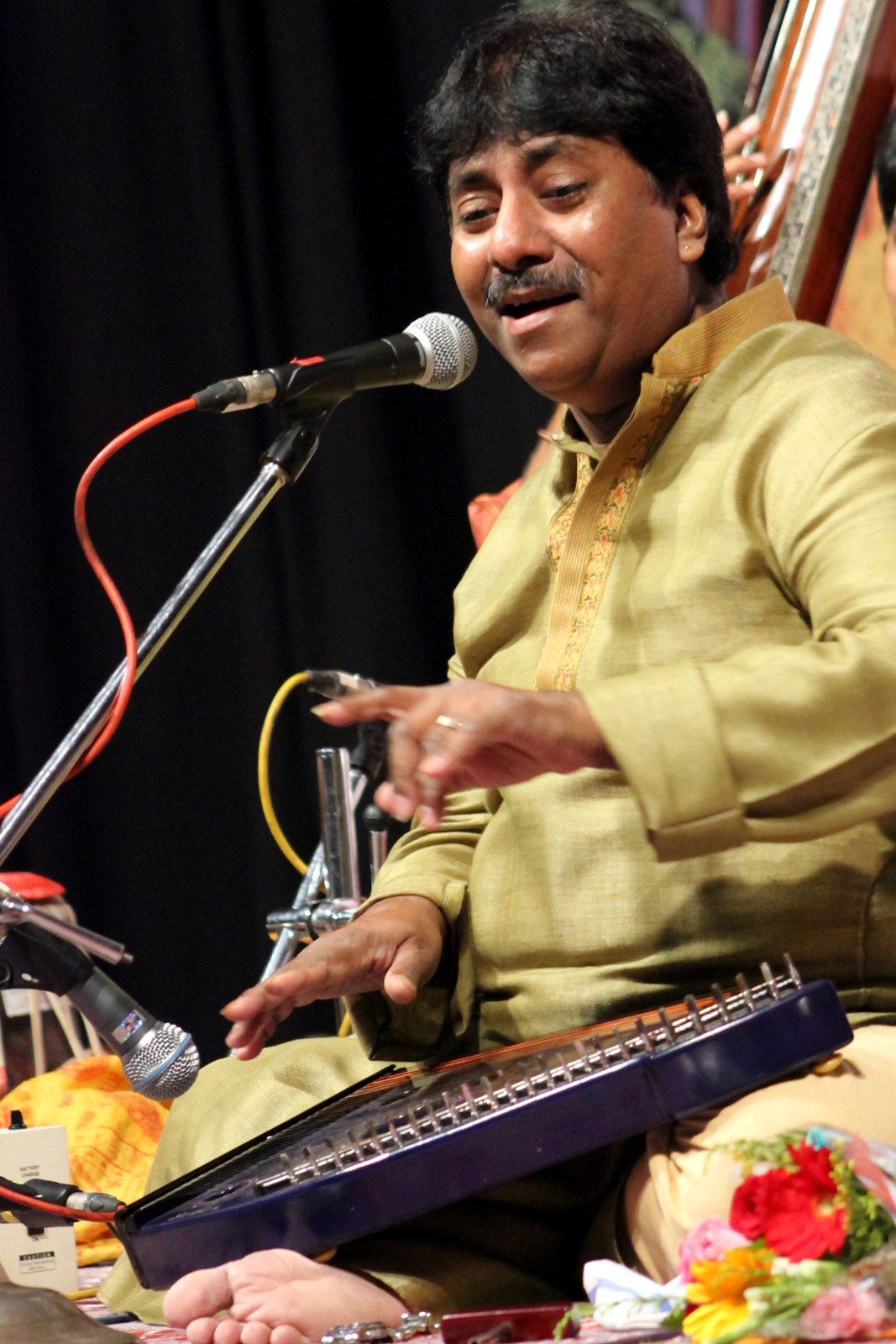
Hindustani classical · 1968–2024
Ustad Rashid Khan
The slow khayal, held open for as long as it needed.
- Instrument
- Khayal vocal
- Gharana
- Rampur-Sahaswan gharana
- Schools & gurukuls
- ITC Sangeet Research AcademyScholar, then musician of the academy
- Born
- 1 July 1968, Sahaswan, Sahaswan, Budaun district, Uttar Pradesh
- Died
- 9 January 2024, Kolkata, Kolkata, West Bengal
Official website & social links
We have no checked official pages for Ustad Rashid Khan yet. Suggest an official link.
Where to start
Begin listening
Raga Megh Malhar
Megh Malhar · Saregama · Saregama Hindustani Classical
Raga Lalit and thumri — Bengal Classical Music Festival 2016
Lalit · Bengal Foundation · Bengal Foundation
Recordings are embedded from official or authorised channels and never rehosted. Nothing plays on its own, and starting one closes another. Where an editor has added a note, it explains why that recording was chosen — not what happens inside it.
Biography
Life
Rashid Khan was born on 1 July 1968 at Sahaswan in Budaun district, a great-grandson of Ustad Inayat Hussain Khan, who founded the Rampur-Sahaswan gharana.
As a child he showed little interest in music. His uncle, Ustad Ghulam Mustafa Khan, noticed his ability and taught him briefly in Bombay, but his real training came from his maternal grand-uncle Ustad Nissar Hussain Khan — a hard taskmaster who had him at swara practice from four in the morning and on single notes for hours at a stretch.
He gave his first concert at about eleven and sang at an ITC event in Delhi in 1978. In April 1980, when Nissar Hussain Khan moved to the ITC Sangeet Research Academy in Calcutta, the fourteen-year-old went with him. He was recognised as a musician of the academy in 1994 and taught there in the following years.
He built an audience unusually large for a classical singer, performing heavily through the 1990s and 2000s, and worked outside the classical concert too — the Sufi fusion album Naina Piya Se, collaborations with the pianist Louis Banks, jugalbandis with Shahid Parvez, and playback singing for Hindi films.
He was made Padma Shri in 2006, the same year as his Sangeet Natak Akademi Award, and Padma Bhushan in 2022. He died in Kolkata on 9 January 2024, aged fifty-five, after a long illness.
Musical contribution
What they brought to music
Rashid Khan's signature was the slow khayal. Where much of the concert world had drifted toward shorter, faster expositions, he would hold a vilambit composition open for forty minutes or more, turning over a single phrase until it gave way, and only then moving on. The Rampur-Sahaswan training behind that — full-throated production, medium-slow tempo, exact sargam work — gave him the resources to sustain it.
He was also a fine singer of tarana, delivering it in a vocal rather than an instrumental manner, and he spoke of emotional content as the point of the exercise rather than a by-product of technique. He acknowledged Amir Khan and Bhimsen Joshi as influences without imitating either. What he did more than any contemporary was carry the full-length classical khayal to listeners who had never intended to sit through one.
Life in dates
Timeline
1968
Born in Sahaswan
Born on 1 July in Budaun district, Uttar Pradesh.
1978
Sings at an ITC concert in Delhi
An early public appearance as a boy.
1980
Joins the ITC Sangeet Research Academy
Moves to Calcutta in April with his guru Nissar Hussain Khan.
1994
Recognised as a musician of the academy
Later teaches there as a guru.
2006
Padma Shri and Sangeet Natak Akademi Award
Both conferred in the same year.
2022
Padma Bhushan
India's third-highest civilian honour.
2024
Dies in Kolkata
Dies on 9 January, aged fifty-five, after a long illness.
In pictures
Photographs
Lineage & company
Teachers, students and musical connections
Documented teaching lineage
Taught by Ustad Nissar Hussain Khan
Grand-uncle and principal teacher.
Rashid Khan — Wikipedia
Teaching, family, collaboration and influence are recorded separately here; none is ever inferred from another.
In the documented teaching trees
Where the archive's lineage research places Ustad Rashid Khan, and the teaching links recorded around them inside each tree.
Rampur-Sahaswan gharana1968–2024
The gharana's most widely heard modern voice.
Taught in this tree by: Nissar Hussain Khan
People
Grouped by the kind of relationship the sources record — who taught this musician, who they taught, family, and the people they played with.
Teachers and gurus
- Ustad Nissar Hussain KhanPrincipal teacher
His maternal grand-uncle, with whom he trained from childhood.
Rashid Khan — Wikipedia
Family
- Ustad Ghulam Mustafa KhanUncle and early teacher
First recognised his ability and taught him in Bombay.
Rashid Khan — Wikipedia - Ustad Inayat Hussain KhanGreat-grandfather
Founder of the Rampur-Sahaswan gharana.
Maestro Ustad Rashid Khan dies at 55 — The Hindu
Collaborators and accompanists
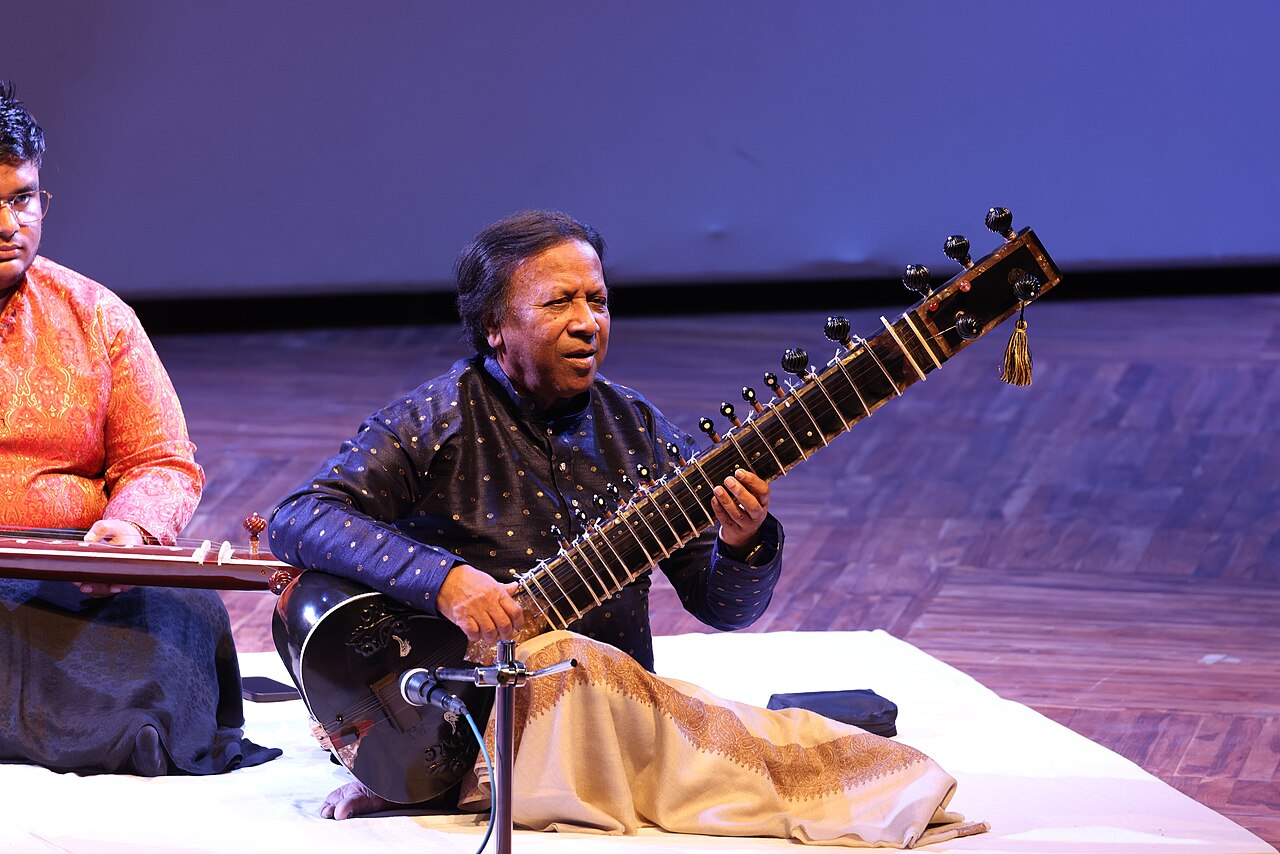 Ustad Shahid Parvez KhanConcert partner
Performed jugalbandis together.
Ustad Rashid Khan — Darbar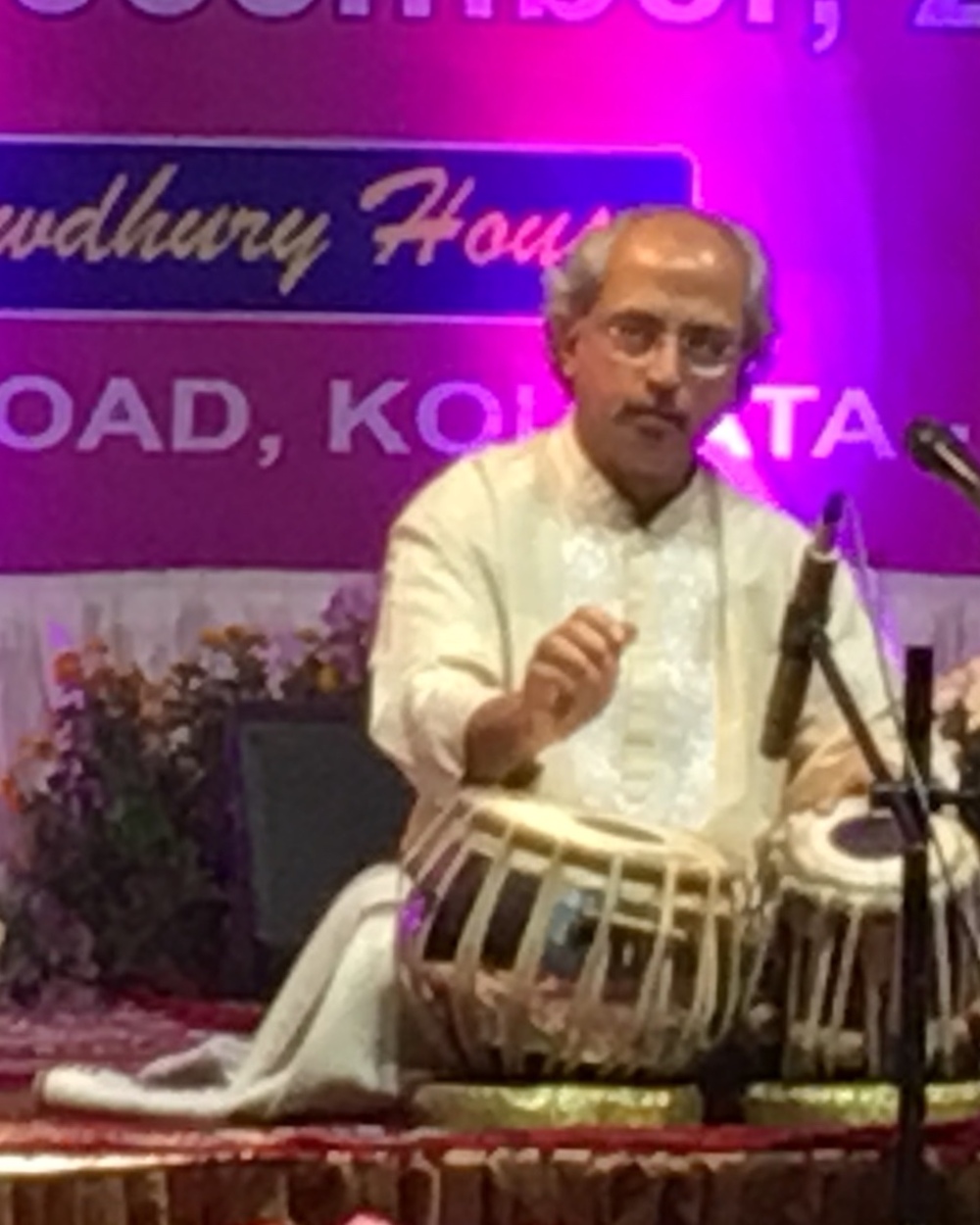 Pandit Yogesh SamsiTabla accompanist
Has accompanied him in concert.
Yogesh Samsi — official site
Schools, gurukuls and institutions
- ITC Sangeet Research Academy
Scholar, then musician of the academy
Recognition
Honours and recognition
Highest national honour first, then by year.
- 2022Padma Bhushan
- 2006Padma Shri
- 2006Sangeet Natak Akademi Award
- 2012Banga BhushanConferred by the Government of West Bengal.
Writing
From the journal
Community
Memories from the community
Personal recollections, not verified history
These are memories shared by listeners and musicians. They sit apart from the sourced biography above, and an editor reads each one before it appears.
- No memories have been shared yet.
Members can share a memory of Ustad Rashid Khan. Sign in or create an account.
Provenance
Sources and image credits
- Rashid Khan — Wikipedia
- The maestro who took classical music to India's masses — BBC News
- Maestro Ustad Rashid Khan dies at 55 — The Hindu
Photograph: Suyash Dwivedi, via Wikimedia Commons, CC BY-SA 4.0
Continue exploring
- Rampur-Sahaswan gharanaThe lineage Ustad Rashid Khan is associated with, and the other musicians documented within it.
- The khayal vocalHow the instrument works, and who else in the archive plays it.
- ITC Sangeet Research AcademyThe school Ustad Rashid Khan is connected to — what it teaches and where it is.
- All musiciansBrowse the archive by name, instrument or discipline.