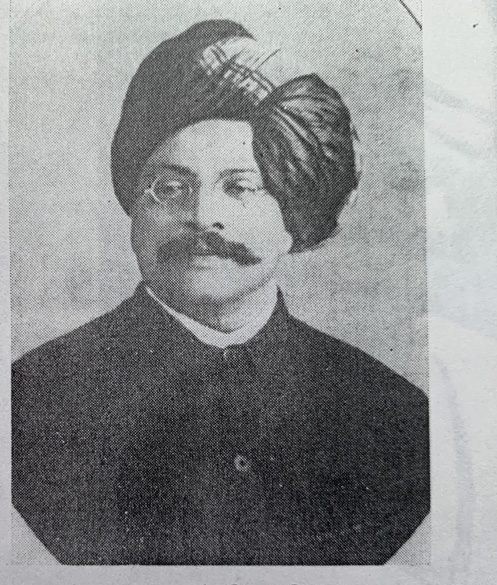
Hindustani classical · 1872–1931
Pandit Vishnu Digambar Paluskar
The Gwalior-trained singer who founded the Gandharva Mahavidyalaya in Lahore in 1901, taking Hindustani music out of the court and into a school open to the public.
- Instrument
- Khayal vocal
- Gharana
- Gwalior gharana
- Schools & gurukuls
- Akhil Bharatiya Gandharva Mahavidyalaya MandalFounder
- Born
- 18 August 1872, Kurundwad, Maharashtra
- Died
- 21 August 1931, Miraj
- On these dates
- Born 18 August 1872 per B. Chaitanya Deva (Publications Division, 1981). The caption under his photograph in Govindrao Tembe's book gives 1871.
Official website & social links
We have no checked official pages for Pandit Vishnu Digambar Paluskar yet. Suggest an official link.
Where to start
Begin listening
Pandit Vishnu Digambar Paluskar — Films Division birth-centenary film (1971)
Recorded 1971 · Sundeep Dougal
The fullest film portrait of his life.
Films Division documentary for his birth centenary; uploaded by Sundeep Dougal, not by Films Division.
1967 — Story of four timeless performances of Pandit Vishnu Digambar Paluskar
Recorded 1967 · AIR Raagam
All India Radio's own account of his concerts.
All India Radio archive programme.
Pandit Vishnu Digambar Paluskar: Pioneer of Indian Classical Music — talk by Madhavi Nanal
Desh Kaal
A clear spoken introduction to his life.
Illustrated talk on his life and work.
Recordings are embedded from official or authorised channels and never rehosted. Nothing plays on its own, and starting one closes another. Where an editor has added a note, it explains why that recording was chosen — not what happens inside it.
Biography
Life
Vishnu Digambar Paluskar was born on 18 August 1872 at Kurundwad, then a small princely state in the Deccan. His father, Digambar Gopal Paluskar, was a keertankar, a singer of devotional story-telling, and the boy learnt to sing by accompanying him. During the Datta Jayanti festival at nearby Narsobachi Wadi, a firecracker burst near his face and badly damaged his eyes. Doctors at Kurundwad and Miraj could not restore his sight, and a career in either school studies or keertan seemed closed to him.
The royal physician at Miraj, who had heard the boy's devotional singing, spoke to the Raja of Miraj, and the Raja placed him with Balakrishnabuwa Ichalkaranjikar, the senior musician of Maharashtra, who had learnt in Gwalior. Paluskar trained with him in the old residential way until about 1896, when relations between them became strained and he left Miraj.
He travelled for several years — to Baroda, where he sang at court, and then through Saurashtra, Gwalior, Mathura, Bharatpur and Delhi to the Punjab. In Saurashtra he gave a public concert and charged a small fee, a break from the custom that classical music was heard only in a patron's rooms or in a temple. At Mathura he studied Brij Bhasha, the language of many of the finest Hindustani song texts.
In Lahore, on 5 May 1901, he founded the Gandharva Mahavidyalaya. It was run on donations, public support and the money from his own concerts, and it taught to regular courses rather than leaving everything to a teacher's moods. He set up a press to print music books in notation, and insisted on strict discipline in both music and conduct, so that families who had looked down on musicians began to send their children, including daughters. In September 1908 he opened a branch in Bombay and later moved the school there; a building was put up in 1915 and a hostel after it, largely on borrowed money. In 1924, while he was away on a concert tour, his creditors seized and auctioned the property.
He moved to the Shri Ram Nam Adhar Ashram he had started at Nashik and gave his later years almost entirely to devotional music. His Ram dhun "Raghupati Raghava Raja Ram" was sung at the head of Mahatma Gandhi's Dandi March in 1930, and his "Vande Mataram" was regularly heard at sessions of the Indian National Congress. In failing health he was taken to Miraj by its Raja, and he died there on 21 August 1931.
Of his twelve children, only one son, Dattatreya, survived; he was eleven when his father died and was trained by his father's senior students, becoming the singer D. V. Paluskar. Paluskar's own students — among them Omkarnath Thakur, Vinayakrao Patwardhan and Narayanrao Vyas — became leading performers and teachers, and after his death they formed the Akhil Bharatiya Gandharva Mahavidyalaya Mandal to carry the schools on. In 2000 India Today named him, alongside Bhatkhande, among the "100 people who shaped India".
Musical contribution
What they brought to music
Trained in the Gwalior style through Balakrishnabuwa Ichalkaranjikar. He rewrote or replaced song texts he found coarse while keeping their tunes, and later turned almost wholly to bhajans and Ram dhun. The only recording claimed to be his voice — an early cylinder of "Baalam re" — has not been independently confirmed.
In pictures
Photographs
Lineage & company
Teachers, students and musical connections
In the documented teaching trees
Where the archive's lineage research places Pandit Vishnu Digambar Paluskar, and the teaching links recorded around them inside each tree.
Gwalior gharana1872–1931
Founded the Gandharva Mahavidyalaya and moved classical teaching into public schools and concert halls.
Taught in this tree by: Balkrishnabuwa Ichalkaranjikar
Recorded as teaching: Omkarnath Thakur
People
Grouped by the kind of relationship the sources record — who taught this musician, who they taught, family, and the people they played with.
Teachers and gurus
- Balakrishnabuwa IchalkaranjikarGuru
Trained with him at Miraj until about 1896
B. Chaitanya Deva, An Introduction to Indian Music (1981)
Students and disciples
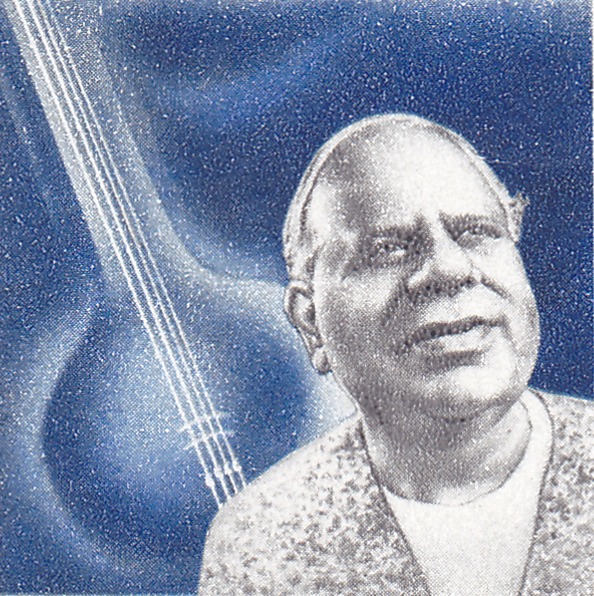 Pandit Omkarnath ThakurDisciple
Named among his leading students
India Today (2000)- Pandit Vinayakrao PatwardhanDisciple
Named among his leading students; later taught D. V. Paluskar
India Today (2000); Darbar - Pandit Narayanrao VyasDisciple
Named among his leading students; later taught D. V. Paluskar
India Today (2000); Darbar
Family
- Digambar Gopal PaluskarFather
A keertankar; Vishnu first sang accompanying him
B. Chaitanya Deva, An Introduction to Indian Music (1981) - Pandit D. V. PaluskarSon
His only surviving child, trained after 1931 by his father's senior students
Darbar — Pandit D. V. Paluskar
Other recorded connections
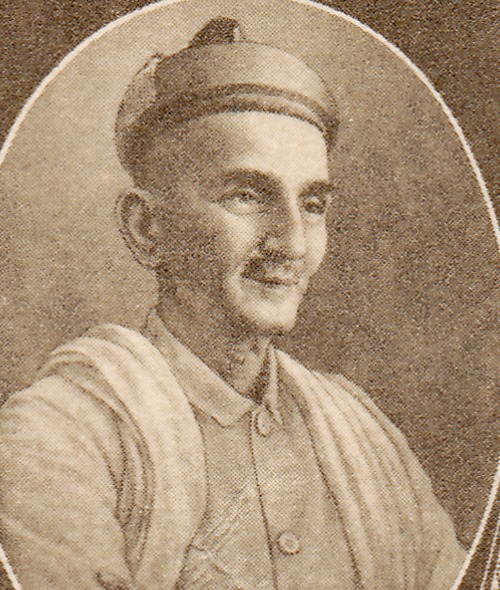 Pandit Vishnu Narayan BhatkhandeContemporary
Contemporary and rival; together credited with reviving classical music for a new public
India Today (2000)- Ustad Rahimat KhanAdmired
Often presented him at Gandharva Mahavidyalaya recitals
Bajakhana — Rahimat Khan
Schools, gurukuls and institutions
Recognition
Honours and recognition
Highest national honour first, then by year.
- 1973Commemorative postage stampIssued by India Post on 21 July 1973, around his birth centenary
- 2000India Today — "100 People Who Shaped India"Named with V. N. Bhatkhande in the art and culture section of the millennium issue
Community
Memories from the community
Personal recollections, not verified history
These are memories shared by listeners and musicians. They sit apart from the sourced biography above, and an editor reads each one before it appears.
- No memories have been shared yet.
Members can share a memory of Pandit Vishnu Digambar Paluskar. Sign in or create an account.
Provenance
Sources and image credits
- B. Chaitanya Deva, "Pandit Vishnu Digambar Paluskar", from An Introduction to Indian Music (Publications Division, Government of India, 1981), via chembur.com (archived)
- S. Kalidas, "Vishnu Bhatkhande and Vishnu Paluskar", India Today, 100 People Who Shaped India (2000, archived)
- Akhil Bharatiya Gandharva Mahavidyalaya Mandal — About us
- Darbar — Pandit D. V. Paluskar
- Rajan Parrikar, "Lost Voices" (2020)
- Wikipedia — Vishnu Digambar Paluskar
Photograph c. 1920s, unknown photographer, reproduced in Govindrao Tembe's Mazha Sangeet Vyasang; public domain, via Wikimedia Commons
Continue exploring
- Gwalior gharanaThe lineage Pandit Vishnu Digambar Paluskar is associated with, and the other musicians documented within it.
- The khayal vocalHow the instrument works, and who else in the archive plays it.
- Akhil Bharatiya Gandharva Mahavidyalaya MandalThe school Pandit Vishnu Digambar Paluskar is connected to — what it teaches and where it is.
- All musiciansBrowse the archive by name, instrument or discipline.