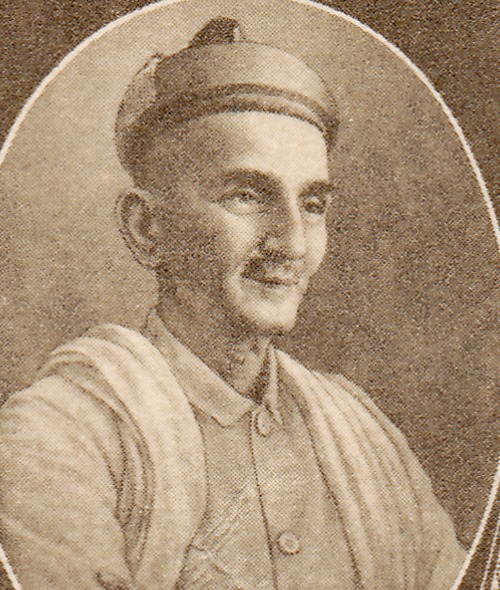
Hindustani classical · 1860–1936
Pandit Vishnu Narayan Bhatkhande
The Bombay lawyer turned musicologist who sorted Hindustani ragas into ten thaats, wrote down thousands of compositions in his own notation, and organised the first All-India Music Conference in 1916.
- Instrument
- Musicologist
- Schools & gurukuls
- Bhatkhande Sanskriti VishwavidyalayaFounder
- Born
- 10 August 1860, Walkeshwar, Bombay
- Died
- 19 September 1936, Walkeshwar, Bombay
Official website & social links
We have no checked official pages for Pandit Vishnu Narayan Bhatkhande yet. Suggest an official link.
Where to start
Begin listening
A special programme on Pandit Vishnu Narayan Bhatkhande
AIR Raagam
All India Radio's own tribute.
All India Radio programme on his life and work.
Pandit Vishnu Narayan Bhatkhande — Pioneer of Hindustani Classical Music
Raaggiri
A quick introduction to his thaats and notation.
Short illustrated account from the Raaggiri trust.
Recordings are embedded from official or authorised channels and never rehosted. Nothing plays on its own, and starting one closes another. Where an editor has added a note, it explains why that recording was chosen — not what happens inside it.
Biography
Life
Vishnu Narayan Bhatkhande was born on 10 August 1860 at Walkeshwar in Bombay. Music was part of home life — his mother sang and his father played the swarmandal as an amateur — and as a boy he learnt the flute and later the sitar. He studied at Elphinstone College, took a law degree from Bombay University in 1887 and practised as a lawyer.
In 1884 he joined the Gayan Uttejak Mandali, a music society in Bombay, where over several years he learnt khayal and dhrupad compositions from musicians including Raojibua Belbagkar and Ali Hussain. After the deaths of his wife and daughter in the early 1900s he gave less and less time to law and, by about 1910, devoted himself entirely to music.
From 1904 he travelled widely. In the south he met Carnatic musicians in Madras, Ramanathapuram and Ettayapuram, and obtained two old treatises that classified ragas, the Chaturdandi Prakashika of Venkatamakhin and the Svaramelakalanidhi of Ramamatya. In 1907–09 he toured central, eastern and northern India, visiting court and temple musicians and comparing different versions of the same compositions. At Rampur he studied with Wazir Khan, a descendant of Tansen.
From this material came his best-known work. He grouped the ragas in use into ten parent scales, or thaats — Bilawal, Kalyan, Khamaj, Bhairav, Poorvi, Marwa, Kafi, Asavari, Bhairavi and Todi. His four-volume Hindustani Sangeet Paddhati, written in Marathi as a dialogue between teacher and student, discussed raga theory in detail. The six-volume Kramik Pustak Malika, published from 1919 and completed after his death, set out more than two thousand traditional compositions in his notation, graded for students. He also wrote lakshan geets, songs that describe a raga's features, and some of his books appeared under the pen-names Vishnu Sharma and Chaturpandit.
Bhatkhande believed that musicians of different traditions should compare and discuss their music openly. In 1916, under the patronage of Maharaja Sayajirao Gaekwad III, he organised the first All-India Music Conference at Baroda, bringing together some four hundred musicians; further conferences followed in Delhi, Banaras and Lucknow. He was asked to reorganise the Baroda state music school, helped set up the Madhav Sangeet Mahavidyalaya in Gwalior, and in 1926, with Rai Umanath Bali and other Lucknow patrons, founded the Marris College of Music in Lucknow — now Bhatkhande Sanskriti Vishwavidyalaya.
After a stroke in 1933 he grew weak, and he died at Walkeshwar on 19 September 1936. His students S. N. Ratanjankar and G. N. Natu carried on his teaching; Ratanjankar in particular shaped what became known as the Bhatkhande tradition. In 1961 India Post issued a stamp in his honour, and in 2000 India Today named him, with his contemporary Vishnu Digambar Paluskar, among the "100 people who shaped India".
Musical contribution
What they brought to music
A scholar more than a performer. His thaat system classifies ragas by their scale and is used mainly for teaching; musicians have long argued that ten thaats cannot hold every raga. His notation, written in Devanagari with marks above and below the letters, became the standard for printed compositions.
In pictures
Photographs
Lineage & company
Teachers, students and musical connections
People
Grouped by the kind of relationship the sources record — who taught this musician, who they taught, family, and the people they played with.
Teachers and gurus
- Raojibua BelbagkarTeacher
Taught him khayal and dhrupad compositions at the Gayan Uttejak Mandali, Bombay
Wikipedia; Mintage World - Ustad Ali HussainTeacher
Taught him compositions at the Gayan Uttejak Mandali, Bombay
Wikipedia; Mintage World - Ustad Wazir Khan (Rampur)Teacher
Studied with him at Rampur during his research travels
Wikipedia — Wazir Khan (Rampur) - G. N. NatuDisciple
Mentored by him and sent to train with Gwalior gharana vocalists
NCPA — Bhatkhande Parampara (2019)
Students and disciples
- Pandit S. N. RatanjankarDisciple
His leading student, who shaped the Bhatkhande tradition
NCPA — Bhatkhande Parampara (2019) - Vadilal ShivramDisciple
With Bhatkhande set up the Shri Sharada Sangit Mandal in Bombay by 1916
Scroll.in (2016)
Other recorded connections
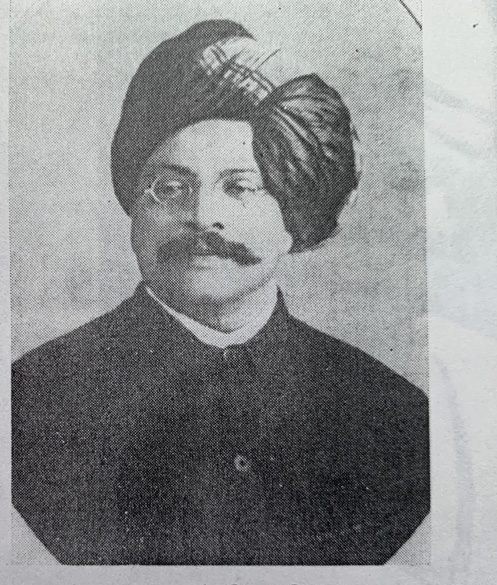 Pandit Vishnu Digambar PaluskarContemporary
Contemporary and rival; together credited with reviving classical music for a new public
India Today (2000)- Ustad Bundu KhanInformant
The sarangi master supplied him with material for his research
Bundu Khan — sarangi.net - Rai Umanath BaliPatron and co-founder
Helped him found the Lucknow music college in 1926
Bhatkhande Sanskriti Vishwavidyalaya — History
Schools, gurukuls and institutions
Recognition
Honours and recognition
Highest national honour first, then by year.
- 1961Commemorative postage stampIssued by India Post on 1 September 1961
- 2000India Today — "100 People Who Shaped India"Named with V. D. Paluskar in the art and culture section of the millennium issue
Community
Memories from the community
Personal recollections, not verified history
These are memories shared by listeners and musicians. They sit apart from the sourced biography above, and an editor reads each one before it appears.
- No memories have been shared yet.
Members can share a memory of Pandit Vishnu Narayan Bhatkhande. Sign in or create an account.
Provenance
Sources and image credits
- S. Kalidas, "Vishnu Bhatkhande and Vishnu Paluskar", India Today, 100 People Who Shaped India (2000, archived)
- Bhatkhande Sanskriti Vishwavidyalaya — History (official site)
- "The pioneering conference a century ago that aimed to preserve Indian classical music", Scroll.in (2016)
- Maharaja Sayajirao University of Baroda — Department of Indian Classical Vocal Music, About
- NCPA — Bhatkhande Parampara, lecture-demonstration by Ramdas Bhatkal (2019)
- V. Sriram, "Bhatkhande's pan-Indian music journey" (2019)
- Mintage World — Birth of the Architect of the Hindustani Classical Music
- Wikipedia — Vishnu Narayan Bhatkhande
Photograph: Detail of the 1961 India Post commemorative stamp; Government Open Data Licence – India, via Wikimedia Commons
Continue exploring