13 September 2026
The instrument she was told not to play: Jyoti Hegde and the rudra veena
She heard the rudra veena at a lecture-demonstration, and her own teacher refused to teach it to her. What followed is one of the better-documented stories of persistence in recent Hindustani music.
By Indian Music Archive Editorial
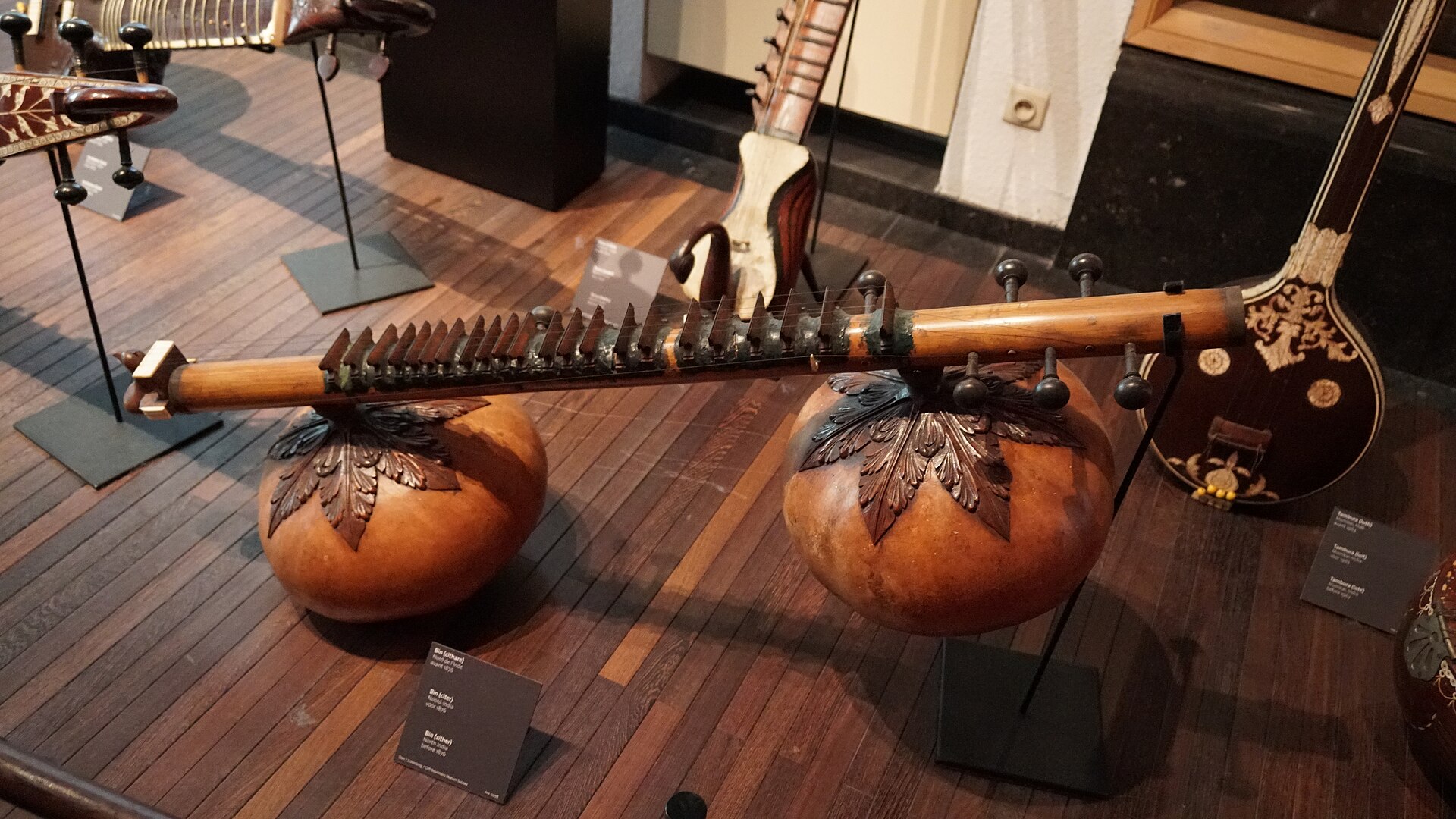
The rudra veena is the most austere instrument in Hindustani music: a long stick zither with two large gourd resonators, a bass register that decays slowly, and a repertoire rooted in dhrupad, the oldest surviving form of North Indian classical singing. It is heavy, it is difficult, and for much of the twentieth century almost nobody played it in public. Vidushi Jyoti Hegde is described in the Indian press as the first — and so far the only — woman performing artiste on it.
This is not a full biography; her archive page carries that. It is about one thing: how she came to the instrument, and what she says it asks of a player.
A sound heard once
Hegde did not come from a musical family. She was learning the sitar from Dr Bindu Madhav Pathak, a sitar and rudra veena player, when he played the veena at a lecture-demonstration. In her own account the sound changed the direction of her life: the gambhirta — the gravity, the weight — of the veena's tone struck her as entirely unlike the chanchalata, the restless quickness, of the sitar.
Her teacher refused to teach it to her, telling her the instrument was not a woman's domain. He eventually agreed with her father to lend her an old and awkward veena, in the expectation that she would give up. She has described going to his house early in the morning for a single exercise and then practising that one phrase for the rest of the day. Instead of abandoning it, she worked at it until he advised her father to buy her a good instrument — the one she says she still plays.
The results arrived quickly enough to be a matter of record. She won first prize for rudra veena in the Akhil Bharatiya Akashvani Sangeet Spardha in 1981-82, won the Karnataka Youth Festival three years running from 1981 to 1983, and was taken on as a regular artist at All India Radio, where she is a Grade-A artist on both rudra veena and sitar.
From khayal towards dhrupad
Her training moved over time from khayal, the elaborated vocal form most Hindustani instrumentalists take their phrasing from, towards dhrupad, which is slower, plainer and far more demanding in its treatment of a single note. After Pathak she learned from Indudhar Nirody at Dharwad, and later became a disciple of Ustad Asad Ali Khan, of the Jaipur beenkar family and widely described as the last master of the khandar bani style. The Hindu reports that she began with him at the age of thirty-five — an unusually late start with a new guru, and on the instrument he was known for above all others.
She has said the rudra veena, alone among Indian string instruments, asks the player for the breath discipline of a dhrupad singer, and she describes her own practice as a form of nada yoga. Her playing follows Asad Ali Khan's khandarbani manner and is audibly shaped by the sitar work she never stopped.
Where she has been heard
She made her Darbar Festival debut in London in 2014 and returned in 2023. Her recording Rare Instruments — Rudra Veena was issued in 2012. In 2025 she played raag Bairagi Bhairav — a raga she learned from Pathak rather than from Asad Ali Khan — at a Delhi event marking World Music Day and International Yoga Day, and spoke there about the breath control the veena demands.
The archive holds three verified performances: Raag Bhairagi Bhairav, Raag Lalit and Raag Poorvi. Begin with any of them and give it room; on this instrument the long opening is the performance, not the preamble.
A note on the record
Accounts of her birthplace differ. One reference work gives Sirsi in North Kanara; in a 2015 interview she says she was born in Dharwad, where her father was a range forest officer, and grew up in Belgaum and Sirsi. We have left the difference standing rather than choosing between them, as we do elsewhere in the archive when sources disagree.
Musicians in this story
Foundational figures first, then by birth year.
Sources
Related reading
Other stories about the same musicians.
Continue exploring
If this was worth your time, pass it on.
Conversation
Discussion, questions and listening notes. Anything meant to become part of the archive itself goes through editorial review first.
- No one has written here yet.
Members can take part in the conversation. Sign in or create an account.