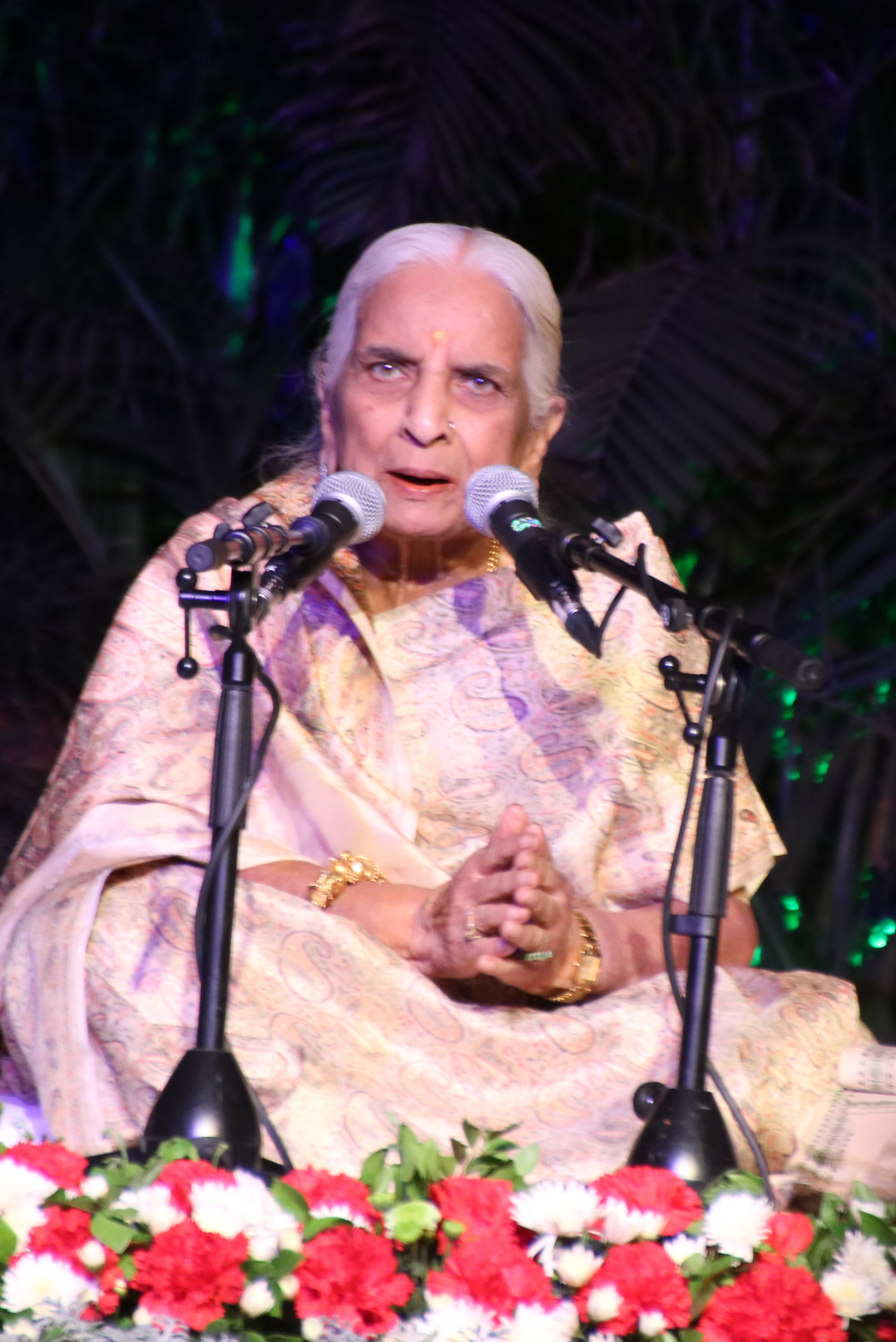
Hindustani classical · 1929–2017
Girija Devi
The voice that kept the thumri of Banaras on the concert platform.
- Instrument
- Khayal vocalThumri
- Gharana
- Benares gharana (vocal)
- Schools & gurukuls
- ITC Sangeet Research AcademyEarly facultyPrayag Sangeet SamitiPerformed at the Samiti
- Born
- 8 May 1929, Benares, Benares (Varanasi)
- Died
- 24 October 2017, Kolkata, Kolkata, West Bengal
Official website & social links
We have no checked official pages for Girija Devi yet. Suggest an official link.
Where to start
Begin listening
Thumri "Mad Se Bhare Tore Nain"
Saregama · Saregama Hindustani Classical
Bhairavi (purab ang) — "Nahak Laaye Gawanwa"
Bhairavi · Saregama · Saregama Hindustani Classical
Recordings are embedded from official or authorised channels and never rehosted. Nothing plays on its own, and starting one closes another. Where an editor has added a note, it explains why that recording was chosen — not what happens inside it.
Biography
Life
Girija Devi was born in Benares on 8 May 1929. Her father, Ramdeo Rai, played the harmonium and sang, and she began learning at about five with Sarju Prasad Misra, who taught her khayal and the difficult tappa. She continued later with Chand Misra, in thumri and the lighter classical forms.
She was married at fifteen. Her husband supported her singing, but there was strong opposition within the household to a woman of the family performing in public. She persisted, and made her first broadcast on All India Radio Allahabad in 1949, followed by her first public concert at a conference in Bihar in 1951.
Over the following decades she became the leading exponent of the purab ang, the eastern manner of thumri, and one of the last singers at ease across khayal, thumri, tappa, kajri, chaiti and dadra alike.
In the 1980s she moved to Kolkata to teach at the ITC Sangeet Research Academy, and she also taught at Banaras Hindu University. Her students include Malini Awasthi and Sunanda Sharma.
She performed almost until the end of her life, and died of cardiac arrest in Kolkata on 24 October 2017, aged eighty-eight.
The Hindu's account by Meena Banerjee fills in how the training began. She was born on 8 May 1929 in a village near Varanasi; her father Ramdeo Rai, a Bhumihar Brahmin zamindar, was passionate about music and would travel into the city for lessons with the child in tow, which led to her own early study under Sarju Prasad Misra, a vocalist and sarangi player. After his death she continued with Shrichand Mishra for as long as he lived, and she kept up the obligation afterwards, saying that she still looked after her gurus' families and expected the same devotion from her own students.
Her marriage shaped her career in a specific way. Madhusudan Jain, a Varanasi businessman who loved literature and music, married her when she was twenty-four and encouraged her singing on one condition: that she would not perform at private mehfils. The public route followed instead — a first radio broadcast from Allahabad in 1949 and a debut concert in 1951 — and Ravi Shankar introduced her to the Delhi circle around Sumitra Charat Ram, after which her reputation spread quickly.
The tabla player Aneesh Pradhan, writing for Scroll, describes the singing itself: a voice "bold and strident, albeit with a sharp metallic edge and a nasal twang", a thumri elaboration carrying "poise and dignity matched with the pukaar", the cry of the nayika, and sparkling tappa, a form demanding "immense vocal dexterity". Chaiti, kajri and jhoola sat in her concerts beside khayal, sung by someone for whom they were not exotica but the music of her own place. As Pradhan puts it, her singing "was a lesson to those in the present generation who treat the thumri-dadra genre as an afterthought".
She taught for many years as a guru at the ITC Sangeet Research Academy, which on her death called her "a doyen of Hindustani classical music and beloved ITC Sangeet Research Academy Guru". Her age at death is reported inconsistently: The Hindu and Meena Banerjee give 88, Scroll gives 87. She died in Kolkata on 24 October 2017 after a cardiac arrest, with concerts at Jaipur and Pune still in her diary.
Musical contribution
What they brought to music
The purab ang thumri that Girija Devi carried is built on bol-banao — turning a single line of text over and over, drawing a different shade of feeling from it each time. Where the Punjabi manner of thumri leans on rhythmic play, hers worked through melodic elaboration, and required both classical grammar and an actor's sense of a phrase.
She also kept alive repertoire that could easily have been lost: tappa, with its rapid broken runs, and the seasonal songs of eastern Uttar Pradesh — kajri for the monsoon, chaiti for the spring. By singing them with full classical seriousness she moved them from the salon to the concert hall, and made the case that the semi-classical forms were not a lesser art.
Life in dates
Timeline
1929
Born in Benares
Born on 8 May; begins learning at about five.
1949
First broadcast
Sings on All India Radio, Allahabad.
1951
First public concert
Performs at a music conference in Bihar.
1972
Padma Shri
Awarded by the Government of India.
1980s
Moves to Kolkata to teach
Joins the ITC Sangeet Research Academy as a guru.
1989
Padma Bhushan
Awarded by the Government of India.
2016
Padma Vibhushan
India's second-highest civilian honour.
2017
Dies in Kolkata
Dies on 24 October, aged eighty-eight.
In pictures
Photographs
Lineage & company
Teachers, students and musical connections
In the documented teaching trees
Where the archive's lineage research places Girija Devi, and the teaching links recorded around them inside each tree.
Tappa lineage1929–2017
One of the last singers to perform Benares tappa regularly in concert.
Taught in this tree by: Sarju Prasad Misra
Benares gharana (vocal)1929–2017
Carried Benares thumri into the modern concert hall and taught widely.
Taught in this tree by: Sarju Prasad Misra
People
Grouped by the kind of relationship the sources record — who taught this musician, who they taught, family, and the people they played with.
Teachers and gurus
- Sarju Prasad MisraFirst teacher
Taught her khayal and tappa from about the age of five.
Girija Devi — Wikipedia - Chand MisraTeacher
Taught her thumri and the semi-classical forms.
Girija Devi — Wikipedia - Shrichand MishraTeacher
Her second guru, with whom she continued to study after Sarju Prasad Misra's death and for as long as he lived.
The end of an era — The Hindu - ITC Sangeet Research AcademyInstitution
Long-serving guru at the academy, which called her "a doyen of Hindustani classical music and beloved ITC Sangeet Research Academy Guru".
ITC press release, 25 October 2017
Students and disciples
- Malini AwasthiStudent
Folk and semi-classical singer.
Girija Devi — Wikipedia
Family
- Ramdeo RaiFather
Zamindar of a village near Varanasi whose own music lessons in the city began her training.
The end of an era — The Hindu
Other recorded connections
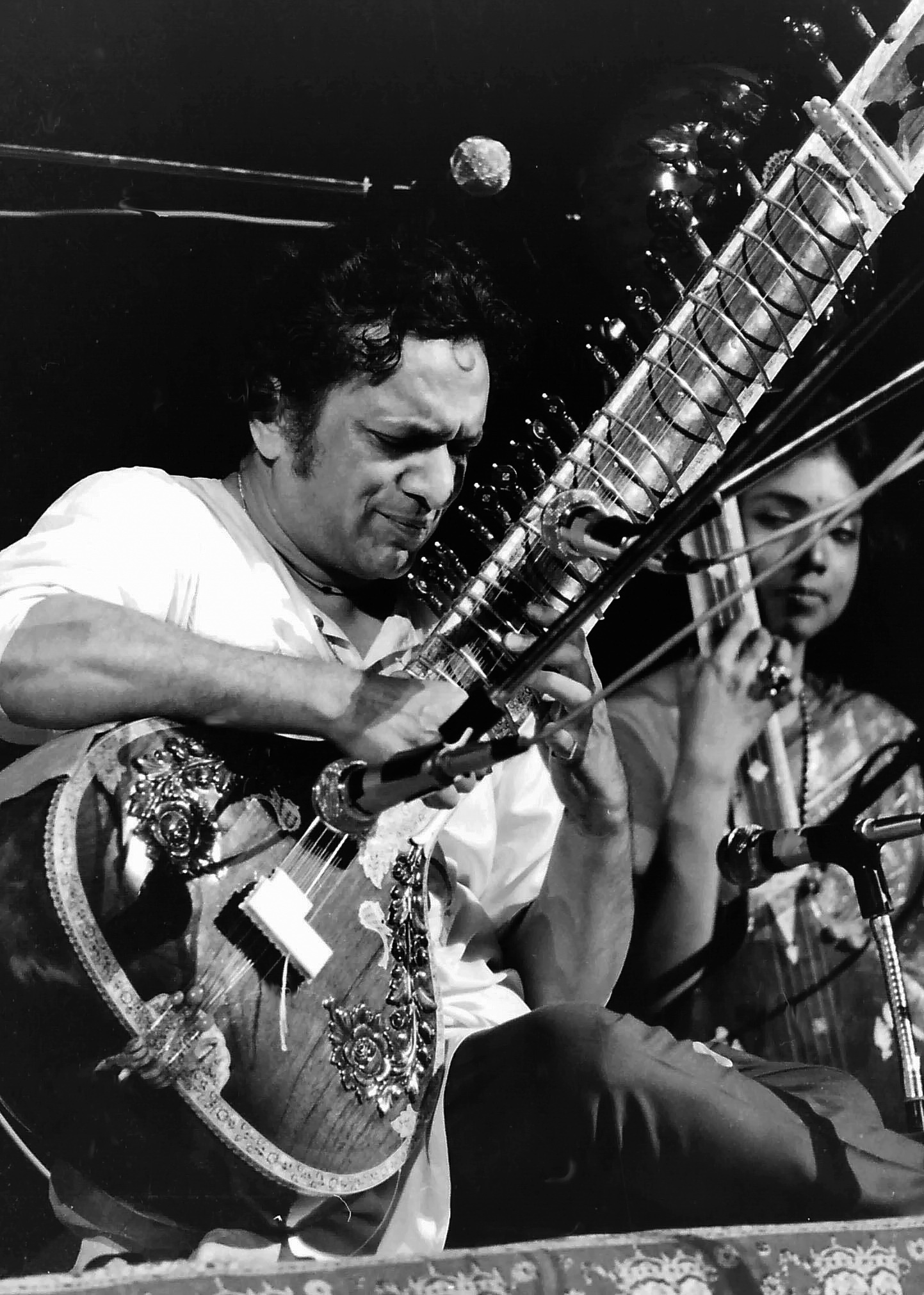 Pandit Ravi ShankarSupporter
Introduced her to the Delhi circle around Sumitra Charat Ram, after which her reputation spread quickly.
The end of an era — The Hindu
Schools, gurukuls and institutions
- ITC Sangeet Research Academy
Early faculty
- Prayag Sangeet Samiti
Performed at the Samiti
Recognition
Honours and recognition
Highest national honour first, then by year.
- 2016Padma Vibhushan
- 1989Padma Bhushan
- 1972Padma Shri
- 2010Sangeet Natak Akademi Fellowship
- 1977Sangeet Natak Akademi Award
Writing
From the journal
Community
Memories from the community
Personal recollections, not verified history
These are memories shared by listeners and musicians. They sit apart from the sourced biography above, and an editor reads each one before it appears.
- No memories have been shared yet.
Members can share a memory of Girija Devi. Sign in or create an account.
Provenance
Sources and image credits
- The end of an era — The Hindu (Meena Banerjee), 27 October 2017
- ITC mourns the demise of Vidushi Girija Devi — ITC press release, 25 October 2017
- 'Queen of Thumri' Girija Devi dead — The Hindu, 25 October 2017
- Girija Devi — Wikipedia
- Girija Devi, 1929–2017 — Scroll.in
Photograph via Wikimedia Commons, CC BY-SA 4.0
Continue exploring
- Benares gharana (vocal)The lineage Girija Devi is associated with, and the other musicians documented within it.
- The khayal vocalHow the instrument works, and who else in the archive plays it.
- The thumriHow the instrument works, and who else in the archive plays it.
- ITC Sangeet Research AcademyThe school Girija Devi is connected to — what it teaches and where it is.
- All musiciansBrowse the archive by name, instrument or discipline.