
Hindustani classical · born 1952
Pandit Ajoy Chakrabarty
A Patiala-Kasur khayal singer, the first scholar of the ITC Sangeet Research Academy, and founder of the Kolkata music school Shrutinandan.
- Instrument
- Khayal vocalThumri
- Gharana
- Patiala gharana
- Schools & gurukuls
- ITC Sangeet Research AcademyGuru, and alumnusBharatiya Vidya Bhavan, LondonPerformed at the centreSaptak School of MusicPerformed at the Saptak festival
- Born
- 25 December 1952, Kolkata
Official website & social links
We have no checked official pages for Pandit Ajoy Chakrabarty yet. Suggest an official link.
Where to start
Begin listening
Start here
Raga Yaman at Swar Utsab
Yaman · One n Only Pandit Ajoy Chakraborty
A full khayal from his own channel.
Recorded live in 2016.
Explore further
Raga Bhairavi at the ITC Sangeet Research Academy
Bhairavi · One n Only Pandit Ajoy Chakraborty
Closing bhairavi, sung at the academy he trained in.
Recorded live in 2019 at the academy where he was the first scholar.
Explore further
Dadra in Mishra Sindhu Bhairavi
darbarfestival
The lighter repertoire he programmes after the khayal.
Recordings are embedded from official or authorised channels and never rehosted. Nothing plays on its own, and starting one closes another. Where an editor has added a note, it explains why that recording was chosen — not what happens inside it.
On screen
Songs & films
- Vocalist
- Teacher
- Composer
Biography
Life
Ajoy Chakrabarty was born in Kolkata on 25 December 1952 to Ajit Kumar Chakrabarty and Mahamaya Devi. His father was his first teacher. He took his B.A. and M.A. in music at Rabindra Bharati University, and in 1977 became the first scholar to graduate from the ITC Sangeet Research Academy.
Beyond his father he studied with Pannalal Samanta, Kanaidas Bairagi, Munawar Ali Khan and Pandit Jnan Prakash Ghosh, and took further training from Latafat Hussain Khan, Nivruttibua Sarnaik and Hirabai Barodekar. He also studied Carnatic music with Dr M. Balamuralikrishna. Alongside khayal he sings thumri, tappa, bhajan, kirtan and lighter and film repertoire in several languages.
He has performed at Carnegie Hall, the Kennedy Center and Preservation Hall in the United States, the Royal Albert Hall and Queen Elizabeth Hall in London, the Théâtre de la Ville in Paris, and the Aga Khan Museum in Toronto. Inspired by his guru Jnan Prakash Ghosh, he founded Shrutinandan, where he teaches; his daughter Kaushiki Chakraborty trained there alongside her academy study.
His honours include the Kumar Gandharva National Award (1993), the Sangeet Natak Akademi Award (1999–2000), the Padma Shri (2011), the Banga Bibhushan and Maha Sangeet Samman (2012), the National Tansen Samman (2015) and the Padma Bhushan (2020).
His own account of his training, on the Shrutinandan website, names more teachers than any single gharana label allows. The first guidance came from his father Ajit Kumar Chakraborty, with Pannalal Samanta and Kanaidas Bairagi, before he was accepted by Jnan Prakash Ghosh; the training then continued under Munawar Ali Khan, son of Bade Ghulam Ali Khan, which is the direct line behind his claim on the Patiala-Kasur gayaki. He also studied with Latafat Hussain Khan of the Agra gharana, Nivrittibua Sarnaik, Hirabai Barodekar, and — in the Carnatic idiom — M. Balamuralikrishna.
The institutional side of his career runs through the ITC Sangeet Research Academy, which he joined in 1977 as its first outstanding scholar, becoming its only gold medallist fellow, a member of its experts' committee and a senior guru. He graduated top of his class in music for both his BA and MA at Rabindra Bharati University in Kolkata. He teaches at Shrutinandan, the school he founded in Tollygunge, Kolkata.
The honours are recorded slightly differently by different bodies. His own site lists the Sangeet Natak Akademi Award for 1999–2000, the Kumar Gandharva Samman of 1993, the Best Male Playback Singer award for the Bengali film Chhandaneer in 1990, and the Padma Shri in 2011; Wikipedia adds the Padma Bhushan in 2020. He has sung and recorded widely outside the classical forms as well — thumri, tappa, kirtan, folk and film songs, in Hindi, Urdu, Bengali, Tamil, Telugu and Persian.
Musical contribution
What they brought to music
Patiala-Kasur khayal: a wide-ranging voice used for elaborate taan work and ornament, and a recital habit of following the khayal with thumri, tappa or a Bengali song rather than closing on the raga alone.
Life in dates
Timeline
1952
Born in Kolkata
His father Ajit Kumar Chakrabarty was his first teacher.
1977
First scholar to graduate from the ITC Sangeet Research Academy
1993
Kumar Gandharva National Award
2011
Padma Shri
2020
Padma Bhushan
In pictures
Photographs
Lineage & company
Teachers, students and musical connections
Documented teaching lineage
Taught Kaushiki Chakraborty
She trained with him at his school Shrutinandan.
Wikipedia — Kaushiki ChakrabortyTaught by Ajit Kumar Chakrabarty
Wikipedia — Ajoy ChakrabartyTaught by Pandit Jnan Prakash Ghosh
Shrutinandan was founded in the spirit of his teaching.
Wikipedia — Ajoy ChakrabartyTaught by Munawar Ali Khan
Wikipedia — Ajoy Chakrabarty
Teaching, family, collaboration and influence are recorded separately here; none is ever inferred from another.
In the documented teaching trees
Where the archive's lineage research places Pandit Ajoy Chakrabarty, and the teaching links recorded around them inside each tree.
Patiala gharanaborn 1952
A leading Patiala singer and founder of a large teaching school in Kolkata.
Taught in this tree by: Jnan Prakash Ghosh, Munawar Ali Khan
People
Grouped by the kind of relationship the sources record — who taught this musician, who they taught, family, and the people they played with.
Teachers and gurus
 Pandit Jnan Prakash GhoshTeacher
Named on his own site as the guru who accepted him after his first teachers in Kolkata.
Shrutinandan — Gurus- Ustad Munawar Ali KhanTeacher
Son of Bade Ghulam Ali Khan, under whom his Patiala-Kasur training continued.
Shrutinandan — Biography - Ustad Latafat Hussain KhanTeacher
Agra gharana vocalist, one of the several maestros he names among his teachers.
Shrutinandan — Biography 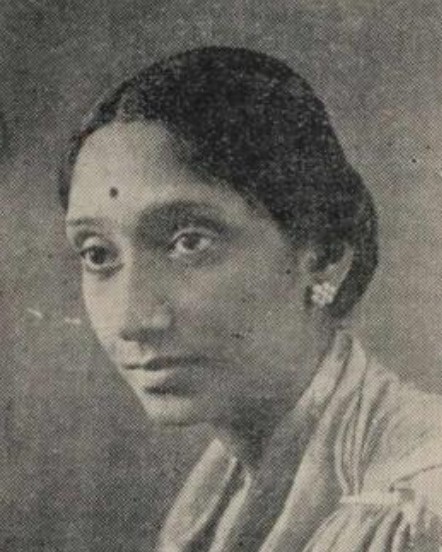 Vidushi Hirabai BarodekarTeacher
Named among the musicians he learned from beyond his principal gurus.
Shrutinandan — Biography- Dr M. BalamuralikrishnaTeacher
Carnatic musician from whom he studied south Indian style.
Shrutinandan — Biography - ITC Sangeet Research AcademyInstitution
Joined in 1977 as its first outstanding scholar; its only gold medallist fellow, and later a senior guru and expert-committee member.
Shrutinandan — Biography
Students and disciples
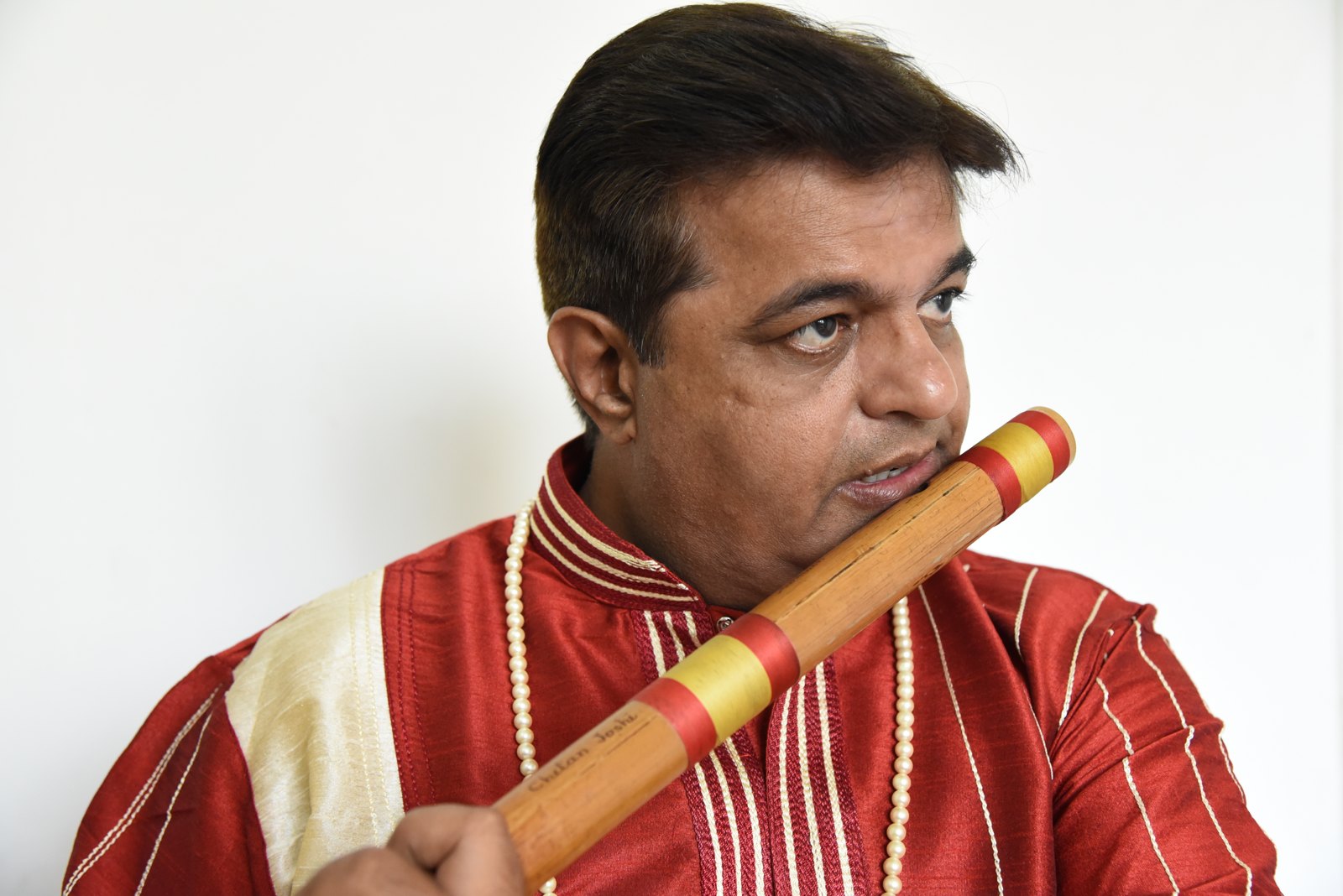
Family
 Kaushiki Chakrabortydaughter and student
He accompanied her on harmonium for her 2003 live album "Pure".
Wikipedia — Kaushiki Chakraborty- Ajit Kumar ChakrabortyFather and first teacher
Named on his own site as his first guru, alongside Pannalal Samanta and Kanaidas Bairagi.
Shrutinandan — Gurus
Collaborators and accompanists
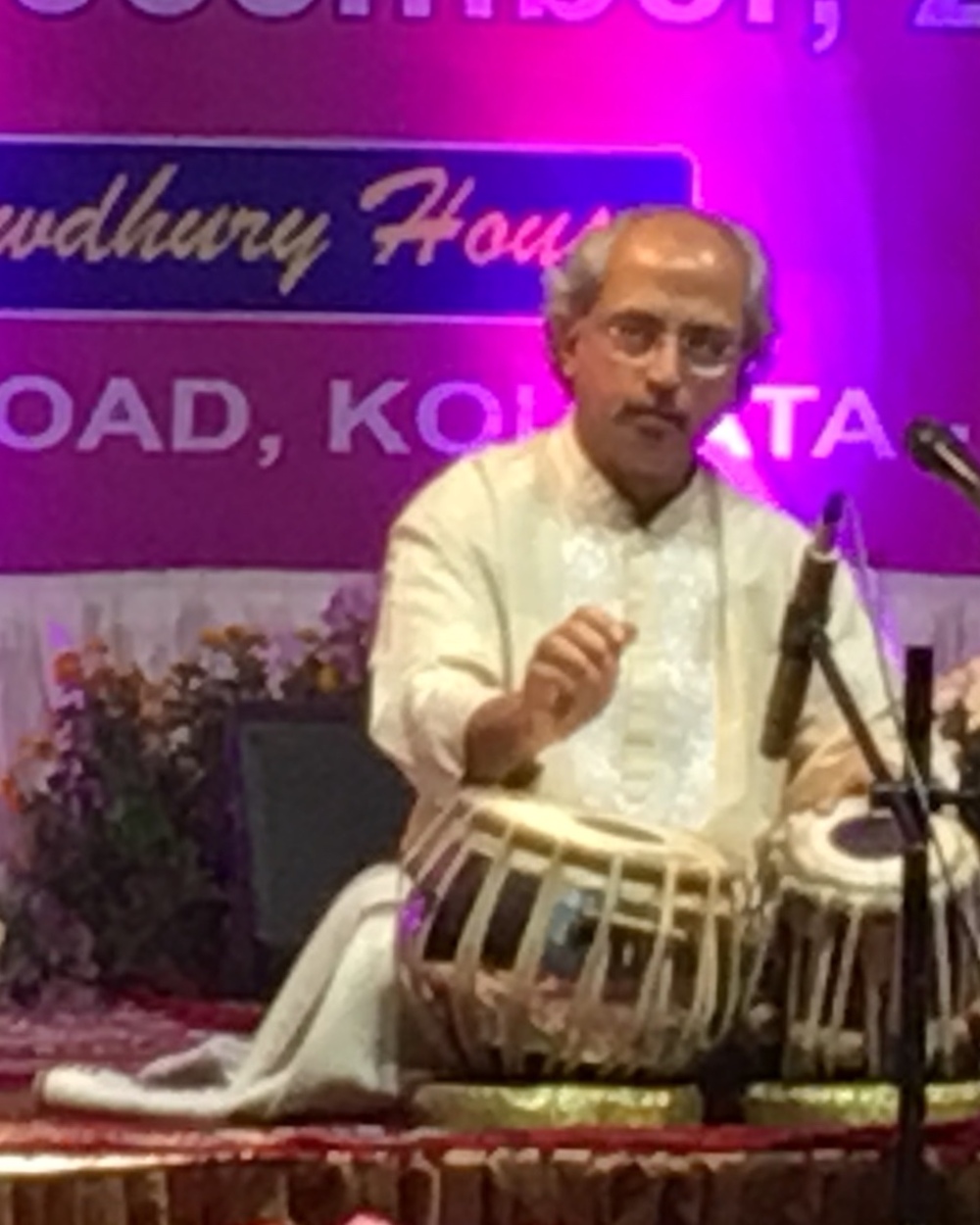 Pandit Yogesh SamsiTabla accompanist
Has accompanied him in concert.
Yogesh Samsi — official site
Other recorded connections
- ShrutinandanInstitution
The music school he founded and teaches at, in Tollygunge, Kolkata.
Shrutinandan official site
Named on other pages
Musicians whose own pages record a connection with this one, in the words their sources use.
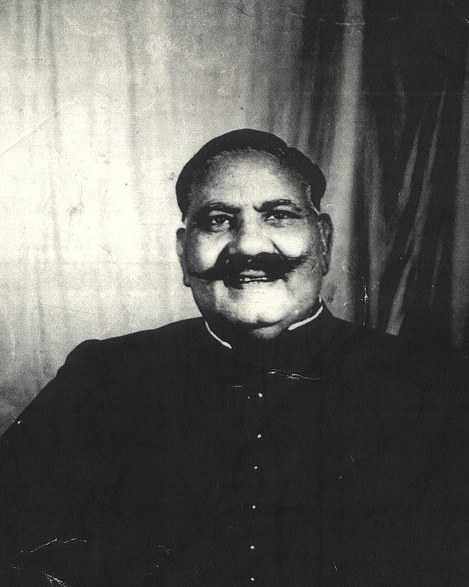 Bade Ghulam Ali KhanTheir page records: Gharana successor
Trained by Bade Ghulam Ali Khan's son Munawar Ali Khan, and regarded as a leading exponent of the Patiala-Kasur gayaki.
Schools, gurukuls and institutions
- ITC Sangeet Research Academy
Guru, and alumnus
- Bharatiya Vidya Bhavan, London
Performed at the centre
- Saptak School of Music
Performed at the Saptak festival
Recognition
Honours and recognition
Highest national honour first, then by year.
- 2020Padma Bhushan
- 2011Padma Shri
- 1999–2000Sangeet Natak Akademi Award
- 1993Kumar Gandharva National Award
- 1993Kumar Gandharva Samman
- 2015National Tansen SammanGovernment of Madhya Pradesh.
Writing
From the journal
The corporate gurukul: how ITC built a music school around a tradition
When princely patronage ended, a tobacco company built a residential campus in Kolkata and called it a gurukul. What the documented record shows about how that transplant worked — and what it does not say.
Your first evening with Indian classical music
Where to begin, what to expect, and five performances already in the archive that reward an unhurried first listen.
Community
Memories from the community
Personal recollections, not verified history
These are memories shared by listeners and musicians. They sit apart from the sourced biography above, and an editor reads each one before it appears.
- No memories have been shared yet.
Members can share a memory of Pandit Ajoy Chakrabarty. Sign in or create an account.
Provenance
Sources and image credits
Continue exploring
- Patiala gharanaThe lineage Pandit Ajoy Chakrabarty is associated with, and the other musicians documented within it.
- The khayal vocalHow the instrument works, and who else in the archive plays it.
- The thumriHow the instrument works, and who else in the archive plays it.
- ITC Sangeet Research AcademyThe school Pandit Ajoy Chakrabarty is connected to — what it teaches and where it is.
- All musiciansBrowse the archive by name, instrument or discipline.