13 September 2026
Your first evening with Indian classical music
Where to begin, what to expect, and five performances already in the archive that reward an unhurried first listen.
By Indian Music Archive Editorial
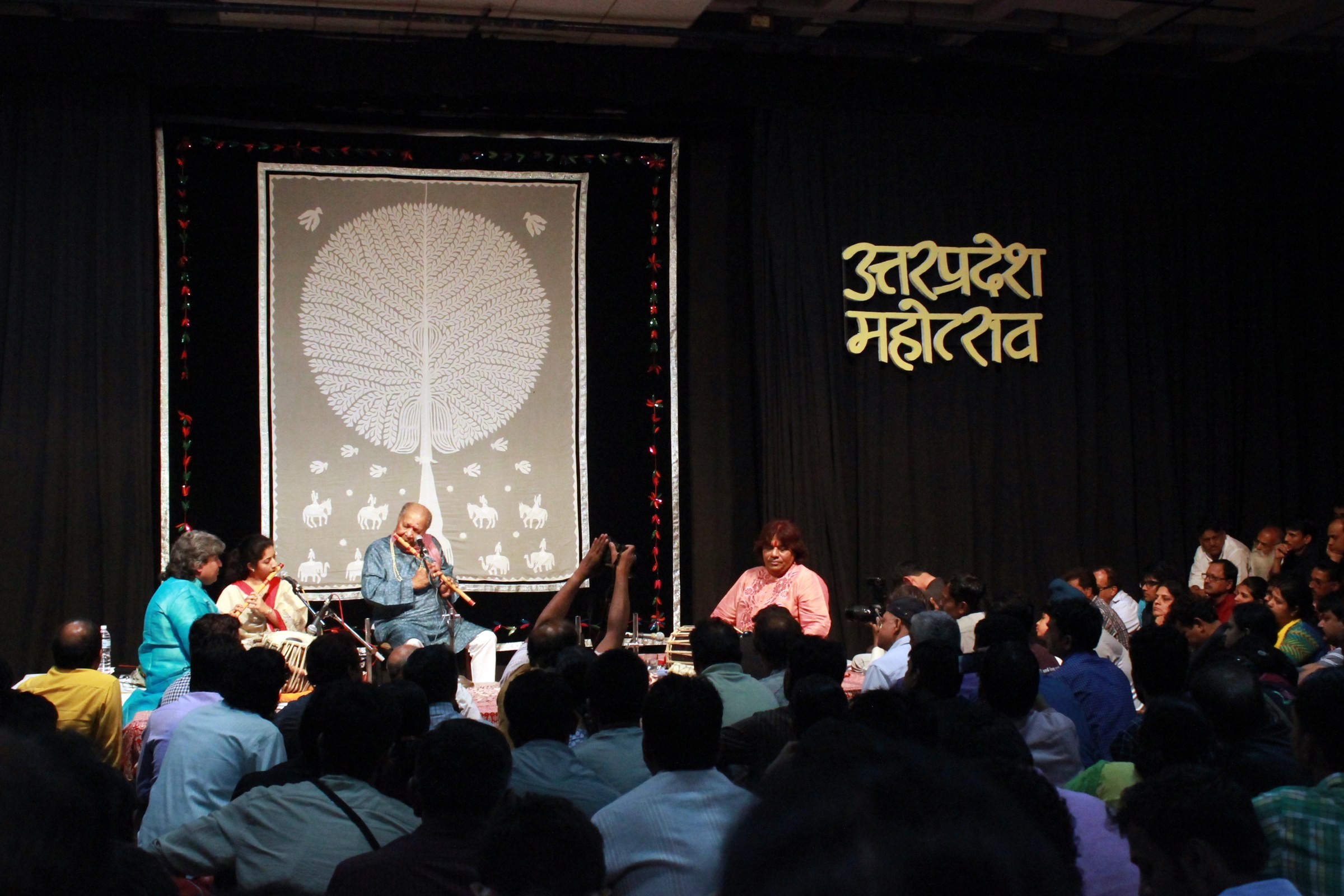
Indian classical music asks for something most music today does not: a stretch of time. A raga is not a song with a beginning, a chorus and an end. It is a set of notes with rules about how they may be approached, ornamented and left, and a performance is the act of exploring those rules in front of an audience. Nothing is hurried, because nothing is being delivered — it is being discovered, slowly, in the room.
That is the whole difficulty for a newcomer, and also the whole reward. This guide is a way in: what the shape of a performance usually is, what to listen for, and five recordings already catalogued in this archive that make good first company.
The shape of a performance
Most Hindustani instrumental recitals open with an alap: a slow, free section with no drum, where the player introduces the notes of the raga one at a time and tests the space between them. There is no beat to hold on to here, and that is deliberate. If the opening minutes feel formless, they are meant to — the pulse has not arrived yet.
Rhythm enters when the tabla does. From there the music moves into composed material set in a tala, a repeating rhythmic cycle, and the cycle becomes the frame for improvisation. Vocal music follows a related arc: khayal, the dominant Hindustani vocal form, unfolds from a slow composition into faster elaboration.
Two things are worth knowing before you start. The drone you hear underneath everything is the tanpura, and it never changes; it is the fixed horizon that makes every other note mean something. And the accompanist is not background. In a good concert the tabla player and the soloist are in conversation, and much of the pleasure of a live recording lies in hearing them listen to each other.
What to listen for
Do not try to follow a tune. Follow one note instead. Pick whichever note the musician keeps returning to and notice how differently it is arrived at each time — from above, from below, through a glide, with a shake. That returning is the raga establishing itself.
Then notice the arc. Nearly every performance slowly gains speed and density. If you come back to the same recording twice, you will start to feel where those gear changes happen, and the long opening will stop feeling long.
Five performances to begin with
Raga Yaman at Swar Utsab, sung by Pandit Ajoy Chakrabarty. Yaman is the raga most often taught first, and khayal singing is the central Hindustani vocal form. A good place to hear how a single raga is built from the ground up.
Raag Bhimpalasi on the bansuri, played by Rakesh Chaurasia. The bamboo flute is the gentlest possible introduction to this music: the tone is close to a human voice, and the glides between notes are unmistakable.
Sarangi solo, Raga Jog by Pandit Dhruba Ghosh. The sarangi is bowed and fretless, so the pitch slides continuously. Once you have heard it, you hear singing differently.
Tabla solo in teentaal by Ojas Adhiya. A solo recital where the drum is the whole event rather than the accompaniment, in the sixteen-beat cycle you will meet most often.
Raga Shanmukhapriya on the Saraswati veena, played by Jayanthi Kumaresh. South India's Carnatic tradition is a separate world with its own repertoire and vocabulary, and this is a long, unaccompanied way into it.
How to spend the evening
One recording, once, without a second screen. If your attention drifts in the slow opening, let it drift and come back; nobody follows every phrase, including people who have listened for decades.
Every recording above is embedded from an official or authorised channel and nothing plays by itself. When one holds you, the musician's page in this archive will tell you who taught them, what they play, and where to go next. That is usually a better guide than any list.
Musicians in this story
Foundational figures first, then by birth year.
Sources
- Catalogue entries and embedded recordings in this archive, each verified against an official or authorised channel
- Britannica, "Raga" — a raga as a scale with a characteristic order of notes and motifs
- Jameela Siddiqi, "Performance format for Hindustani instrumental music: alap, jor and jhalla", Darbar Festival
- "An introduction to khayal: highly ornamented song", Darbar Festival
- Britannica, "Khayal" — the slow (vilambit) khayal followed by a faster (drut) khayal in the same raga
- Aneesh Pradhan, "Prescribed for the evening, this raag is a many-splendoured thing", Scroll.in — Yaman as a first raag taught across gharanas
- Raga profile: Yaman, Darbar Festival
- Britannica, "Carnatic music" — the southern tradition and its own repertoire of ragas and talas
Related reading
Other stories about the same musicians.
The corporate gurukul: how ITC built a music school around a tradition
When princely patronage ended, a tobacco company built a residential campus in Kolkata and called it a gurukul. What the documented record shows about how that transplant worked — and what it does not say.
Getting to know the bansuri
A length of bamboo with six or seven holes, and no moving parts at all — how the Indian flute makes its sound, and how it became a classical concert instrument within living memory.
Continue exploring
If this was worth your time, pass it on.
Conversation
Discussion, questions and listening notes. Anything meant to become part of the archive itself goes through editorial review first.
- No one has written here yet.
Members can take part in the conversation. Sign in or create an account.