13 September 2026
Getting to know the bansuri
A length of bamboo with six or seven holes, and no moving parts at all — how the Indian flute makes its sound, and how it became a classical concert instrument within living memory.
By Indian Music Archive Editorial
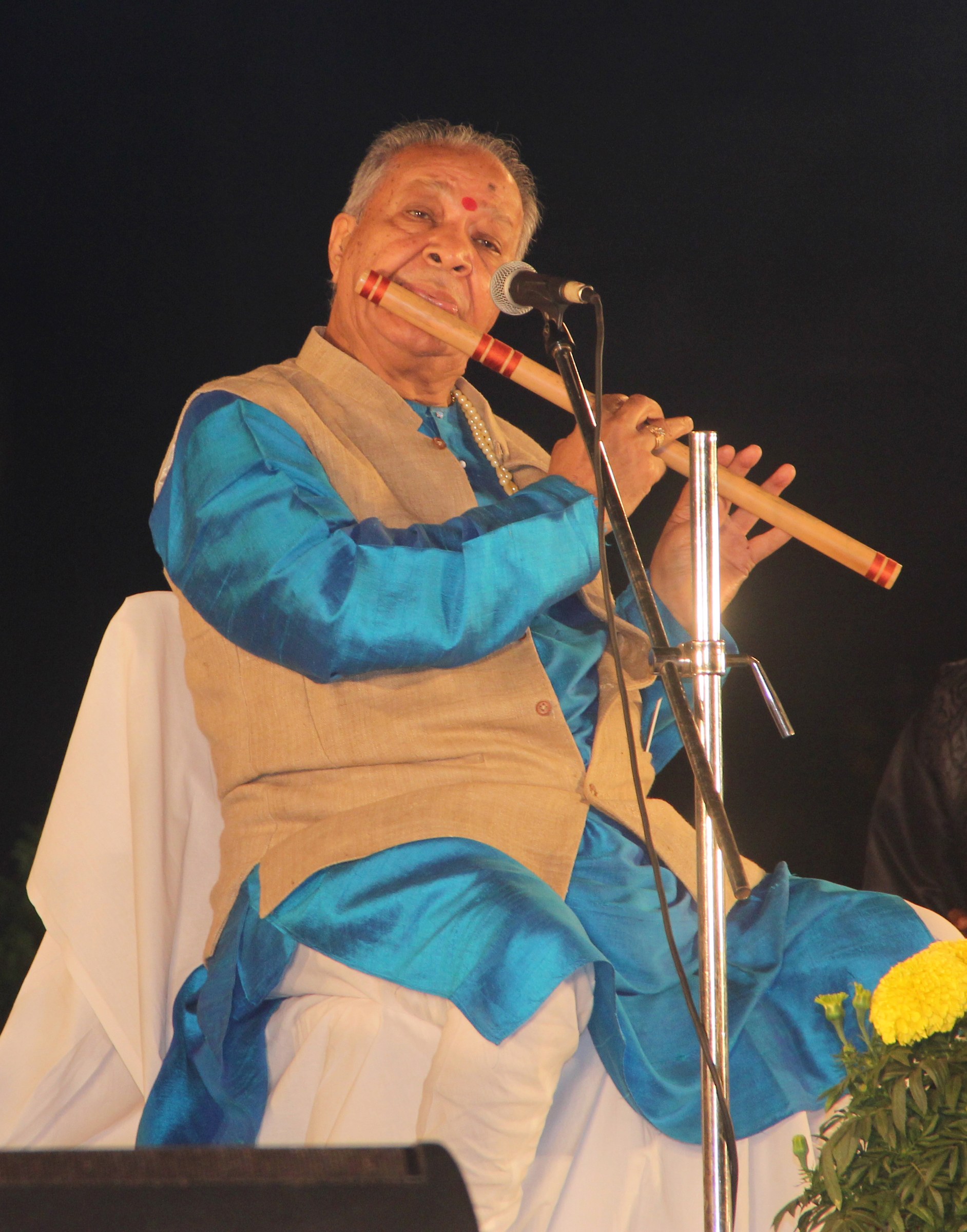
The bansuri is the plainest instrument in Hindustani music to look at and one of the least forgiving to play. It is a tube of bamboo, closed at one end, with a blowing hole and six or seven finger holes cut into it. There are no keys, no pads and no mechanism of any kind. Everything the listener hears — pitch, volume, colour, the long slides between notes — is produced by the player's breath and fingers alone.
How the sound is made
The player blows across the edge of the blowing hole rather than into it, the way you would sound a bottle. The column of air inside the tube vibrates, and the finger holes determine how long that column is and therefore how high the note.
What matters musically is what happens between the holes. Indian melody depends on meend, the continuous glide from one note to another, and on ornaments too fine to be written down. A keyed Western flute closes each hole completely; the bansuri player half-covers the holes with the pads of the fingers and changes the angle and pressure of the breath, so pitch can be bent smoothly rather than stepped through. That is why the instrument sounds so close to a singing voice — it is doing what a voice does.
It also explains why bansuri players own many flutes rather than one. The instrument has no way to transpose, so a different key means a different length of bamboo; the largest concert flutes are long enough that players must stretch to reach the far holes.
A classical instrument within living memory
The flute is ancient in India, and appears throughout its art and poetry. The bansuri as a full classical concert instrument is not ancient at all. It arrived in the twentieth century, and it is possible to name the people responsible.
Pandit Pannalal Ghosh is widely credited with taking a folk and light-music instrument into the raga repertoire, and with lengthening the flute so it could reach the lower register a serious raga exposition needs. A set of his flutes is preserved in the Raja Dinkar Kelkar Museum in Pune.
Pandit Hariprasad Chaurasia carried that work forward and made the bansuri familiar to concert audiences worldwide. His training in the Maihar (Senia-Maihar) gharana came from Annapurna Devi, and the archive records that lineage on both their pages.
Rakesh Chaurasia, trained by his uncle Hariprasad, represents the generation after. His playing sits inside the classical tradition and also well outside it: he is a two-time Grammy winner for collaborative work with Béla Fleck, Edgar Meyer and Zakir Hussain.
Listening
Raag Bhimpalasi by Rakesh Chaurasia is the clearest single recording of his classical playing at length, and a good place to hear the instrument's tone before anything else.
Rare Ragas: Prabhateshwari shows the same player in the fast, rhythmic jhalla section, where the flute is closer to percussion than to song.
Anand, a composition in Bhairavi by Hariprasad Chaurasia is a shorter piece in the raga traditionally used to close a concert.
What to listen for
Listen first for breath. Unlike a bowed or plucked instrument, the bansuri must stop for air, and where a player chooses to breathe shapes every phrase. Then listen for the moments when the note does not arrive cleanly but slides into place. On a keyed flute that would be a mistake. Here it is the point.
The instrument's page in the archive carries its sources, images and the musicians documented as players; each of their pages carries the recordings we have been able to verify.
Musicians in this story
Foundational figures first, then by birth year.
Sources
Related reading
Other stories about the same musicians.
Continue exploring
If this was worth your time, pass it on.
Conversation
Discussion, questions and listening notes. Anything meant to become part of the archive itself goes through editorial review first.
- No one has written here yet.
Members can take part in the conversation. Sign in or create an account.