Hindustani classical · 1927–2024
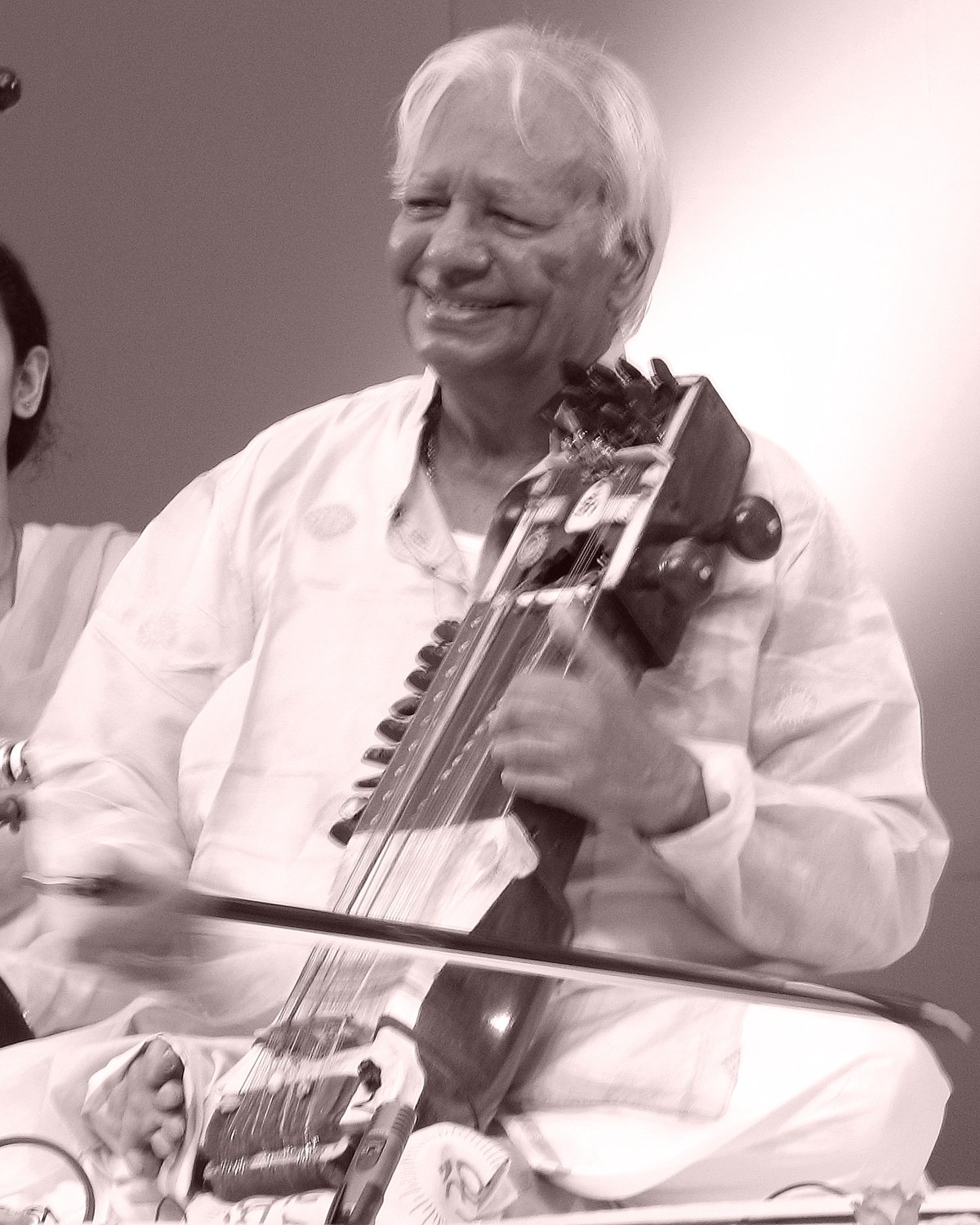
Pandit Ram Narayan
The sarangi player who walked out from behind the singer and took the stage alone.
- Instrument
- Sarangi
- Gharana
- Kirana influence
- Schools & gurukuls
- Prayag Sangeet SamitiPerformed at the Samiti
- Born
- 25 December 1927, near Udaipur, Udaipur, Kingdom of Mewar, British India
- Died
- 9 November 2024, Mumbai, Bandra, Mumbai
Official website & social links
Explore Pandit Ram Narayan's recordings and legacy on the pages kept in their name.
These destinations belong to Pandit Ram Narayan or to those who look after their work, and are checked by an editor before they are listed. They leave the archive. Suggest a link or a correction.
Where to start
Begin listening
Start here
Raga Kirvani — vilambit teental
Ram Narayan - Topic
A label-distributed sarangi recording, with Suresh Talwalkar on tabla as credited on the release.
Recordings are embedded from official or authorised channels and never rehosted. Nothing plays on its own, and starting one closes another. Where an editor has added a note, it explains why that recording was chosen — not what happens inside it.
Biography
Life
Ram Narayan was born on 25 December 1927 near Udaipur, in the princely state of Mewar, into a family of musicians. He began on the sarangi as a child under his father, Nathuji Biawat, and later studied with the dhrupad singer Uday Lal and the khayal singer Madhav Prasad.
In 1944 he joined All India Radio in Lahore as an accompanist, a post that placed him behind many of the leading vocalists of the day. The Partition of 1947 took him to Delhi, and afterwards to Bombay, where he worked as a studio musician for the film industry while continuing to play classical music.
The sarangi at that time was understood as an accompanying instrument, and one carrying a social stigma from its long association with the courtesan tradition. In 1956 Narayan stopped accompanying altogether and set out as a soloist. The decision was regarded within the profession as reckless.
It worked. He built a solo repertoire and a technique to support it, and from the 1960s toured Europe and America, where audiences heard the instrument on its own for the first time. Recordings followed, and with them a generation of younger sarangi players who could imagine a career on the concert platform.
He taught throughout his later years; his son Brij Narayan plays sarod, his daughter Aruna Narayan and grandson Harsh Narayan the sarangi. He died in Mumbai on 9 November 2024, aged ninety-six.
Musical contribution
What they brought to music
Narayan's achievement was less a matter of invention than of proof. The sarangi, bowed and fretless, is the instrument closest to the human voice, and precisely for that reason had been kept in a supporting role. He showed that it could carry the full arc of a raga alone.
To do that he reworked the fingering and bowing the instrument had used for accompaniment, finding ways to sustain the long unmetered lines of alaap and to shape a solo development that did not lean on a singer. In doing so he also helped lift the social stigma the sarangi had carried, and made it possible for the next generation to be heard as soloists in their own right.
Life in dates
Timeline
1927
Born near Udaipur
Born on 25 December into a family of musicians in Mewar.
1944
Joins All India Radio, Lahore
Works as an accompanist to leading vocalists of the day.
1947
Moves to Delhi
Relocates after Partition, and later to Bombay.
1956
Turns soloist
Stops accompanying altogether to pursue a solo sarangi career.
1964
First major European tour
Introduces the solo sarangi to audiences abroad.
2005
Padma Vibhushan
India's second-highest civilian honour.
2024
Dies in Mumbai
Dies on 9 November, aged ninety-six.
In pictures
Photographs
Lineage & company
Teachers, students and musical connections
In the documented teaching trees
Where the archive's lineage research places Pandit Ram Narayan, and the teaching links recorded around them inside each tree.
Delhi and Moradabad sarangi lineages1927–2024
Established the sarangi as a solo concert instrument.
Taught in this tree by: Abdul Wahid Khan
People
Grouped by the kind of relationship the sources record — who taught this musician, who they taught, family, and the people they played with.
Teachers and gurus
- Uday LalTeacher
Dhrupad singer.
Ram Narayan — Wikipedia - Madhav PrasadTeacher
Khayal singer.
Ram Narayan — Wikipedia
Family
- Nathuji BiawatFather and first teacher
Began his sarangi training in Mewar.
Ram Narayan — Wikipedia - Chatur LalBrother
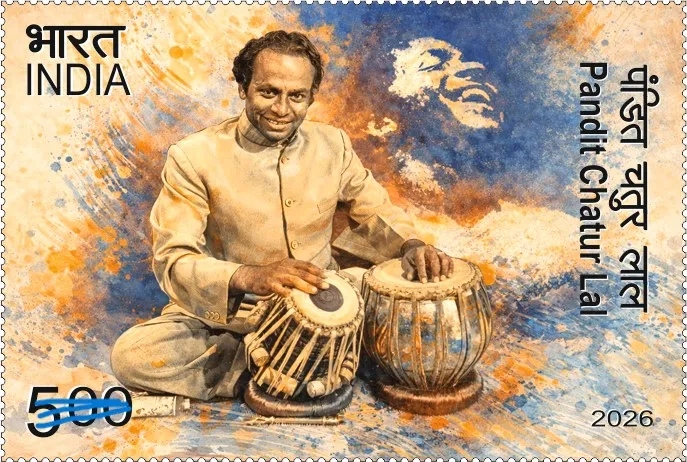
Tabla player.
Ram Narayan — Wikipedia - Aruna NarayanDaughter and student
Sarangi player.
Ram Narayan — Wikipedia - Pandit Chatur Lalfamily
Elder brother; the tabla player he accompanied on sarangi for the 1961 album The Drums of India.
Chatur Lal — Wikipedia
Collaborators and accompanists
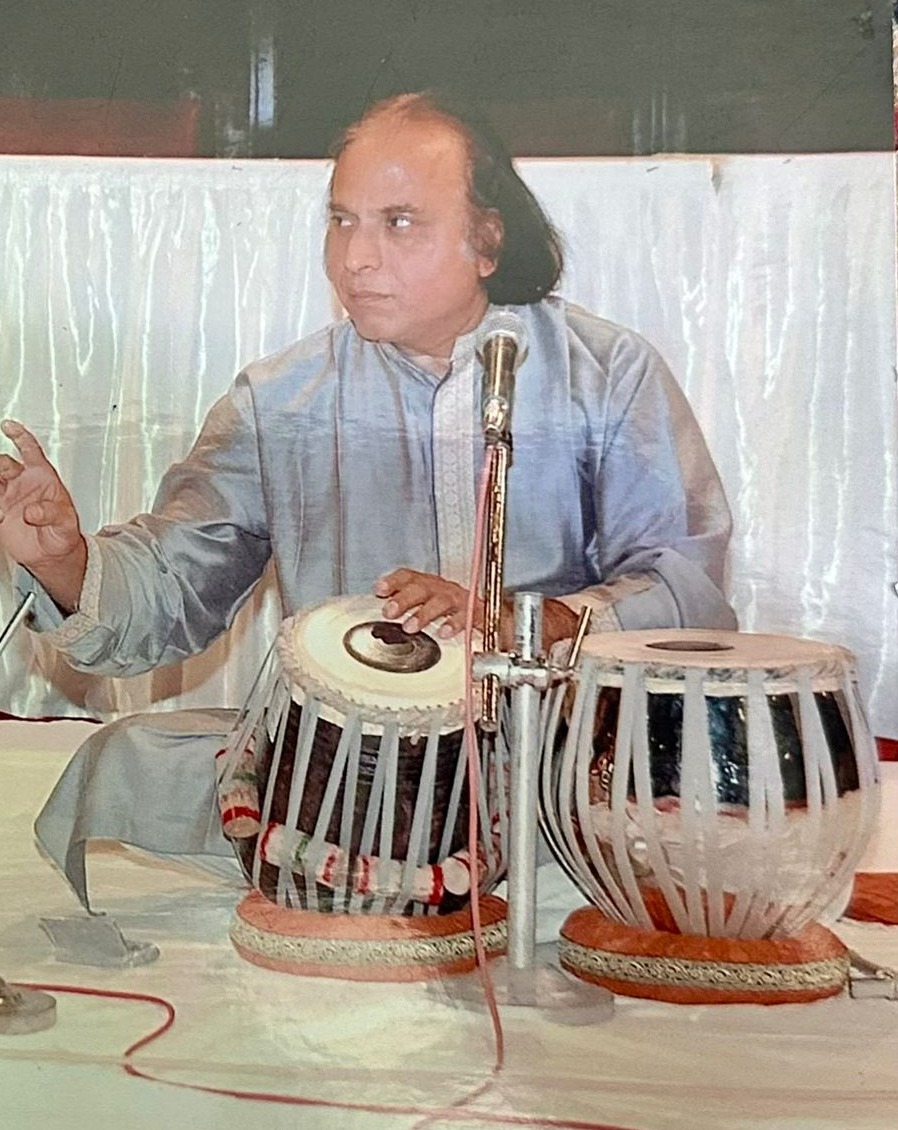 Pandit Suresh TalwalkarLong accompanying partnership
Talwalkar has accompanied him since the late 1960s.
Suresh Talwalkar — Wikipedia
Influence
- Pandit Dhruba Ghoshinfluence on a later sarangi player
Writers describe Dhruba Ghosh's tone as suggesting Ram Narayan's influence.
A tribute to sarangi maestro Dhruba Ghosh (1957-2017), Scroll.in
Other recorded connections
- Ustad Bundu Khanearlier sarangi master
Named among the earlier generation of sarangi players against whom later soloists were measured.
Remembering Dhruba Ghosh, The Hindu 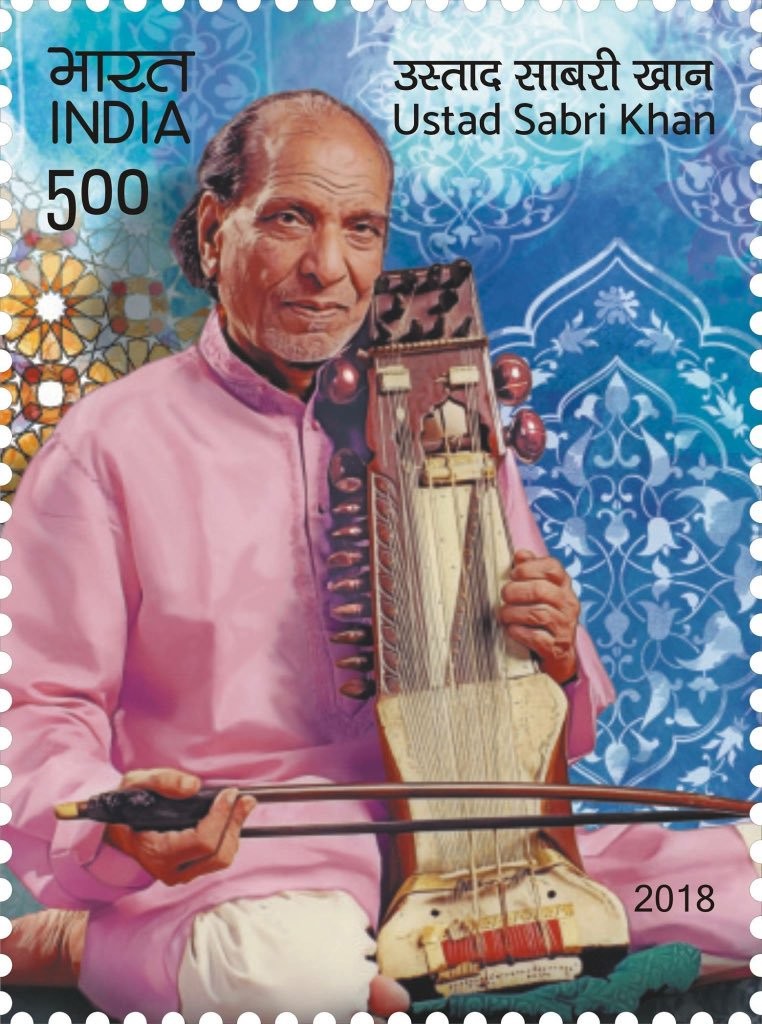 Ustad Sabri Khancontemporary sarangi master
Named alongside Ram Narayan and Sultan Khan among the senior sarangi players of his era.
Remembering Dhruba Ghosh, The Hindu
Named on other pages
Musicians whose own pages record a connection with this one, in the words their sources use.
- Ustad Abdul Wahid KhanTheir page records: Disciple
Named in the article's list of his students.
Schools, gurukuls and institutions
- Prayag Sangeet Samiti
Performed at the Samiti
Recognition
Honours and recognition
Highest national honour first, then by year.
- 2005Padma Vibhushan
- 1991Padma Bhushan
- 1976Padma Shri
- 1975Sangeet Natak Akademi Award
Writing
From the journal
Community
Memories from the community
Personal recollections, not verified history
These are memories shared by listeners and musicians. They sit apart from the sourced biography above, and an editor reads each one before it appears.
- No memories have been shared yet.
Members can share a memory of Pandit Ram Narayan. Sign in or create an account.
Provenance
Sources and image credits
- Ram Narayan — Wikipedia
- Sarangi giant Pandit Ram Narayan passes away at 96 — The Indian Express
- Photograph: Ram Narayan, 1974 — Wikimedia Commons
Photograph by Mausam, Delhi, October 2010 — CC BY-SA 2.0 via Wikimedia Commons
Continue exploring