Hindustani classical · 20th century
Pandit Sharda Sahai
Sixth-generation Benares tabla soloist who founded the Pandit Ram Sahai Sangit Vidyalaya and taught the style across Europe and North America.
- Instrument
- Tabla
- Gharana
- Benares gharana (tabla)
- Born
- 1935, Benares (Varanasi)
- Died
- 2011
Official website & social links
Explore Pandit Sharda Sahai's recordings and legacy on the pages kept in their name.
These destinations belong to Pandit Sharda Sahai or to those who look after their work, and are checked by an editor before they are listed. They leave the archive. Suggest a link or a correction.
Where to start
Begin listening
Rare Compositions of Benares: Madhya Laya — Teental (16 beats)
Audiorec Limited · Recorded 2003 · 33:34 · Pandit Sharda Sahai - Topic
Label release from the album "Compositions Of Benares" (Audiorec Limited, released 2003-08-01), delivered to YouTube by The Orchard Enterprises. Benares baj tabla solo in teental. Performance date not documented; the 2003 date is the release.
Watch on YouTubeUploaded 2015-02-24
Teental — from "The Spirit Of Benares"
Audiorec Limited · Recorded 1991 · 33:42 · Pandit Sharda Sahai - Topic
A separate, earlier album ("The Spirit Of Benares", Audiorec Limited, released 1991-08-01) — a distinct teental solo, not a reissue of the 2003 recording. Performance date not documented.
Watch on YouTubeUploaded 2017-02-25
Recordings are embedded from official or authorised channels and never rehosted. Nothing plays on its own, and starting one closes another. Where an editor has added a note, it explains why that recording was chosen — not what happens inside it.
Biography
Life
Sharda Sahai was born in Benares in 1935, the third of Pandit Bhagvati Sahai's four sons and a direct descendant of Pandit Ram Sahai. He began learning from his father, and when Bhagvati Sahai died in 1946 he became a disciple of Pandit Kanthe Maharaj — who had himself been a student of Sharda Sahai's grandfather, Pandit Baldev Sahai. The teaching thus returned to the family after a generation outside it.
He started performing professionally at nine and made his major public debut at sixteen at the Italee Music Conference in Calcutta, alongside the sarod player Ustad Ali Akbar Khan. All India Radio graded him an A-grade artist in 1965, the same year he founded the Pandit Ram Sahai Sangit Vidyalaya in Benares, a school for classical music and dance later extended to the United Kingdom. As an accompanist he worked with Ravi Shankar, Vilayat Khan, Nikhil Banerjee, Ali Akbar Khan, Amjad Ali Khan and the violinist V. G. Jog, and with the Kathak dancers Gopi Krishna, Birju Maharaj and Sitara Devi.
A 1970 tour of Europe and North America with Amjad Ali Khan led the same year to an appointment as artist-in-residence in the World Music Program at Wesleyan University, where he stayed five years while also teaching at Brown University and the Berklee College of Music. In Britain he was a senior lecturer at Dartington College of Arts for six years and later taught at Leeds and Oxford. He also worked well outside the classical concert circuit, performing jugalbandi with the mridangam players Umayalpuram Sivaraman, T. Shakaran and R. Raghavan, and collaborating with the violinist L. Shankar, the composer John Cage and the percussion ensemble Nexus.
Because the Benares family repertoire was closely guarded and passed down within the household, his playing is often treated as the reference model for the style — particularly the solo form, in which the Benares baj is at its most developed.
In December 1997 the Canadian percussionist Russell Hartenberger, of the ensemble Nexus and one of his Wesleyan students, interviewed him at Southall in London about rhythm and teaching. Sharda Sahai described beginning every student with time kept in the body before anything else — clapping one against one, then two, then four, always spoken in bols rather than numbers, and adding cross-rhythms as the pupil was ready rather than naming them as fives or sevens in the southern manner. He allowed a metronome for a while where a student's time would not settle, but not for long: Indian music, he said, is not very much like a metronome. He was made a Fellow of Leeds College of Music in November 1997.
Musical contribution
What they brought to music
A soloist's command of the Benares baj: resonant Na and Din strokes, full-hand tete patterns and the long solo architecture of uthan, gat, tukra, paran and fard inherited directly through the family.
Lineage & company
Teachers, students and musical connections
In the documented teaching trees
Where the archive's lineage research places Pandit Sharda Sahai, and the teaching links recorded around them inside each tree.
Benares gharana (tabla)1935–2011
Family-line player who taught the Benares style in Britain and the United States.
People
Grouped by the kind of relationship the sources record — who taught this musician, who they taught, family, and the people they played with.
Teachers and gurus
- Pandit Kanthe MaharajTeacher
Took him on after his father's death; Kanthe Maharaj had been a disciple of Sharda Sahai's grandfather Baldev Sahai.
PRSSV Founders
Students and disciples
- Shawn MativetskyDisciple
Canadian tabla player who studied with him and teaches the Benares solo repertoire.
Guruji – Pandit Sharda Sahai
Family
- Pandit Bhagvati SahaiFather and first teacher
Taught him until his death in 1946; the Sahai family site gives the year as 1942.
PRSSV Founders - Pandit Baldev SahaiGrandfatherPRSSV Founders
- Pandit Ram SahaiFounder of his gharana
Direct family descendant of the founder of the Benares baj.
PRSSV Founders 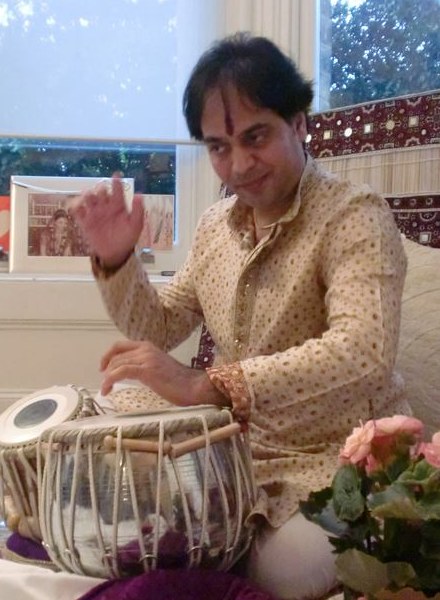 Pandit Sanju SahaiSon and disciple
Both belong to the Sahai family line of the Benares gharana.
Ancestry — Sanju Sahai
Collaborators and accompanists
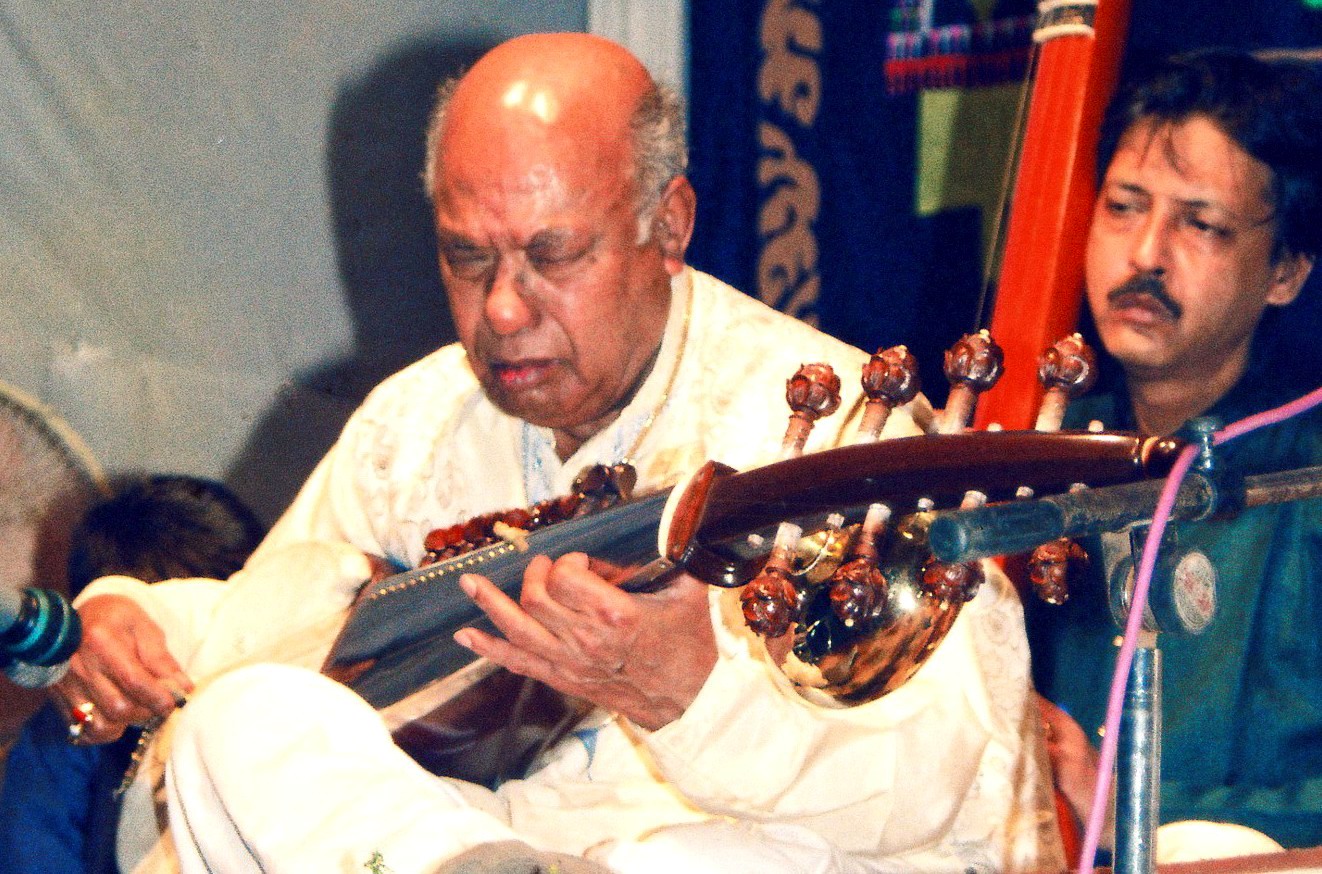 Ustad Ali Akbar Khanaccompanied
Shared the stage at his major debut, aged sixteen, at the Italee Music Conference in Calcutta.
Shawn Mativetsky — Benares gharana lineage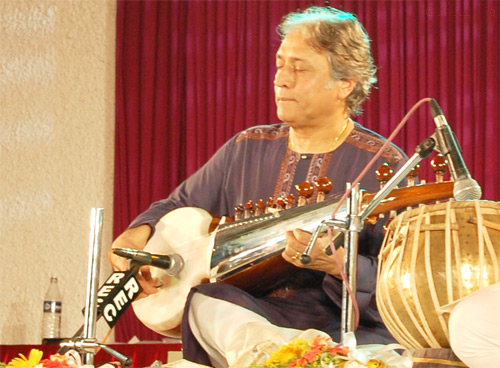 Ustad Amjad Ali Khanaccompanied
Toured Europe and North America together in February 1970.
Shawn Mativetsky — Benares gharana lineage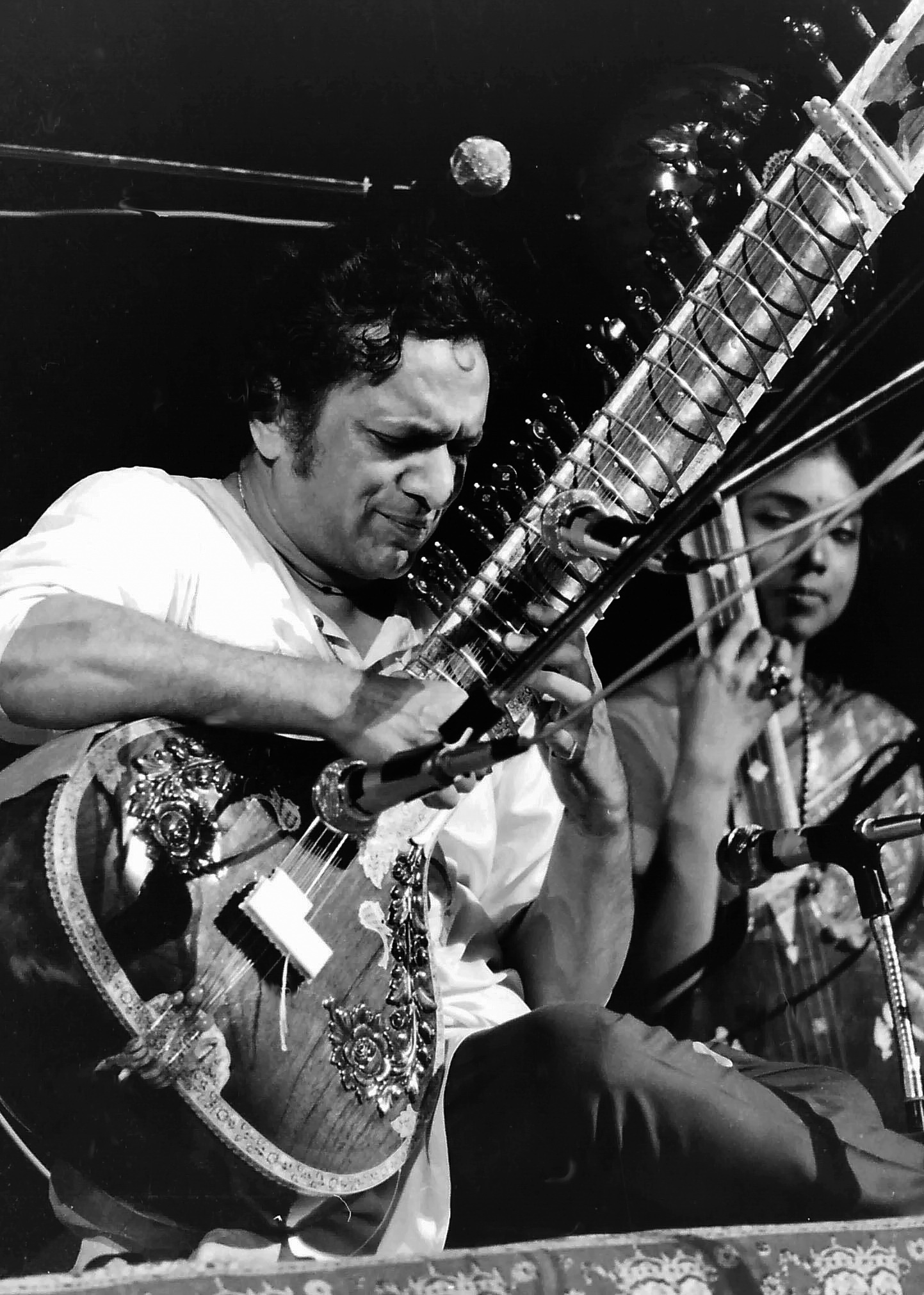 Pandit Ravi Shankaraccompanied
Named among the leading artists he accompanied.
Shawn Mativetsky — Benares gharana lineage- Pandit Birju Maharajaccompanied in dance
Named among the Kathak dancers he accompanied.
Shawn Mativetsky — Benares gharana lineage
Community
Memories from the community
Personal recollections, not verified history
These are memories shared by listeners and musicians. They sit apart from the sourced biography above, and an editor reads each one before it appears.
- No memories have been shared yet.
Members can share a memory of Pandit Sharda Sahai. Sign in or create an account.
Provenance
Sources and image credits
- PRSSV Founders — Pandit Ram Sahai Sangit Vidyalaya
- Benares Gharana Lineage Chart and Tabla Player Biographies — Shawn Mativetsky
- Ancestry — Sanju Sahai (official family site)
- Sharda Sahai: Thoughts on Rhythm — interview by Russell Hartenberger, Nexus Percussion
- Pandit Sharda Sahai — official website
No photograph of this musician is published here yet; we use only images we are permitted to show, with credit.
Continue exploring