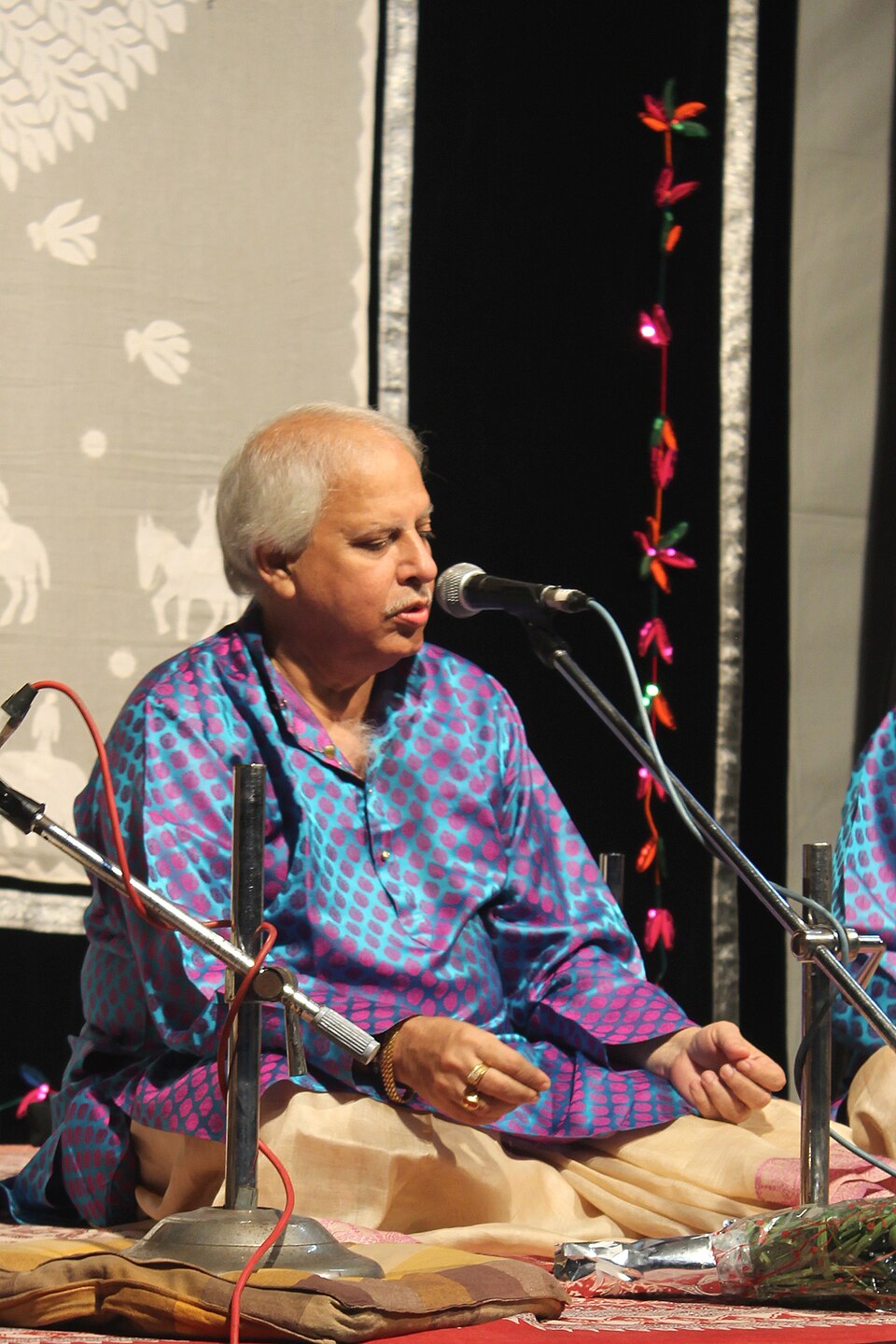
Hindustani classical · b. 1956
Pandit Sajan Mishra
The younger half of the Rajan–Sajan Mishra duo, now carrying the Banaras khayal forward with his son Swaransh.
- Instrument
- Khayal vocal
- Gharana
- Benares gharana (vocal)
- On these dates
- Birth year 1956 per Wikipedia; exact birth date not confirmed in reliable sources checked.
Official website & social links
Pandit Sajan Mishra's own pages elsewhere on the web.
These destinations belong to Pandit Sajan Mishra or to those who look after their work, and are checked by an editor before they are listed. They leave the archive. Suggest a link or a correction.
Where to start
Begin listening
Raga Jog, with Swaransh Mishra
Pt. Sajan Swaransh Mishra Official
His present-day duet with his son.
Official channel.
Raga Madhuvanti, with Swaransh Mishra
Pt. Sajan Swaransh Mishra Official
An evening raga in the father–son duet.
Official channel.
Raag Megh, with Rajan Mishra — Darbar Festival
darbarfestival
The brothers' duet at full stretch.
With Rajan Mishra.
Recordings are embedded from official or authorised channels and never rehosted. Nothing plays on its own, and starting one closes another. Where an editor has added a note, it explains why that recording was chosen — not what happens inside it.
Biography
Life
Sajan Mishra was born in 1956 and brought up in Varanasi, in a musical family whose tradition stretches back about three centuries. He learnt first from his great-uncle, the vocalist Pandit Bade Ramdas Mishra, and then from his father Pandit Hanuman Prasad Mishra and uncle Pandit Gopal Prasad Mishra, both eminent sarangi players.
Although his brother Rajan was four years older, the two decided to debut together and sing together for life. Their first concert was a haazri — an offering of music — at the Sankat Mochan temple in Varanasi. They moved to Delhi in 1977, gave their first concert abroad in Sri Lanka in 1978, and went on to perform across Europe, North America and Asia for more than four decades, including at Darbar Festival at the Royal Festival Hall, London, in 2016 with Pandit Kumar Bose on tabla. They founded Viraam, a gurukul in Uttarakhand where Banaras-style khayal is taught.
Honours shared with his brother include the Sangeet Natak Akademi Award (1998), the Padma Bhushan (2007) and the National Tansen Samman (2011–12). After Rajan Mishra died in April 2021, Sajan Mishra continued performing with his son Swaransh, a vocalist trained by Rajan Mishra, including tribute concerts to his brother in India and the USA.
Musical contribution
What they brought to music
Unhurried khayal that keeps strictly to the purity of the raga, with Banaras thumri, dadra and bhajans alongside. Heard in duet — first with his brother, now with his son.
In pictures
Photographs
Lineage & company
Teachers, students and musical connections
People
Grouped by the kind of relationship the sources record — who taught this musician, who they taught, family, and the people they played with.
Teachers and gurus
- Gayanacharya Pandit Bade Ramdas MishraGuru
Great-uncle; his first teacher
Darbar
Family
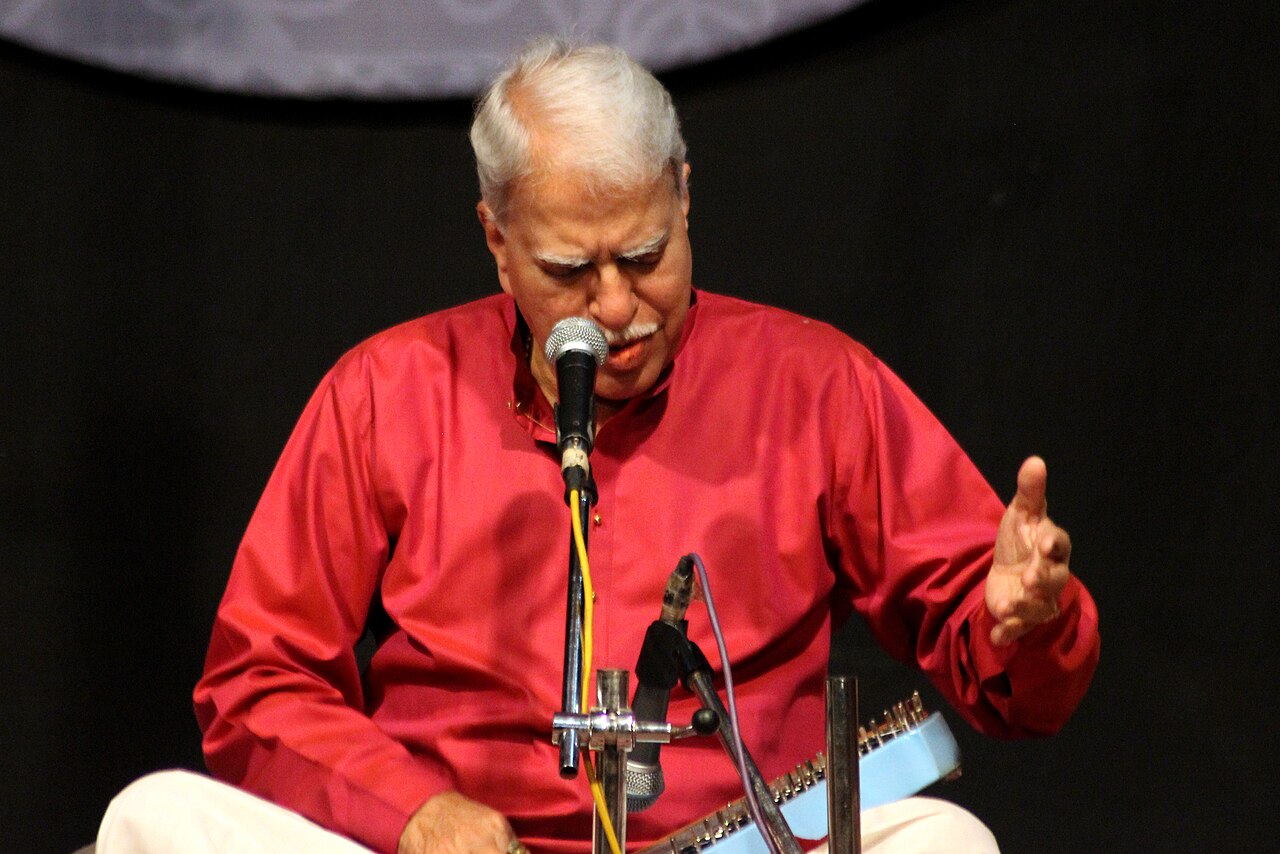 Pandit Rajan MishraBrother and duet partner
Sang in duet with him for five decades, until 2021
Darbar- Pandit Hanuman Prasad MishraFather and guru
Sarangi player
Darbar - Pandit Gopal Prasad MishraUncle and guru
Sarangi player
Darbar - Swaransh MishraSon and duet partner
Vocalist; a disciple of Rajan Mishra
Shadaj; official YouTube channel 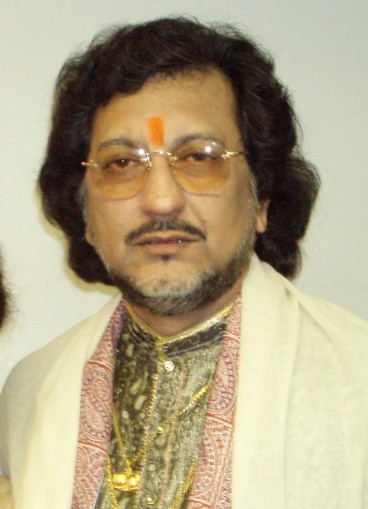 Pandit Kumar BoseAccompanist
Tabla for the brothers at Darbar Festival, London, 2016
Darbar
Recognition
Honours and recognition
Highest national honour first, then by year.
- 2007Padma BhushanJointly with Rajan Mishra
- 1998Sangeet Natak Akademi AwardJointly with Rajan Mishra
- 2011–12National Tansen SammanMadhya Pradesh government; jointly with Rajan Mishra
Community
Memories from the community
Personal recollections, not verified history
These are memories shared by listeners and musicians. They sit apart from the sourced biography above, and an editor reads each one before it appears.
- No memories have been shared yet.
Members can share a memory of Pandit Sajan Mishra. Sign in or create an account.
Provenance
Sources and image credits
- Darbar — Pandits Rajan & Sajan Mishra
- Shadaj — Pandit Sajan Misra & Swaransh Misra concert (2024)
- Pt. Sajan Swaransh Mishra Official — YouTube channel about page
- Frontline — "Rajan Mishra (1951–2021): Musical mind of Banaras"
- Indian Performing Arts Association of Charlotte — Misra Brothers (archived)
- Wikipedia — Rajan and Sajan Mishra
Photograph by Suyash Dwivedi, Bharat Bhavan, Bhopal, 2015 — CC BY-SA 4.0, via Wikimedia Commons
Continue exploring