Hindustani classical · 20th–21st century
Pandit Satyasheel Deshpande
Khayal vocalist, composer, teacher and Samvaad archivist trained by Kumar Gandharva, with documented Gwalior repertoire and a comparative approach across traditions.
- Instrument
- Khayal vocal
- Gharana
- Gwalior gharana
Official website & social links
We have no checked official pages for Pandit Satyasheel Deshpande yet. Suggest an official link.
Where to start
Begin listening
Multani — Man Ki Man Hi Maahi Rahi (live excerpt)
Artist Bandcamp
Artist identifies his own composition; 2:08 preview from Manthan recital, Vashi, 19 July 2009. Album credits Milind Pote (tabla), Abhishekh Kathe (harmonium), Krishna Bhat and Srijan Deshpande (vocal support). January 2010 is release, not session date. External listening only; playback unverified.
Megh — Garaje Ghataa Gan (live excerpt)
Artist Bandcamp
Artist labels a traditional Megh Malhar bandish; 1:36 preview from Manthan recital, Vashi, 19 July 2009, not a complete concert. January 2010 release is not session date. External listening only; playback unverified.
Thumri Katha — seven-track album preview
Artist Bandcamp
Artist-published album previews explore thumri and contrasting regional approaches. Catalogue distinguishes December 2006 launch from November 2007 digital-release field; recording date unknown. One album destination, not seven separate full recordings. All rights reserved; no rehosting; playback unverified.
Recordings are embedded from official or authorised channels and never rehosted. Nothing plays on its own, and starting one closes another. Where an editor has added a note, it explains why that recording was chosen — not what happens inside it.
Biography
Life
Satyasheel Deshpande is a Hindustani vocalist, composer, teacher and researcher whose work connects performance with the documentation of musical traditions. His official curriculum vitae records his birth on 9 January 1951; his biography places his early life in Bombay. His father, the musicologist Vamanrao Deshpande, brought him into contact with musicians including Bhimsen Joshi, Mogubai Kurdikar and Vasantrao Deshpande. Listening to musicians at home helped form his musical curiosity, but these encounters are not all treated as formal discipleships.
In 1972 he committed himself to study with Kumar Gandharva in Dewas. His official biography describes an education concerned with the principles behind different genres, artists and gharanas, rather than imitation of a single voice. Deepa Ganesh’s 2021 account of his Suranjan Trust presentation preserves his recollections of that study: a bandish could be revisited repeatedly until new musical possibilities emerged. His later performance and lecture-demonstration practice joined singing with an examination of how musicians interpret inherited material.
Gwalior is a documented part of his repertoire and scholarship, not an exclusive description of his musical identity. His curriculum vitae records a performance of selected Gwalior bandishes for the Sangeet Natak Akademi Archives. His own Gaud Malhar presentation explains how Gwalior mukhadas inspired a composition. He has also written on the gharana, while his broader work compares gharana and non-gharana approaches. These contributions are distinguished from a claim that his creative practice belongs to only one school.
Archival work is central to his contribution. Samvaad Foundation’s team account and the Indian Classical Music Performing Arts Public Digital Archive place its founding in 1983. His artist biography separately describes Ford Foundation support in 1987 for preserving and comparatively studying North Indian music. The dates identify different stages, not competing dates for the same event. At Samvaad he recorded performances, conversations and teaching sessions, engaging with differing interpretations of classical forms. The collection’s value here is its documented educational purpose; no superlative size claim is independently asserted.
His recordings include khayal, thumri and devotional music. The artist’s Live in Concert preview documents the Manthan recital at Vashi on 19 July 2009, including his own Multani composition and a traditional Megh bandish. Thumri Katha explores contrasting expressive and regional approaches to thumri. His work also includes film singing, notably the duet with Asha Bhosle in Lekin, and writing: the advisory biography identifies Gaan Gunagaan, published by Rajhans Prakashan in 2022. His sustained combination of performance, teaching, composition and comparative research makes him an important contributor to both musical practice and its preservation.
Musical contribution
What they brought to music
Comparative, composition-centred khayal practice with documented Gwalior repertoire; not exclusive gharana membership.
Lineage & company
Teachers, students and musical connections
People
Grouped by the kind of relationship the sources record — who taught this musician, who they taught, family, and the people they played with.
Teachers and gurus
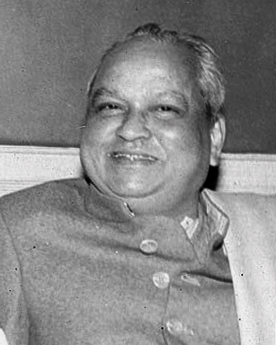 Kumar GandharvaTeacher
Committed to sustained study with Kumar Gandharva in Dewas in 1972.
Official musical education account
Students and disciples
- Dr. Pushkar LeleStudent
Documented musical tuition, not inferred influence or family.
Musical education account
Community
Memories from the community
Personal recollections, not verified history
These are memories shared by listeners and musicians. They sit apart from the sourced biography above, and an editor reads each one before it appears.
- No memories have been shared yet.
Members can share a memory of Pandit Satyasheel Deshpande. Sign in or create an account.
Provenance
Sources and image credits
- Official artist — full biography and musical education
- Official curriculum vitae — birth date, Gwalior repertoire and teaching
- Samvaad Foundation — founder account
- ICM Performing Arts Public Digital Archive — advisory biography and published book
- Deepa Ganesh — full account of Kumar Gandharva lecture, The Hindu, 2021
- Official artist — Gwalior mukhadas and Gaud Malhar composition
No photograph of this musician is published here yet; we use only images we are permitted to show, with credit.
Continue exploring