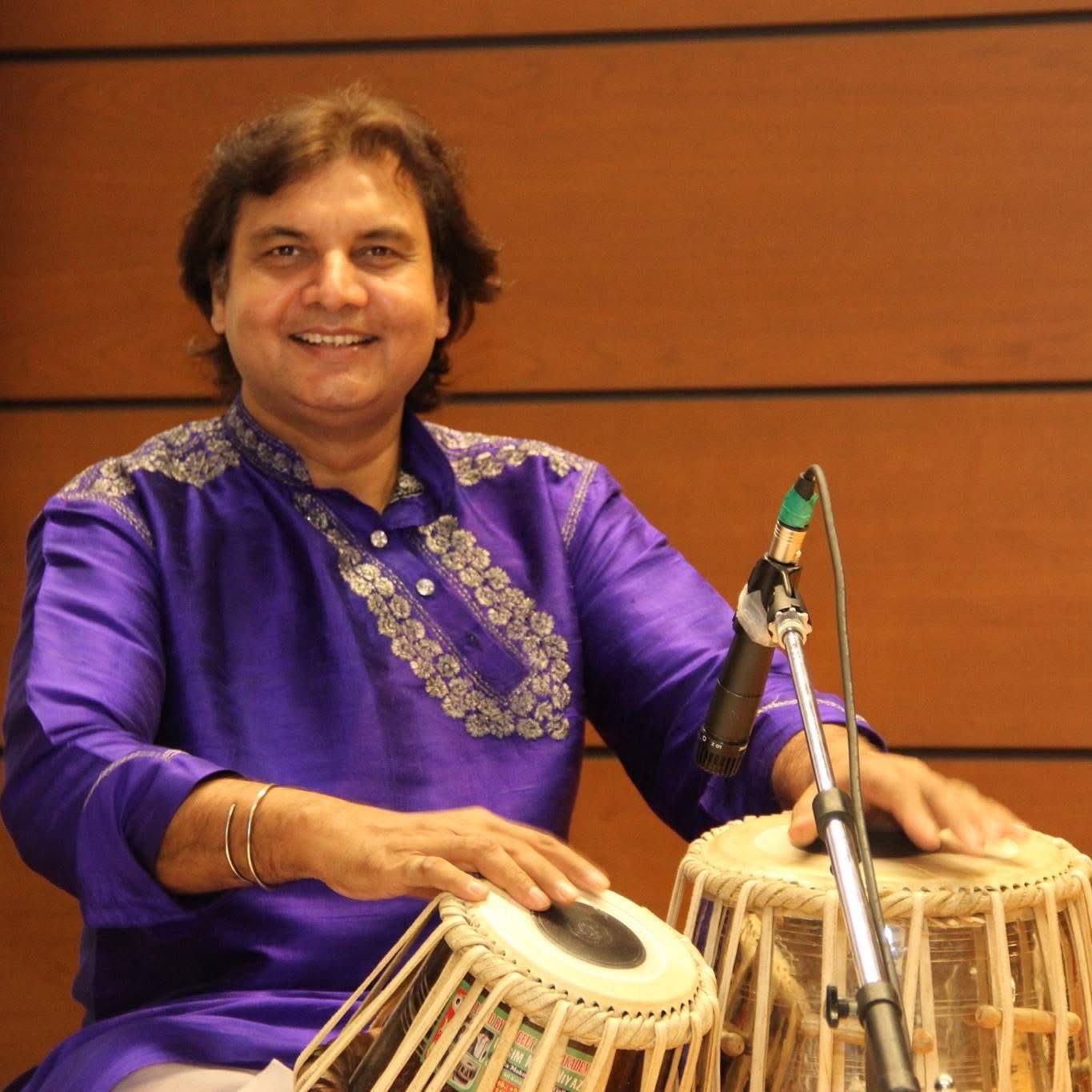
Photograph: Courtesy of Ustad Akram Khan
Hindustani classical · born 1965
Ustad Akram Khan
The working custodian of the Ajrara baaj.
- Instrument
- Tabla
- Gharana
- Ajrara gharana (tabla)hereditary
- Schools & gurukuls
- Prayag Sangeet SamitiGraduate of its examinations
- Born
- 1 January 1965, India
Official website & social links
Ustad Akram Khan's own pages elsewhere on the web.
- Official websiteUstad Akram Khan's own account
- Instagram · @akramtablaofficialUstad Akram Khan's own account
These destinations belong to Ustad Akram Khan or to those who look after their work, and are checked by an editor before they are listed. They leave the archive. Suggest a link or a correction.
Where to start
Begin listening
Start here
Tabla solo in drut teentaal — Kala Festival 2025, Reading
Performed 2025-09-14 · 11:36 · KalaSudha
Kala Festival 2025, The Great Hall, University of Reading. An excerpt from the evening's performance
His first solo in the archive; published by the festival that recorded it.
Watch on YouTubeUploaded 2026-09-05
Recordings are embedded from official or authorised channels and never rehosted. Nothing plays on its own, and starting one closes another. Where an editor has added a note, it explains why that recording was chosen — not what happens inside it.
Biography
Life
Mohammad Akram Khan was born in 1965 into the Ajrara tabla family. His father was Ustad Hashmat Ali Khan, and he counts himself the seventh generation of the gharana. He began learning at eleven, first under his great-grandfather Ustad Mohammad Shafi Khan, then under Ustad Niazu Khan, and continued under his father.
Alongside the family training he took formal qualifications — Sangeet Visharad at Chandigarh in 1984 and Sangeet Praveen from Prayag Sangeet Samiti, Allahabad, in 1988, with a commerce degree from Meerut in between. He is a Top Grade artist of All India Radio, New Delhi.
He gave his first concert at seventeen in Lucknow and first played abroad in Norway in 1987, at twenty-two. In the same year he performed with Ustad Vilayat Khan in Japan and accompanied the sitar player again in the United States in 1992; he has played at the Kennedy Center and Lincoln Center. He teaches from a studio in Laxmi Nagar, Delhi, runs a tabla academy, and gives workshops and masterclasses — including one at Chinmaya Vishwavidyapeeth in March 2024 devoted specifically to Ajrara technique and history. His own account places more than fifteen Ajrara qaidas in his active repertoire; he is teaching the style to his son Zargham.
He is not the Akram Khan known as a contemporary dancer and choreographer; they are different people.
With his father he founded the Tabla Academy of Ajrada Gharana in Delhi, which teaches in the guru–shishya manner; by his own count more than a thousand students have passed through it. He is graded Outstanding by the Indian Council for Cultural Relations, and in 1993–94 he was a visiting lecturer in ethnomusicology at the University of Washington, Seattle; he has also given lecture-demonstrations at the University of British Columbia and in Oslo.
He has played four times inside the Parliament of India — twice with Pandit Debu Chaudhuri, once with Pandit Jasraj and once with Pandits Rajan and Sajan Mishra — and at Hyderabad House, New Delhi, during a visit by Chancellor Angela Merkel. As an accompanist he has played with Pandit Ravi Shankar, Ustad Amjad Ali Khan, Pandit Shivkumar Sharma, Pandit Hariprasad Chaurasia, Pandit Birju Maharaj, Pandit Ram Narayan, Vidushi Girija Devi, Ustad Sultan Khan and Dr N. Rajam, among many others, and he is regularly heard as a soloist.
His honours include the Delhi Ratan award (2006), the Uttar Pradesh Sangeet Natak Akademi award (2013), the Taal Samrat award of Pracheen Kala Kendra, Chandigarh (2015), the Hanumant Lifetime Achievement award presented by Morari Bapu at Mahuva (2022) and the Atal Bihari Vajpayee Samman (2023). His recordings are held by the Sangeet Natak Akademi, New Delhi.
Musical contribution
What they brought to music
Ajrara playing is closed and rim-led, and Akram Khan's recitals are built around the gharana's qaidas rather than around speed. The things to listen for are the triplet pulse inside the phrase, which gives the bols a rolling rather than even feel, and the bayan work — pressure shifted mid-stroke so the bass pitch slides. In accompaniment he describes his approach as conversation with the soloist, answering phrases rather than laying a grid under them.
In pictures
Photographs
Lineage & company
Teachers, students and musical connections
In the documented teaching trees
Where the archive's lineage research places Ustad Akram Khan, and the teaching links recorded around them inside each tree.
Ajrara gharana (tabla)born 1965
Seventh-generation Ajrara exponent; performer and teacher of the gharana repertoire today.
People
Grouped by the kind of relationship the sources record — who taught this musician, who they taught, family, and the people they played with.
Teachers and gurus
- Ustad Hashmat Ali Khanteacher
Father and continuing teacher; Ajrara gharana maestro.
Profile — akramkhantabla.in - Ustad Mohammad Shafi Khanteacher
Great-grandfather and first teacher, from around the age of eleven.
Profile — akramkhantabla.in - Ustad Niazu Khanteacher
Ajrara master under whom he received early training.
Akram Khan — SwarGanga
Family
- Zargham Khanfamily
Son, to whom he is passing on the Ajrara repertoire.
Akram Khan — mytribe artist page
Collaborators and accompanists
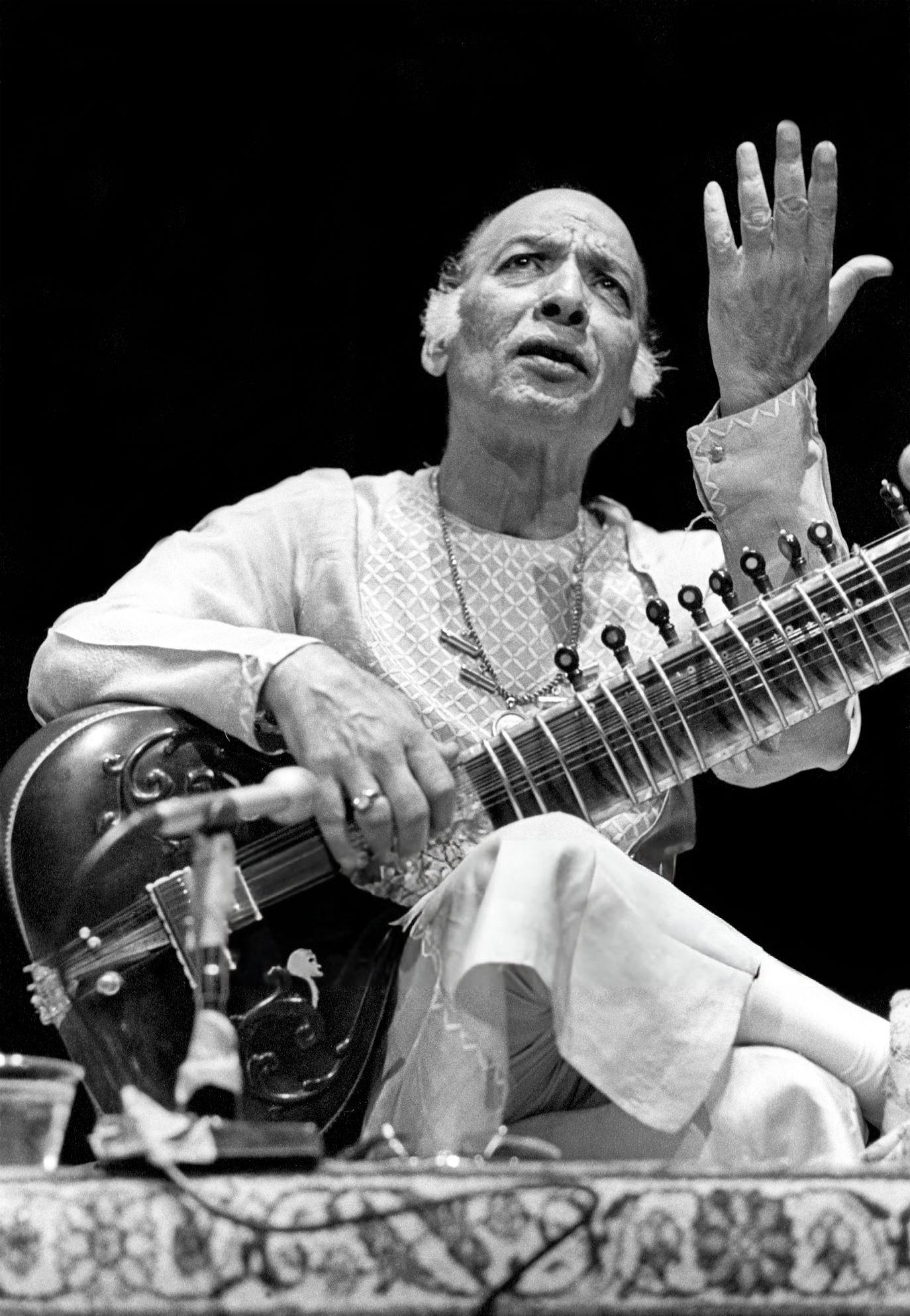 Ustad Vilayat Khancollaborator
Accompanied the sitar player in Japan in 1987 and in the United States in 1992.
Akram Khan — SwarGanga
Named on other pages
Musicians whose own pages record a connection with this one, in the words their sources use.
- Ustad Habibuddin KhanTheir page records: Gharana line
Delhi-based Ajrada player described as a torchbearer of the gharana; descends from the Habibuddin–Manju Khan line rather than being a direct student.
Schools, gurukuls and institutions
- Prayag Sangeet Samiti
Graduate of its examinations
Recognition
Honours and recognition
Highest national honour first, then by year.
- 2013Uttar Pradesh Sangeet Natak Akademi award
- 2006Delhi Ratan awardArt and Cultural Trust of India
- 2006Tabla Bhushan award
- 2015Taal Samrat awardPracheen Kala Kendra, Chandigarh
- 2015Taal Samrat awardUstad Ashique Ali Charitable Trust
- 2022Hanumant Lifetime Achievement awardPresented by Morari Bapu, Mahuva, Gujarat
- 2023Atal Bihari Vajpayee Samman
Community
Memories from the community
Personal recollections, not verified history
These are memories shared by listeners and musicians. They sit apart from the sourced biography above, and an editor reads each one before it appears.
- No memories have been shared yet.
Members can share a memory of Ustad Akram Khan. Sign in or create an account.
Provenance
Sources and image credits
Continue exploring
- Ajrara gharana (tabla)The lineage Ustad Akram Khan is associated with, and the other musicians documented within it.
- The tablaHow the instrument works, and who else in the archive plays it.
- Prayag Sangeet SamitiThe school Ustad Akram Khan is connected to — what it teaches and where it is.
- All musiciansBrowse the archive by name, instrument or discipline.