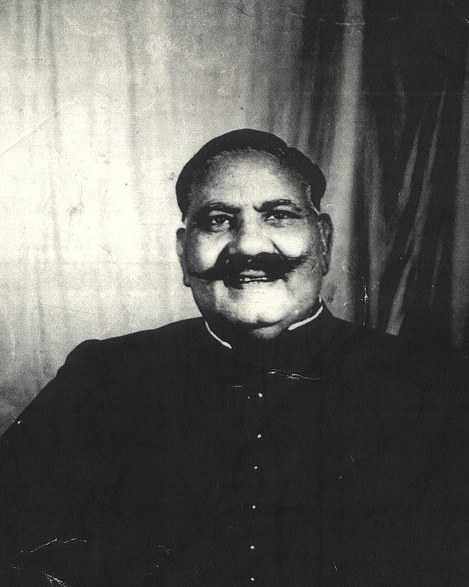
Hindustani classical · 1902–1968
Bade Ghulam Ali Khan
The great voice of the Kasur Patiala gharana, who composed under the pen-name Sabrang.
- Instrument
- Khayal vocal
- Gharana
- Patiala gharana
- Schools & gurukuls
- Prayag Sangeet SamitiPerformed at the Samiti
- Born
- 2 April 1902, Kasur district, Punjab, British India
- Died
- 23 April 1968, Hyderabad
- On these dates
- Sources differ on his birth year: Wikipedia and most concert-circuit accounts give 2 April 1902, while Ashok Ranade's assessment published by Sahapedia dates him 1901-1968.
Official website & social links
We have no checked official pages for Bade Ghulam Ali Khan yet. Suggest an official link.
Where to start
Begin listening
Start here
Bhor Bhai
Gujri Todi · Saregama Hindustani Classical
Published on the label's own channel.
Recordings are embedded from official or authorised channels and never rehosted. Nothing plays on its own, and starting one closes another. Where an editor has added a note, it explains why that recording was chosen — not what happens inside it.
Biography
Life
Bade Ghulam Ali Khan was born on 2 April 1902 in the Kasur district of Punjab, in what was then British India. He trained under his father, Ali Baksh Khan, and his uncle, Kale Khan, and began his career singing their compositions. Mubarak Ali Khan and Barkat Ali Khan were his younger brothers.
His notable early performances included Calcutta in 1938 and the All India Music Conference in Bombay in 1944. After the Partition of India in 1947 he moved to Kasur, by then in Pakistan, returning to live in India permanently in 1957; he acquired Indian citizenship and settled at Malabar Hill in Bombay. He lived at various times in Lahore, Bombay, Calcutta and finally Hyderabad.
He largely kept away from film work, but was persuaded by the producer K. Asif to sing two pieces, in ragas Sohni and Rageshri, for Mughal-e-Azam (1960) with music by Naushad — the only film playback of his career.
A near-paralysing stroke in 1961 left him partially disabled, and from then he performed with the support of his younger son, Munawar Ali Khan. He died at Basheer Bagh Palace in Hyderabad on 23 April 1968 and is buried at the Daira Mir Momin cemetery there.
His style drew three traditions together into what became the Kasur-Patiala manner: the Behram Khani elements of dhrupad, the gyrations of Jaipur and the behlavas, or embellishments, of Gwalior. Many of his raga expositions were deliberately brief. He accepted that the beauty of classical music lay in unhurried improvisation, but judged that his audiences would not sit through long alaps, and he sang for the many rather than the few; he was particularly at home in lighter ragas such as Adana, Bhupali, Hameer, Jaijaiwanti and Jaunpuri. Under the pen name Sabrang he composed a large number of new bandishes. Ashok Ranade, hearing him open a Bombay concert with Kedara in 1948, described a voice of wide range and easy movement in all tempi whose defining quality was lucidity — the Sanskrit prasad, the power to convey meaning without obstruction: his enunciation was unhurried and exact, vowels and joint consonants kept undistorted even at high pitch, and the words never rounded off at the edges, a control that carried even into his tarana singing. He recorded for His Master's Voice and was active from about 1923 to 1967. India Post issued a stamp in his honour in 2003.
Musical contribution
What they brought to music
He drew together the Behram Khani elements of dhrupad, the melodic gyrations of Jaipur and the behlavas of Gwalior into his own Kasur Patiala style. Many of his raga expositions were deliberately brief: he held that the beauty of classical music lay in unhurried improvisation, but judged that his audiences would not sit through long alaps. He excelled in lighter ragas such as Adana, Bhupali, Hameer, Jaijaiwanti and Jaunpuri, and composed under the pen-name "Sabrang". He was equally celebrated in thumri, dadra and bhajan.
Life in dates
Timeline
1902
Born
Born on 2 April in the Kasur district of Punjab, British India.
1944
All India Music Conference
One of his celebrated early performances, in Bombay; an earlier one was in Calcutta in 1938.
1957
Settled in India
Returned from Kasur to live permanently in India, later acquiring Indian citizenship.
1960
Mughal-e-Azam
Sang two pieces, in Sohni and Rageshri, for the film — his only playback recordings.
1961
Stroke
A near-paralysing stroke; he continued performing with his son Munawar Ali Khan.
1968
Died
Died in Hyderabad on 23 April; buried at the Daira Mir Momin cemetery.
Lineage & company
Teachers, students and musical connections
In the documented teaching trees
Where the archive's lineage research places Bade Ghulam Ali Khan, and the teaching links recorded around them inside each tree.
Patiala gharana1902–1968
The most famous Patiala singer, equally at home in khayal and thumri.
Taught in this tree by: Kale Khan, Ashiq Ali Khan
Recorded as teaching: Munawar Ali Khan
People
Grouped by the kind of relationship the sources record — who taught this musician, who they taught, family, and the people they played with.
Family
- Ali Baksh KhanFather and teacher
"he trained under his uncle Kale Khan and father Ali Baksh Khan before rising to prominence in pre-Partition India."
Darbar — Ustad Bade Ghulam Ali Khan - Kale KhanTeacher (uncle)
"he trained under his uncle Kale Khan and father Ali Baksh Khan before rising to prominence in pre-Partition India."
Darbar — Ustad Bade Ghulam Ali Khan - Munawar Ali KhanSon and disciple
"He was taught by his father Bade Ghulam Ali Khan and his uncle Barkat Ali Khan." (from the account of Munawar Ali Khan)
Wikipedia — Munawar Ali Khan - Barkat Ali KhanYounger brother
A thumri singer; one of the two younger brothers, with Mubarak Ali Khan, who sang in the same family line.
Wikipedia — Bade Ghulam Ali Khan - Mubarak Ali KhanYounger brother
Named with Barkat Ali Khan as his younger brothers in the Kasur-Patiala family.
Wikipedia — Bade Ghulam Ali Khan - Karamat Ali KhanElder son
Born in Lahore on 28 December 1928; his sons, among them Mazhar Ali Khan, continued the gharana.
Wikipedia — Bade Ghulam Ali Khan - Raza Ali KhanGrandson
Son of Munawar Ali Khan; continues the Kasur-Patiala line in performance.
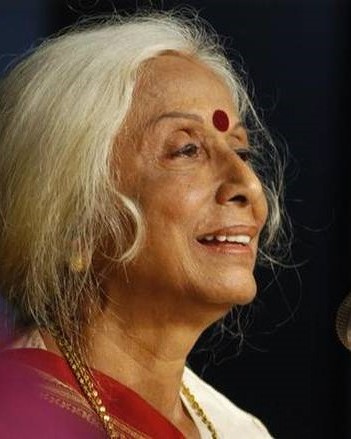
Wikipedia — Bade Ghulam Ali Khan  Pandit Ajoy ChakrabartyGharana successor
Trained by Bade Ghulam Ali Khan's son Munawar Ali Khan, and regarded as a leading exponent of the Patiala-Kasur gayaki.
Shrutinandan — Biography
Other recorded connections
- NaushadFilm music director
Set the two pieces in Sohni and Rageshri that K. Asif persuaded him to record for Mughal-e-Azam (1960), his only film playback.
Darbar — Ustad Bade Ghulam Ali Khan
Schools, gurukuls and institutions
- Prayag Sangeet Samiti
Performed at the Samiti
Recognition
Honours and recognition
Highest national honour first, then by year.
- 1962Padma Bhushan
- 1962Sangeet Natak Akademi Award
- 1967Sangeet Natak Akademi Fellow
Community
Memories from the community
Personal recollections, not verified history
These are memories shared by listeners and musicians. They sit apart from the sourced biography above, and an editor reads each one before it appears.
- No memories have been shared yet.
Members can share a memory of Bade Ghulam Ali Khan. Sign in or create an account.
Provenance
Sources and image credits
- Wikipedia — Bade Ghulam Ali Khan (retrieved 15 September 2026)
- Darbar — Ustad Bade Ghulam Ali Khan (retrieved 15 September 2026)
- Ashok Ranade — Ustad Bade Ghulam Ali Khan (1901-1968), via Sahapedia
- Wikipedia — Bade Ghulam Ali Khan
- Darbar — Ustad Bade Ghulam Ali Khan
Photograph taken before 1958; author unknown, public domain, via Wikimedia Commons
Continue exploring
- Patiala gharanaThe lineage Bade Ghulam Ali Khan is associated with, and the other musicians documented within it.
- The khayal vocalHow the instrument works, and who else in the archive plays it.
- Prayag Sangeet SamitiThe school Bade Ghulam Ali Khan is connected to — what it teaches and where it is.
- All musiciansBrowse the archive by name, instrument or discipline.