Hindustani classical · Historical
Ustad Bundu Khan
Sarangi player of the Delhi line, court musician and musicologist, regarded by many players as the instrument's greatest exponent.
- Instrument
- Sarangi
- Gharana
- Delhi lineage (contested)
- Born
- 1880, Delhi, India
- Died
- 13 January 1955, Karachi, Pakistan
Official website & social links
We have no checked official pages for Ustad Bundu Khan yet. Suggest an official link.
Biography
Life
Bundu Khan was born in Delhi in 1880 into a family of musicians, and began the sarangi at about eight with his father Ali Jan Khan. His principal teacher was his maternal uncle Mamman Khan, a noted sarangi and sursagar player who was also his father-in-law; Nicolas Magriel, who documented the sarangi world from the 1970s onward, adds his grandfather Sangi Khan among his teachers and notes that Mamman Khan was the eldest of Sangi Khan's four sons - that is, the family was itself the school.
He served as a court musician - Wikipedia records twenty-seven years at Indore, and Magriel adds Rampur - before becoming a staff artist at All India Radio in Delhi, where he played from the station's earliest days in the 1930s. He studied Sanskrit in order to read the older musical literature, and was a friend and informant of the musicologist V. N. Bhatkhande. He planned a twelve-volume encyclopaedia of Indian music but completed only the first volume, published in June 1934 as Jauhar-i-Mausiqi in Urdu and Sangeet Vivek Darpan in Hindi - a book Magriel describes as full of tans and eccentric pronouncements.
Very little of his playing survives. Magriel records two 78-rpm discs, including a Darbari and a Bhairavi, with further material issued on an LP by EMI Pakistan and a set of good-quality tapes held at Radio Pakistan; the writer Sheila Dhar's brother Rajesh Bahadur, a student of his, made an All India Radio National Programme about him in 1977. Though remembered chiefly as a soloist, he was also, in Magriel's judgement, an inspired accompanist.
Two documented students are named: Abdul Majeed Khan, who worked in Jhajjar, Delhi and Bombay, and Sagiruddin Khan of Delhi and Calcutta; something of the style carried on into Masit Khan's playing, Masit Khan having studied with Abdul Majeed Khan.
He emigrated to Pakistan a couple of years after Partition - Sheila Dhar's father arranged and paid for his passage - and lived in Karachi, playing on Pakistani radio until his death on 13 January 1955. His sons Umrao Bundu Khan and Bulund Iqbal Khan continued as musicians. Pakistan awarded him the Pride of Performance posthumously in 1985.
Musical contribution
What they brought to music
Accounts of his lineage differ: SwarGanga files him under the Delhi gharana, while Wikipedia describes his teacher Mamman Khan as belonging to the Patiala house. Magriel's account, which places Mamman Khan inside Bundu Khan's own Delhi family as the eldest son of his grandfather Sangi Khan, sits awkwardly with the Patiala attribution; we leave both on record.
His sound was deliberately dry. Magriel reports that he let the sympathetic strings of his sarangi break one by one without replacing them, preferring purity of tone to resonance, and that he usually strung the main playing string, the jil, in metal; he also played a bamboo sarangi. The result belongs to an era before the harmonium fixed intonation into equal steps, when drawing rasa out of the fine gradations between notes, the shrutis, was central to the music. His technique was unusual - playing every note with every finger, and rapid alternation of two fingers in any position, closer to sitar fingering than to standard sarangi practice - and Magriel learnt several of these devices from his relative Ustad Mohammed Ali Khan.
He is remembered too for an unusually deep grasp of vocal compositions and for a sensitivity to vocal nuance that later players - including Pandit Dhruba Ghosh - took from his recordings, notably his use of paltas, note-permutation exercises. A technique described as meendh soot ki sargam, in which the player shifts between notes within a recurring melodic line, is also credited to him.
Life in dates
Timeline
1880
Born in Delhi
Into a family of musicians; began the sarangi at about eight with his father Ali Jan Khan.
1930s
All India Radio, Delhi
Played from the Delhi station in its early years, alongside long court service at Indore.
1934
Publishes his treatise
Jauhar-i-Mausiqi (Urdu) and Sangeet Vivek Darpan (Hindi), published June 1934.
c. 1949
Migrates to Pakistan
Settled in Karachi a couple of years after Partition and played on Pakistani radio.
1955
Died in Karachi
13 January 1955.
Lineage & company
Teachers, students and musical connections
In the documented teaching trees
Where the archive's lineage research places Ustad Bundu Khan, and the teaching links recorded around them inside each tree.
Delhi and Moradabad sarangi lineages1880–1955
The outstanding Delhi sarangi player of his generation; moved to Pakistan after Partition.
Taught in this tree by: Mamman Khan
People
Grouped by the kind of relationship the sources record — who taught this musician, who they taught, family, and the people they played with.
Teachers and gurus
- Mamman Khanprincipal teacher
His maternal uncle and father-in-law, a sarangi and sursagar player.
Bundu Khan — sarangi.net
Students and disciples
- Abdul Majeed KhanDisciple
Named by Magriel as one of two documented students; worked in Jhajjar, Delhi and Bombay.
Bundu Khan — sarangi.net (Nicolas Magriel) - Sagiruddin KhanDisciple
Named by Magriel as one of two documented students; of Delhi and Calcutta.
Bundu Khan — sarangi.net (Nicolas Magriel)
Family
- Ali Jan Khanfather and first teacher
Began teaching him the sarangi at about eight.
Bundu Khan — Wikipedia - Sangi Khangrandfather and teacher
Named as a teacher by the sarangi researcher Nicolas Magriel.
Bundu Khan — sarangi.net - Umrao Bundu Khan and Bulund Iqbal Khansons
Continued his musical line in Pakistan.
Bundu Khan — Wikipedia - Sheila DharFriend of the family and chronicler
The writer's father hosted him regularly and paid for his passage to Pakistan; her brother Rajesh Bahadur, a student of his, made an AIR National Programme about him in 1977.
Bundu Khan — sarangi.net (Nicolas Magriel)
Influence
- Pandit Dhruba Ghoshinfluence on a later player
Dhruba Ghosh's solo playing was shaped by Bundu Khan's recordings, including his use of paltas.
A tribute to sarangi maestro Dhruba Ghosh (1957-2017), Scroll.in
Other recorded connections
- V. N. Bhatkhandefriend and informant
Supplied material to the musicologist.
Bundu Khan — sarangi.net
Named on other pages
Musicians whose own pages record a connection with this one, in the words their sources use.
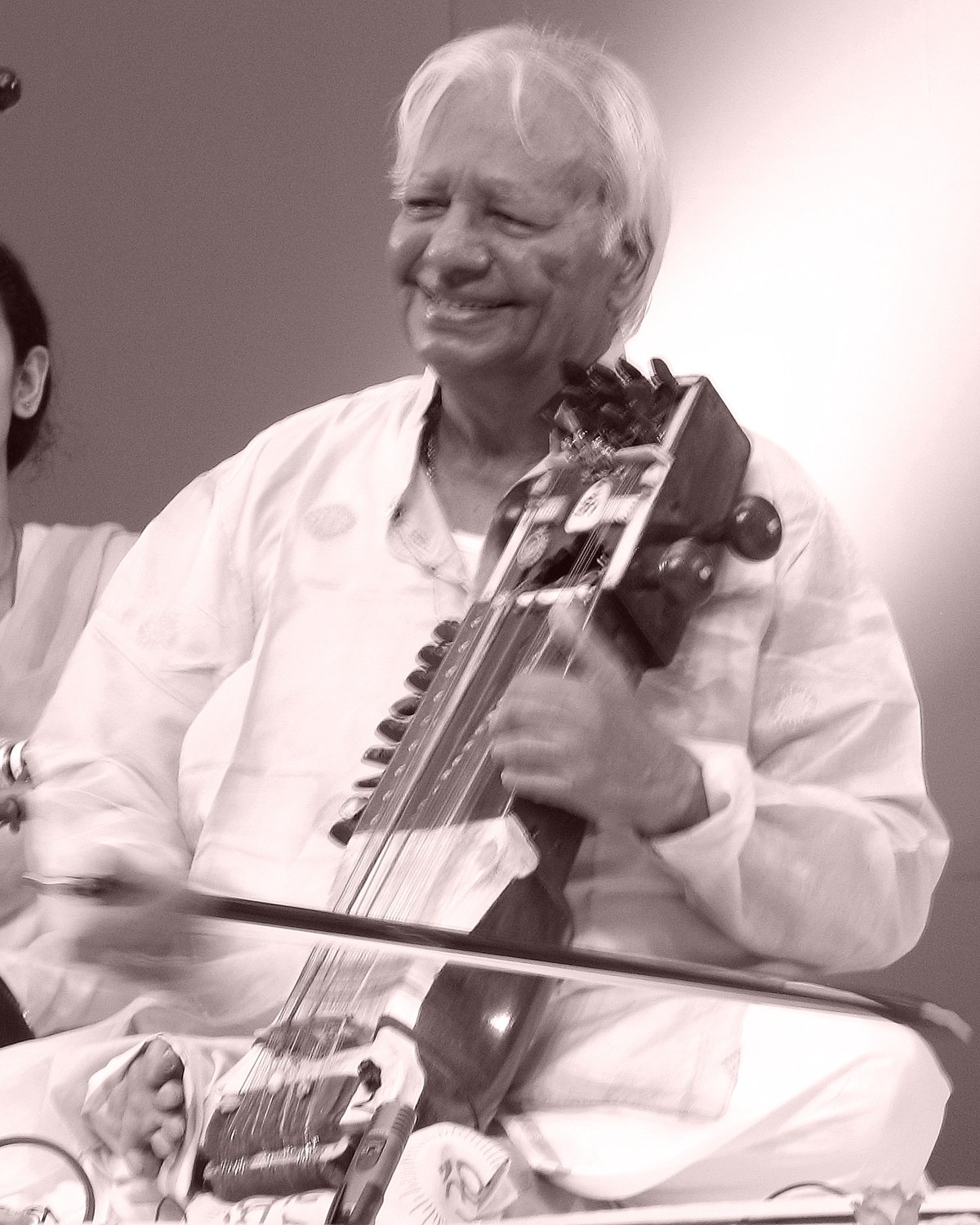 Pandit Ram NarayanTheir page records: earlier sarangi master
Named among the earlier generation of sarangi players against whom later soloists were measured.
Recognition
Honours and recognition
- 1985Pride of Performance (Pakistan)Awarded posthumously by the President of Pakistan.
Community
Memories from the community
Personal recollections, not verified history
These are memories shared by listeners and musicians. They sit apart from the sourced biography above, and an editor reads each one before it appears.
- No memories have been shared yet.
Members can share a memory of Ustad Bundu Khan. Sign in or create an account.
Provenance
Sources and image credits
- Bundu Khan — Wikipedia
- Bundu Khan — sarangi.net (Nicolas Magriel)
- Bundu Khan — SwarGanga Music Foundation
- Bundu Khan — sarangi.net (Nicolas Magriel)
No photograph of this musician is published here yet; we use only images we are permitted to show, with credit.
Continue exploring