Hindustani classical · 20th century
Ustad Zia Mohiuddin Dagar
Rebuilt the rudra veena as a bass concert instrument and made solo dhrupad alap on it a public art.
- Instrument
- Rudra veena
- Gharana
- Dagar vani (Dagarbani)
- Schools & gurukuls
- Dhrupad Gurukul, PalaspeFounderDhrupad Kendra, BhopalTaught at the KendraDhrupad SansthanGuru of the founders
- Born
- 14 March 1929, Udaipur, Rajasthan, India
- Died
- 28 September 1990
Official website & social links
We have no checked official pages for Ustad Zia Mohiuddin Dagar yet. Suggest an official link.
Where to start
Begin listening
Raga Yaman: Alap
Yaman · Wyastone Estate Limited · Recorded 1993 · 40:28 · Zia Mohiuddin Dagar - Topic
Label release "Raga Yaman", ℗ 1993, released 1993-01-01; distributed to YouTube by The Orchard. Release year, not performance year.
Watch on YouTubeUploaded 2016-02-18
Raga Abhogi (Rudra Veena, Seattle, 9 March 1986)
Abhogi · Ideologic Organ · Performed 1986-03-09 · 43:21 · Ustad Zia Mohiuddin Dagar - Topic
From the release "Ragas Abhogi & Vardhani (Rudra Veena // Seattle // 9 March 1986)", ℗ 2018, released 2018-06-01.
Watch on YouTubeUploaded 2023-05-12
Raga Vardhani (Rudra Veena, Seattle, 9 March 1986)
Vardhani · Ideologic Organ · Performed 1986-03-09 · 34:31 · Ustad Zia Mohiuddin Dagar - Topic
Same 2018 release as the Abhogi; a distinct performance from the same Seattle concert.
Watch on YouTubeUploaded 2023-05-12
Recordings are embedded from official or authorised channels and never rehosted. Nothing plays on its own, and starting one closes another. Where an editor has added a note, it explains why that recording was chosen — not what happens inside it.
Biography
Life
Zia Mohiuddin Dagar was born in Udaipur on 14 March 1929 and began studying with his father, Ustad Ziauddin Khan Dagar, court musician to the Maharana of Udaipur. He was trained in both voice and rudra veena — an instrument singers then used privately to work out melody rather than to perform on. He took it as his main instrument anyway and gave his first recital at sixteen.
His father discouraged him from altering the instrument, but after his father's death he rebuilt it with the instrument makers Kanailal & Brother, enlarging the gourds (tumba) and the hollow neck (dandi) to deepen the resonance and lengthen the sustain, so that the veena could reproduce the long held phrases of dhrupad singing. The result — sometimes called the Dagar veena — was too heavy for the usual northern playing posture with a gourd on the shoulder, so he adopted the southern posture instead, one gourd on the floor and one on the left knee.
The family's circumstances after 1947 were hard. With the princely states abolished, the Dagars lost the Udaipur court's patronage and eventually moved to Mumbai, where by his son Bahauddin's account they spent some twenty-five years working in garages, selling bread and occasionally playing for film scores, without a house or even a tanpura of their own, in a climate sceptical of dhrupad and long alaps.
He toured widely and taught in residencies at the American Society for Eastern Arts in Berkeley, the Rotterdam Conservatory, the University of Washington and the University of California. In 1982 he set up a gurukul near Panvel, outside Mumbai, to teach a small circle of disciples. He received the Sangeet Natak Akademi Award in 1981 and the Kalidas Samman from the Madhya Pradesh government in 1986, and died on 28 September 1990. His students include his son Ustad Bahauddin Dagar, Pandit Uday Bhawalkar, Pushparaj Koshti, Ritwik Sanyal and the Gundecha Brothers.
Some of the fullest documentation of his playing was made in the United States. The University of Washington's Ethnomusicology Archives filmed and recorded him repeatedly between 1975 and 1986 — film sessions, a 1977 concert, and the March 1986 Seattle concerts with his brother from which the Abhogi, Vardhani and Yaman releases were later drawn.
Musical contribution
What they brought to music
His playing is remembered for extreme slowness and for a refusal of display: the interest lies in the shaping of individual notes and the glides between them across a very long decay. The instrument he designed is inseparable from that approach — the extra sustain is what makes the pace possible.
Life in dates
Timeline
1929
Born in Udaipur
Son of Ustad Ziauddin Khan Dagar, court musician to the Maharana of Udaipur.
c. 1945
First recital
Given at sixteen, on the rudra veena rather than as a singer.
after 1947
Loss of court patronage
With the princely states abolished the family moved to Mumbai and spent some twenty-five years in hardship.
1981
Sangeet Natak Akademi Award
1982
Founds a gurukul near Panvel
To teach a small circle of disciples outside Mumbai.
1990
Died
28 September 1990.
Lineage & company
Teachers, students and musical connections
Documented teaching lineage
Taught Ustad Zia Fariduddin Dagar
Continued his training under his brother after their father's death.
Zia Fariduddin Dagar — WikipediaTaught Pandit Uday Bhawalkar
Trained with him during the same period of residential study.
About Udayji — Dhrupad Music SocietyTaught Ustad Mohi Bahauddin Dagar
Began teaching him the rudra veena when he was sixteen.
Bahauddin Dagar — WikipediaTaught Ashish Sankrityayan
Meeting him was part of what drew Sankrityayan to dhrupad; named as a source of guidance rather than a principal teacher.
Ashish Sankrityayan - CaesuraeTaught Pandit Ramakant Gundecha
Also trained the brothers at Bhopal alongside his brother Zia Fariduddin Dagar.
Gundecha BrothersTaught Pandit Umakant Gundecha
Also trained the brothers at Bhopal alongside his brother Zia Fariduddin Dagar.
Gundecha Brothers
Teaching, family, collaboration and influence are recorded separately here; none is ever inferred from another.
In the documented teaching trees
Where the archive's lineage research places Ustad Zia Mohiuddin Dagar, and the teaching links recorded around them inside each tree.
Dagar vani (Dagarbani)1929–1990
Redesigned the rudra veena and made solo alap on it a concert form.
Taught in this tree by: Ziauddin Khan Dagar
Recorded as teaching: Bahauddin Dagar, Uday Bhawalkar, Zia Fariduddin Dagar
People
Grouped by the kind of relationship the sources record — who taught this musician, who they taught, family, and the people they played with.
Teachers and gurus
- Ashish SankrityayanGave guidance to
Guidance rather than a formal apprenticeship.
Ashish Sankrityayan — dhrupad.info
Students and disciples
- Pandit Uday Bhawalkarstudent
Trained with him during more than twelve years of residential study.
About Udayji, Dhrupad Music Society - Pushparaj Koshtistudent
A surbahar player trained by him; not yet a page in this archive.
Dagar vani — Wikipedia - Pandit Ritwik Sanyalstudent
Dhrupad vocalist, born 1953, named as his disciple; not yet a page in this archive.
Dagar vani — Wikipedia 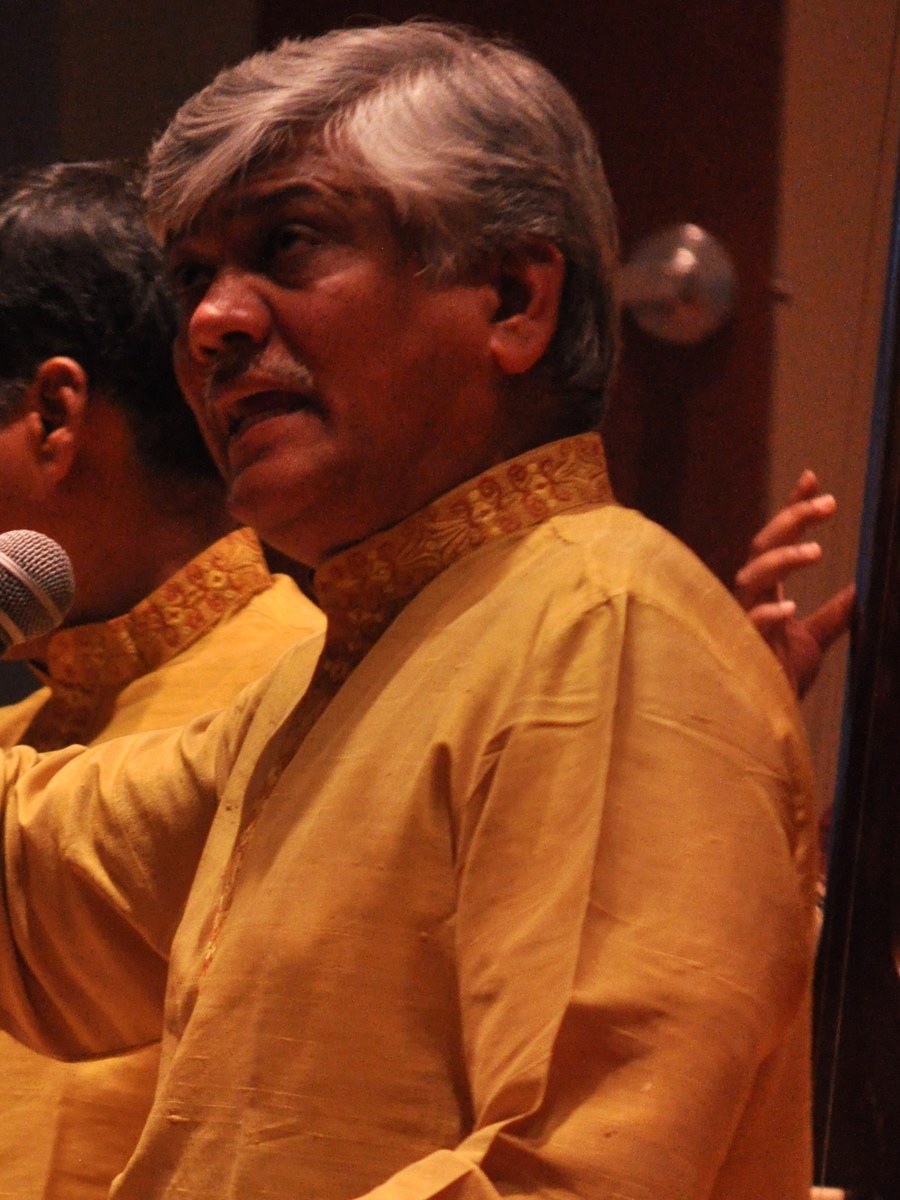 Pandit Umakant Gundechastudent
Received further training from him alongside the teaching of his brother Zia Fariduddin at the Bhopal Kendra.
Dagar vani — Wikipedia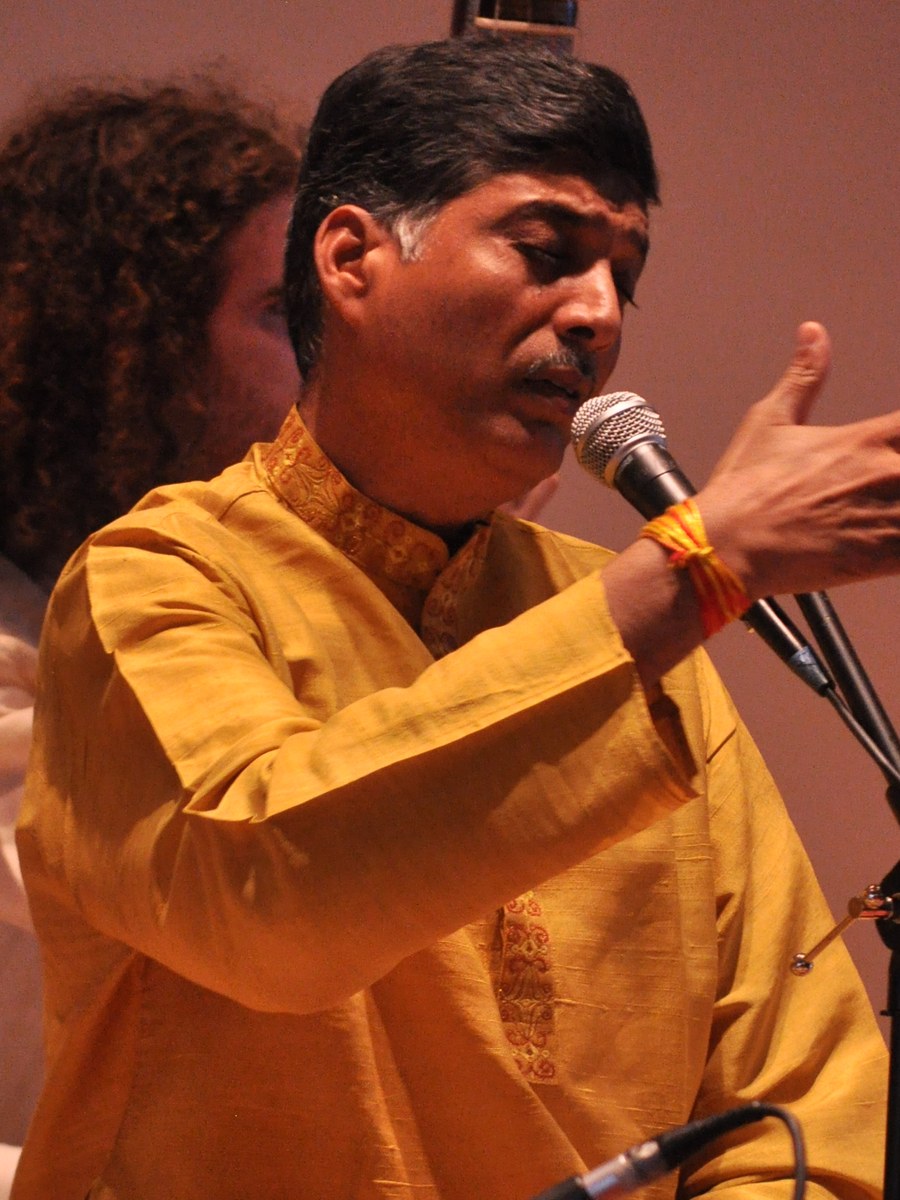 Pandit Ramakant Gundechastudent
Received further training from him alongside the teaching of his brother Zia Fariduddin at the Bhopal Kendra.
Dagar vani — Wikipedia
Family
- Ustad Ziauddin Khan Dagarfather and first teacher
Court musician to the Maharana of Udaipur; taught him voice and rudra veena.
Zia Mohiuddin Dagar — Wikipedia - Ustad Zia Fariduddin Dagarbrother and student
His younger brother, whom he taught after their father's death and often performed with.
Zia Fariduddin Dagar — Wikipedia 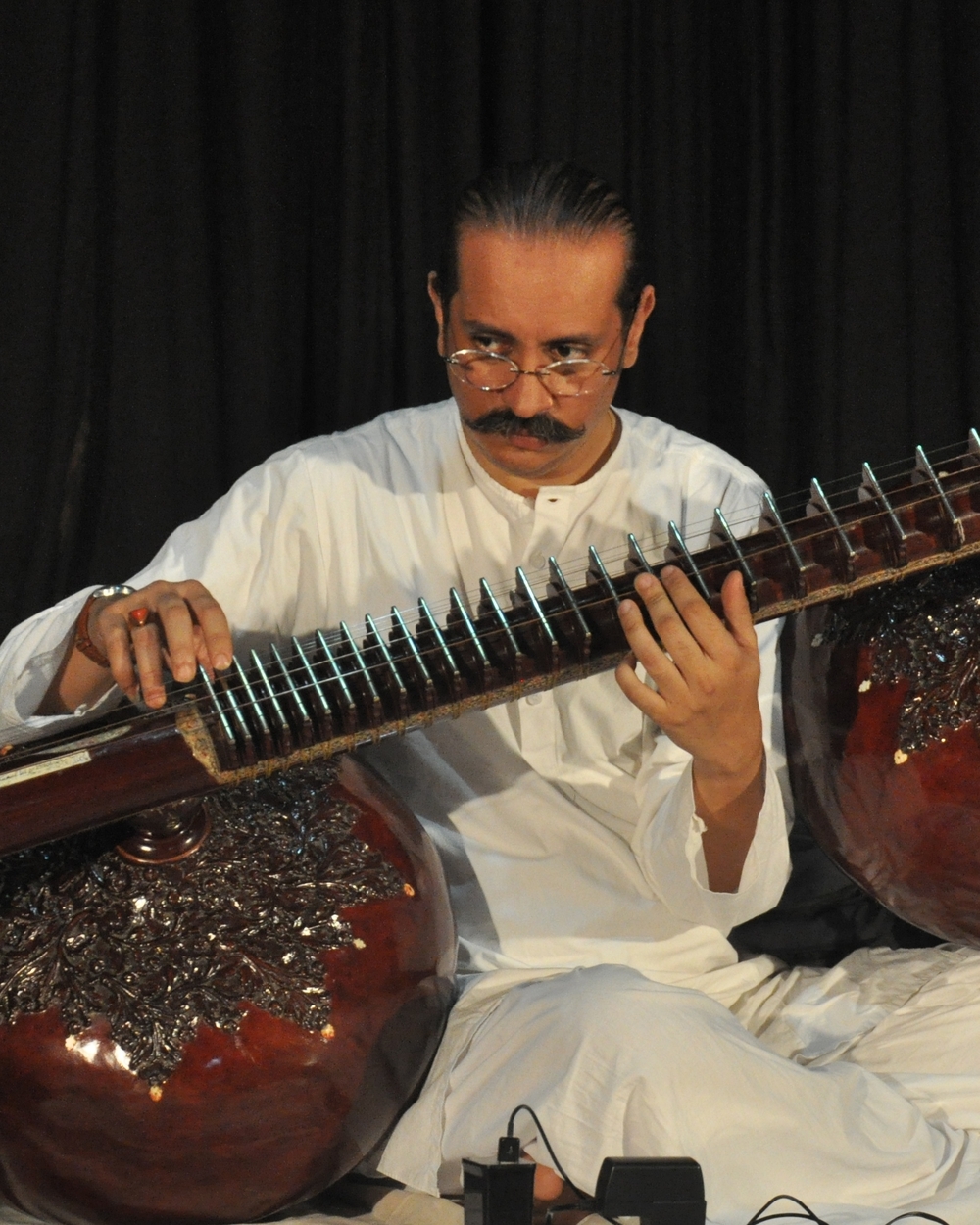 Ustad Bahauddin Dagarson and student
Continues the rudra veena line.
Ustad Zia Mohiuddin Dagar — Darbar
Other recorded connections
- Kanailal & Brotherinstrument makers
Built the enlarged bass rudra veena to his design.
Zia Mohiuddin Dagar — Wikipedia
Named on other pages
Musicians whose own pages record a connection with this one, in the words their sources use.
- Zakiruddin KhanTheir page records: Grandson
Son of Ziauddin Khan; the rudra veena player of the next century.
Schools, gurukuls and institutions
- Dhrupad Gurukul, Palaspe
Founder
- Dhrupad Kendra, Bhopal
Taught at the Kendra
- Dhrupad Sansthan
Guru of the founders
Recognition
Honours and recognition
Highest national honour first, then by year.
- 1981Sangeet Natak Akademi Award
- 1986Kalidas SammanAwarded by the Government of Madhya Pradesh.
Community
Memories from the community
Personal recollections, not verified history
These are memories shared by listeners and musicians. They sit apart from the sourced biography above, and an editor reads each one before it appears.
- No memories have been shared yet.
Members can share a memory of Ustad Zia Mohiuddin Dagar. Sign in or create an account.
Provenance
Sources and image credits
- Zia Mohiuddin Dagar — Wikipedia
- Ustad Zia Mohiuddin Dagar — Darbar
- Zia Mohiuddin Dagar — AllMusic
- Z.M. Dagar (S102–S105) — University of Washington Ethnomusicology Archives film session, 1975
- UW Ethnomusicology Archives: Zia Mohiuddin Dagar and Zia Fariduddin Dagar concert recordings, 15 March 1986
No photograph of this musician is published here yet; we use only images we are permitted to show, with credit.
Continue exploring
- Dagar vani (Dagarbani)The lineage Ustad Zia Mohiuddin Dagar is associated with, and the other musicians documented within it.
- The rudra veenaHow the instrument works, and who else in the archive plays it.
- Dhrupad Gurukul, PalaspeThe school Ustad Zia Mohiuddin Dagar is connected to — what it teaches and where it is.
- All musiciansBrowse the archive by name, instrument or discipline.