Plucked string
Sarod
A fretless plucked instrument with a bright, weighty metallic voice.
Introduction
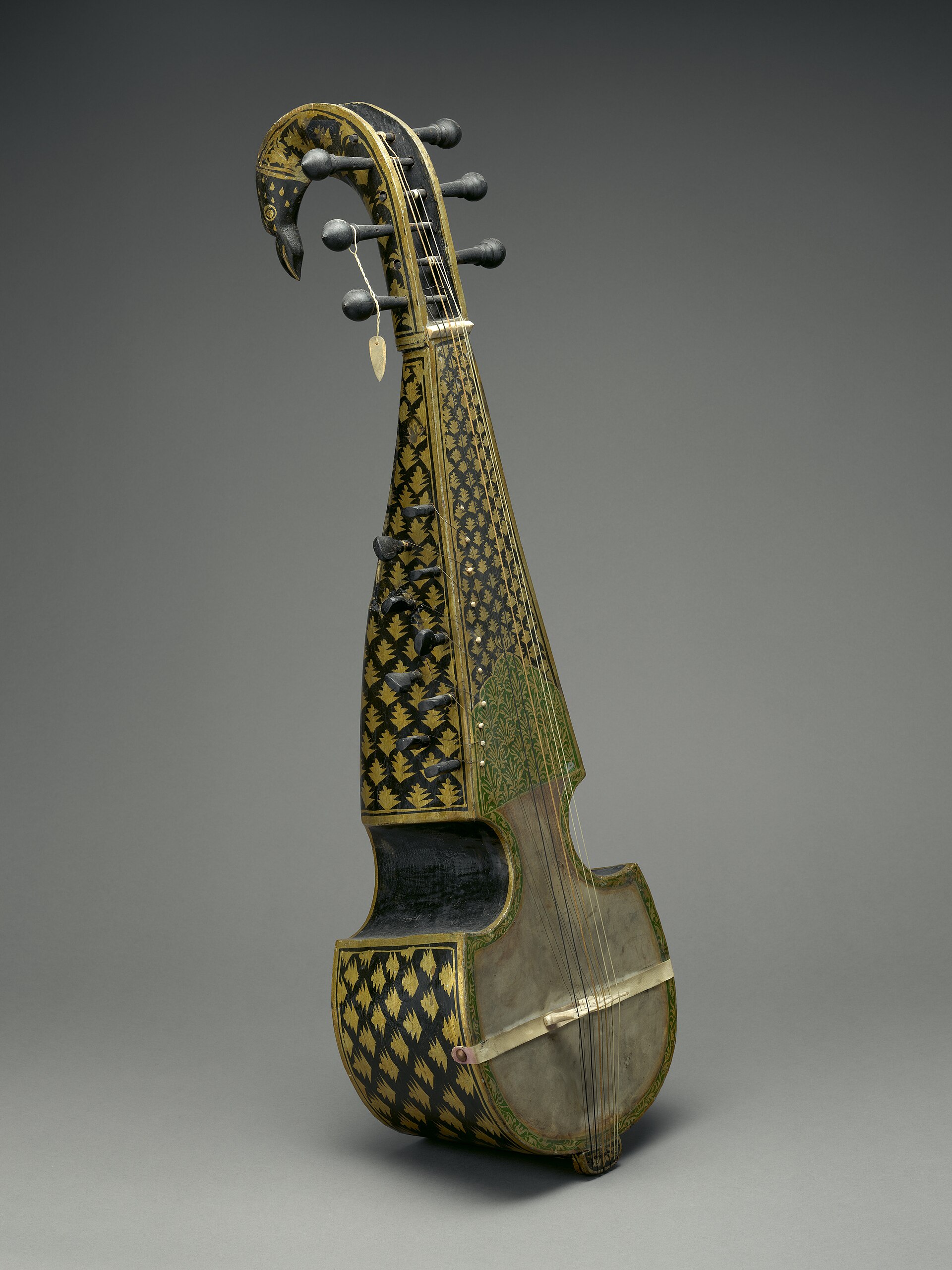
The sarod is a fretless plucked instrument with a polished metal fingerboard, a skin-covered wooden resonator and metal strings, played with a plectrum traditionally cut from coconut shell. With the sitar it is one of the two principal plucked instruments of Hindustani concert music, and is known for a darker, weightier and more introspective sound.
How it makes its sound
Because there are no frets, notes are stopped by pressing a string against smooth metal with the fingernail rather than the fingertip, so the player can slide continuously between pitches. This makes meend — the unbroken glide from one note to another that Indian melody depends on — central to sarod technique, while also demanding exact intonation, since nothing on the fingerboard marks a pitch. The steel strings over a skin belly give a percussive attack and a shorter decay than the sitar, and a bank of sympathetic strings adds a resonant halo beneath the melody.
Its place in the music
The sarod is played as a solo concert instrument, accompanied by tabla and a tanpura drone, in the usual sequence of unmetred alap, then jod and jhala, then composed gats set in tala. Its combination of a biting attack with full slides suits both the austere dhrupad-derived exposition and the ornamented khayal-influenced material that later players brought to it.
A short history
The sarod's origins are contested and no single account is settled. Scholars variously trace it to the Indian saradiya veena (a name by which the instrument was historically known), to the south Indian swarabat, and to the rabab; a separate line of argument derives its name from the Persian sorud, "song" or "melody", from the verb sorudan, to sing or play. The Oxford English Dictionary records the earliest English use of the noun from the 1860s, borrowed from Hindi. The most widely repeated modern account holds that the instrument took shape in India in the early nineteenth century as a developed form of the Afghan rubab played in Pathan communities east of Delhi, and that in the latter half of the century rubab players fitted metal strings and a metal fingerplate — the changes that produced longer-sustaining notes and made dhrupad and khayal ornamentation possible. In its present form the sarod dates definitively from the 1850s, when it gained standing as a serious concert instrument at Rewa, Shahjahanpur, Gwalior and Lucknow. Competing family histories claim its invention, and the archive keeps them attributed rather than choosing between them. Two lines dominate its modern practice: the Bangash line of Gwalior, and the Maihar tradition of Ustad Allauddin Khan, which carried the instrument to a worldwide audience through Ali Akbar Khan.
Hear it
A short sample, drawn from the instrument's most significant players, one recording each.
Start here
Raag Shuddha Basant
Shuddha Basant · AIR Raagam
An archival broadcast recording released by All India Radio's own channel.
Raga Shree on sarod
Shree · Ali Akbar Khan - Topic
Start here
Raga Jhinjhoti
Jhinjhoti · Prasar Bharati Archives
From the national broadcaster's own archive.
Start here
Raga Darbari Kanada — Teentaal
Ustad Amjad Ali Khan - Topic
A label-distributed sarod recording of Darbari Kanada in teentaal.
References
Continue exploring
- Ustad Allauddin KhanPlays the sarod — a page with recordings and sources.
- Ustad Ali Akbar KhanPlays the sarod — a page with recordings and sources.
- SitarA closely related instrument.
- Sarod traditionsThe gharanas and teaching lineages documented for this instrument.
- Gharanas & lineagesThe teaching traditions these musicians belong to.