Plucked string
Sitar
A long-necked plucked lute, the best known solo instrument of Hindustani music.
Introduction
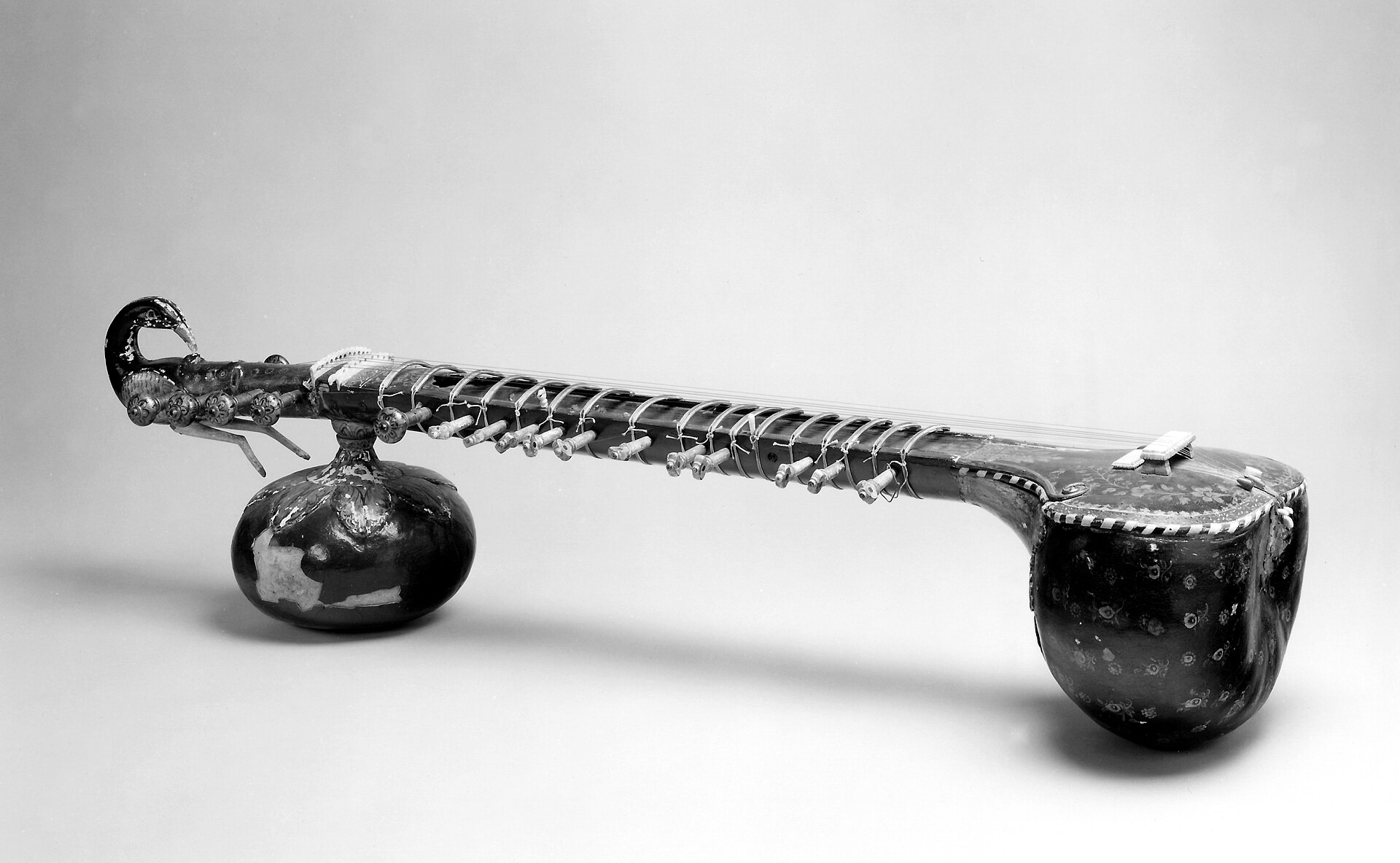
The sitar is a long-necked plucked instrument with a gourd resonator, played seated with a wire plectrum worn on the index finger. It is among the most widely recognised instruments of Hindustani classical music.
How it makes its sound
Melody strings run over curved metal frets that can be pulled sideways, letting a player bend one fret into several notes. Beneath them lie sympathetic strings that are never struck; they ring on their own and give the sitar its shimmering halo of sound.
Its place in the music
In Hindustani classical music the sitar is usually a solo instrument, unfolding a raag slowly in alap before moving into composed and improvised sections accompanied by tabla.
A short history
The instrument took shape in north India over the eighteenth and nineteenth centuries and was developed further in the twentieth by players associated with the Imdadkhani and Maihar lineages.
Hear it
A short sample, drawn from the instrument's most significant players, one recording each.
Sohini (qawwali ang), sitar — recorded Calcutta, 1904
The Gramophone & Typewriter, Ltd.
The first sitar recording made in India, taken by William Sinkler Darby in late 1904 and issued in 1905. Now in the public domain and held at Wikimedia Commons.
Start here
Raag Shuddha Basant
Shuddha Basant · AIR Raagam
An archival broadcast recording released by All India Radio's own channel.
Alap in Bageshri, surbahar
Megaphone Records (JNG-25)
A 78 rpm side issued as by "Professor Enayat Khan"; the transfer is hosted on Michael Kinnear's Etawah discography page.
Kausi Kanada — alap, jod and gat
Kausi Kanada · Saregama Hindustani Classical
References
Continue exploring
- Ustad Imdad KhanPlays the sitar — a page with recordings and sources.
- Ustad Allauddin KhanPlays the sitar — a page with recordings and sources.
- SurbaharA closely related instrument.
- Sitar traditionsThe gharanas and teaching lineages documented for this instrument.
- Gharanas & lineagesThe teaching traditions these musicians belong to.