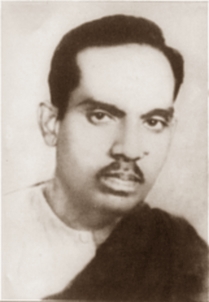
Hindustani classical · 1914–1958
Pandit Anokhelal Mishra
The Banaras tabla at impossible speed, every syllable still audible.
- Instrument
- Tabla
- Gharana
- Benares gharana (tabla)
- Schools & gurukuls
- Prayag Sangeet SamitiPerformed at the Samiti
- Born
- 1914, Benares (Varanasi), United Provinces
- Died
- 10 March 1958
Official website & social links
We have no checked official pages for Pandit Anokhelal Mishra yet. Suggest an official link.
Where to start
Begin listening
Teental — tabla solo
Vaibhav Tipnis
The teental for which he is best remembered, and the clearest surviving example of the na-dhin-dhin-na he is named for. A listener's upload; no release details are stated.
Live in 1957
Recorded 1957 · Ragaroots
One of the home recordings made in his last years. A listener's upload rather than an official release.
Duet with Palani Subramania Pillai, mridangam
NaadAura
A rare meeting of the Banaras tabla and the Carnatic mridangam. A listener's upload; date and occasion are not documented.
Recordings are embedded from official or authorised channels and never rehosted. Nothing plays on its own, and starting one closes another. Where an editor has added a note, it explains why that recording was chosen — not what happens inside it.
Biography
Life
Anokhelal Mishra was born in 1914 into a very poor family in Kashi (Banaras). He lost his parents while still young and was brought up by his grandmother. His talent for rhythm was noticed by Bhairav Prasad Mishra, who took him as a tabla student at about the age of five or six and trained him for some fifteen years. That line runs back through Bhairav Prasad's own teacher, known as Bhagat-ji, to Ram Sahai, the founder of the Banaras baaj; among Bhairav Prasad's other students were Maulvi Ram Mishra, Mahavir Bhatt, Mahadev Prasad Mishra and Nageshvar Prasad, and Anokhelal became the best known of them.
He was known for an almost punishing daily riyaaz, and for a modesty at odds with his reputation — contemporaries recalled a quiet man who praised younger players and said of himself that he still had much to learn.
He played both as a soloist and as an accompanist, working with musicians including Allauddin Khan, Vilayat Khan and Ali Akbar Khan, and accompanying singers and Kathak dancers. His recitals were carried on All India Radio, including its National Programme of Music, and reached listeners abroad through broadcasts such as Voice of America. The Rajan Parrikar Music Archive preserves a tabla solo in teentaal, one of the clearest surviving records of his playing. He was widely called Tabla Samrat, "emperor of tabla".
One surviving document of his solo playing is a teentaal recital recorded at a concert on 26 December 1957, with Jnan Prakash Ghosh on harmonium, before an audience that included Ahmed Jan Thirakwa, Habibuddin Khan, Maseet Khan and Karamatulla Khan; it was later issued as "Samrat". Samta Prasad, himself a Banaras master, said of him: "I am playing only one fourth of Pandit Anokhelal Mishra's style and they glorify my name."
He admired the fard playing of Bhagvati Sahai of the Ram Sahai family, and said he went to listen to him practise and tried to play as much like him as he could.
Among the musicians he trained were Mahapurush Mishra, who became Ali Akbar Khan's principal accompanist for nearly three decades; Chhote Lal Mishra, who later wrote on the playing techniques of the Banaras gharana; Chandra Nath Shastri; Ishwarlal Mishra, called Lallu; Radhakanta Nandi; Ramji Mishra; Sundar Lal Mishra and Chakkan Lal Mishra. His son Kashinath Mishra and grandson Sanjay Mishra also played.
Gangrene appeared in his left foot in 1956, and he died of it on 10 March 1958, aged about forty-four. Accounts of his early life differ in small details — some sources name Bhairav Sahay and Bhairon Maharaj as his teachers rather than the single name Bhairav Prasad Mishra — and those variations are recorded here rather than resolved.
Some of the clearest surviving recordings of his playing were not commercial releases at all. A teental solo lasting more than half an hour, with Khanna Banerjee on lahara, was recorded in Balaram Pathak's house on 11 September 1957, a few months before his death, by his own student Mahapurush Mishra; a second solo from 26 December 1957 survives in the same way. Both were kept privately for decades before being digitised from tape.
Musical contribution
What they brought to music
The Banaras baaj is an open, full-handed style descended in large part from the pakhawaj. What set Anokhelal apart within it was speed held together by clarity: he was called the jadugar, the wizard, of 'na dhin dhin na', the theka of teentaal, and of the phrase 'dhere dhere kite taka'.
The detail players still cite is that he could produce the 'na' of that theka at extreme speed with the first finger alone, so the syllables stayed separate where most playing turns into a blur — the na and tin ringing cleanly, the bayan resonant beneath. In the surviving teentaal solo the tempo climbs without the outline of the theka ever dissolving.
He was equally at ease in slow tempo, where the same care shows as space rather than speed; accounts of his accompaniment for dancers describe a hand that could turn instantly from that unhurried manner to the sharpest agility. That combination, rather than any single composition, is what later Banaras players measure themselves against.
In pictures
Photographs
Lineage & company
Teachers, students and musical connections
People
Grouped by the kind of relationship the sources record — who taught this musician, who they taught, family, and the people they played with.
Teachers and gurus
- Bhairav Prasad MishraTeacher
Took him as a student at about five or six and trained him for some fifteen years in the Banaras baaj.
Wikipedia - Chandra Nath ShastriDisciple
A pupil who has written recollections of his teacher.
Anokhelal Mishra — Wikipedia - Pandit Bhagvati SahaiInfluence
Not a teacher: Anokhelal said he listened to Bhagvati Sahai practise and tried to play like him.
Benares Gharana Lineage Chart — Shawn Mativetsky - Pandit Ram SahaiFounder of his gharana
Shaped the Benares baaj in the early nineteenth century; the tradition he inherited, not a personal teacher.
Benares gharana — Wikipedia
Students and disciples
- Mahapurush MishraDisciple
Later Ustad Ali Akbar Khan's principal accompanist for close to three decades.
Peyman Nasehpour - Radhakanta NandiDisciple
Named among the musicians he trained.
Rajan Parrikar Music Archive - Ramji MishraDisciple
Named among the musicians he trained.
Rajan Parrikar Music Archive - Ishwarlal MishraDisciple
Also known as Lallu; named among his pupils.
Anokhelal Mishra — Wikipedia - Chhote Lal MishraDisciple
Named among his most notable pupils; later wrote on Banaras gharana playing technique.
Anokhelal Mishra — Wikipedia
Family
- Kashinath MishraSon and disciple
His son, also a tabla player.
Anokhelal Mishra — Wikipedia
Collaborators and accompanists
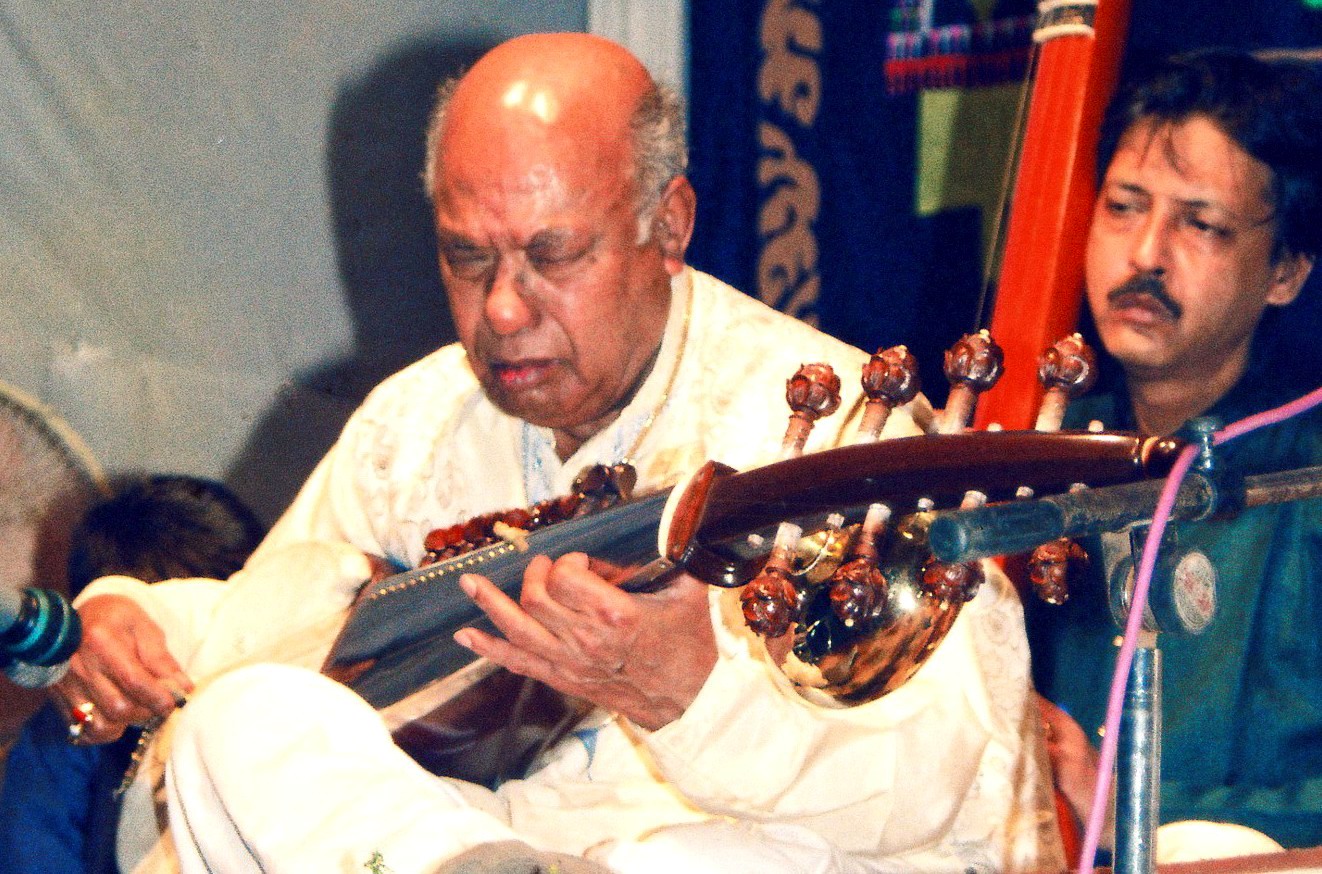 Ustad Ali Akbar KhanCollaborator
Among the soloists he accompanied.
Wikipedia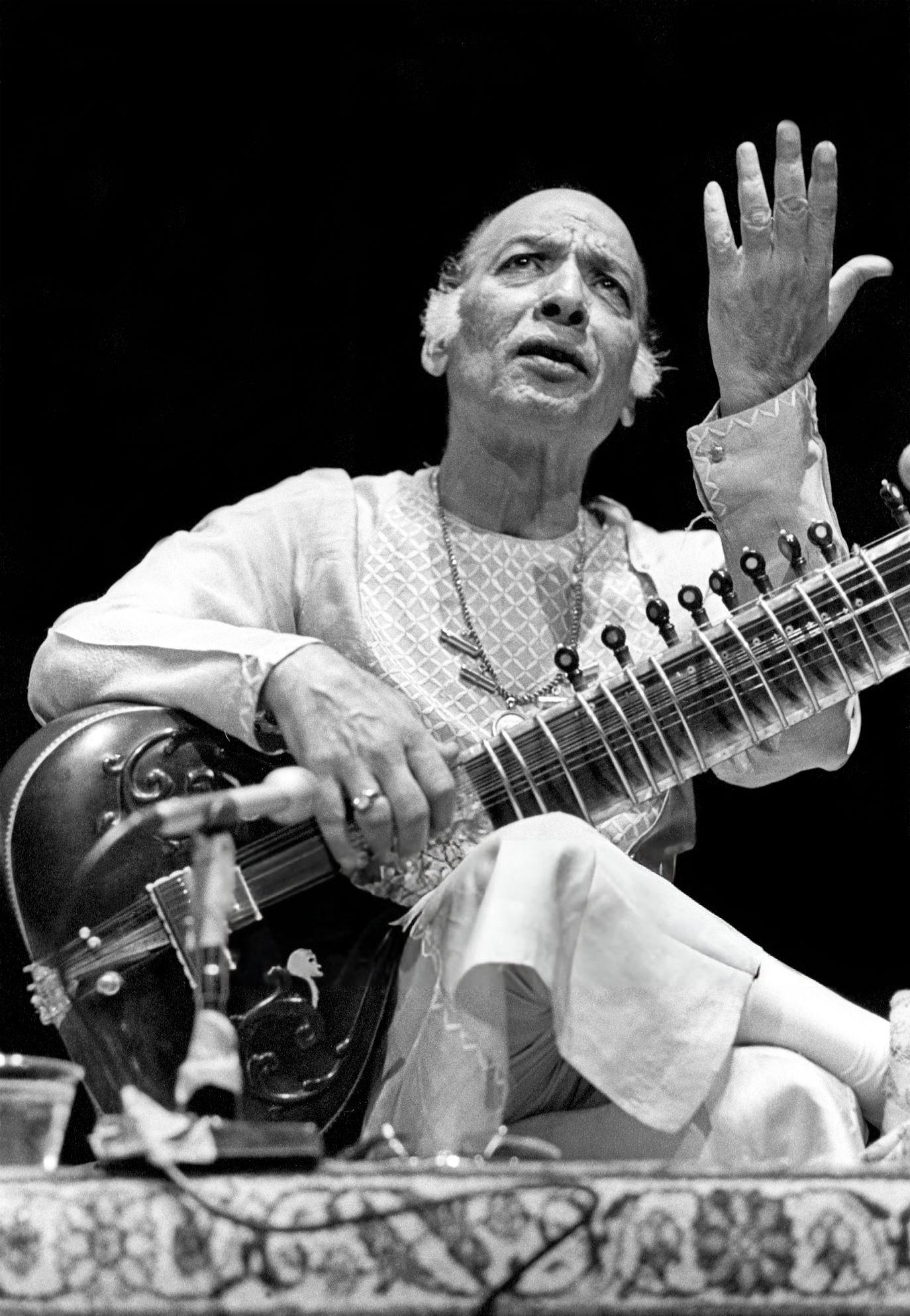 Ustad Vilayat KhanCollaborator
Among the soloists he accompanied.
Wikipedia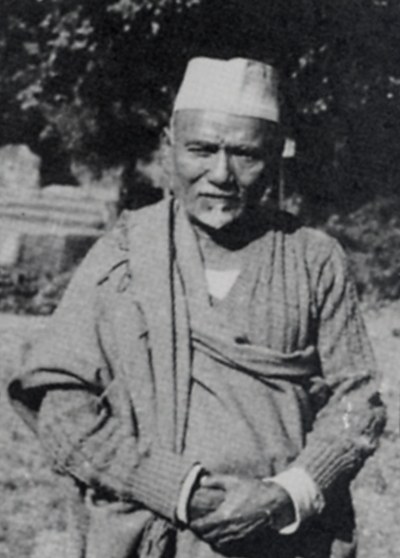 Ustad Allauddin Khanaccompanied
Named among the musicians he accompanied.
Wikipedia — Anokhelal Mishra Pandit Jnan Prakash GhoshCollaborator
Harmonium accompanist on the teentaal solo recorded at a concert on 26 December 1957, later issued as "Samrat".
Anokhelal Mishra — Wikipedia
Other recorded connections
- Pandit Samta PrasadDocumented admiration
Samta Prasad publicly rated his own playing as a fraction of Anokhelal's.
Anokhelal Mishra — Wikipedia
Schools, gurukuls and institutions
- Prayag Sangeet Samiti
Performed at the Samiti
Community
Memories from the community
Personal recollections, not verified history
These are memories shared by listeners and musicians. They sit apart from the sourced biography above, and an editor reads each one before it appears.
- No memories have been shared yet.
Members can share a memory of Pandit Anokhelal Mishra. Sign in or create an account.
Provenance
Sources and image credits
- Anokhelal Mishra — Wikipedia
- Anokhelal Mishra — Rajan Parrikar Music Archive
- Tradition and Creation of Pandit Anokhe Lal Mishra — Sangeet Natak Akademi (ICH)
- Pandit Mahapurush Mishra — Peyman Nasehpour
- Anokhelal Mishra — tabla solo in teental, Balaram Pathak's house, 11 September 1957 (Oriental Traditional Music from LPs & Cassettes)
- Benares Gharana Lineage Chart and Tabla Players — Shawn Mativetsky
Painting after a photograph, owned by his disciple Chandra Nath Shastri; scan by Wikimedia Commons user Packmania (CC BY-SA 3.0)
Continue exploring
- Benares gharana (tabla)The lineage Pandit Anokhelal Mishra is associated with, and the other musicians documented within it.
- The tablaHow the instrument works, and who else in the archive plays it.
- Prayag Sangeet SamitiThe school Pandit Anokhelal Mishra is connected to — what it teaches and where it is.
- All musiciansBrowse the archive by name, instrument or discipline.