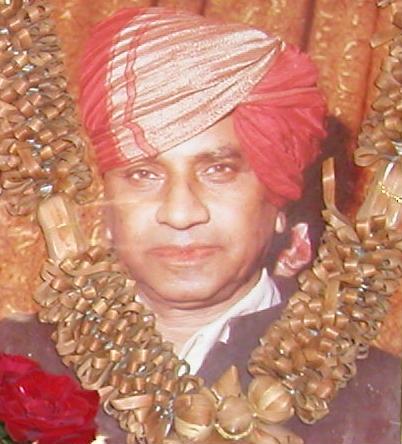
Hindustani classical · 1920–1991
Pandit Basavaraj Rajguru
A Dharwad voice trained in both Carnatic and Hindustani music, who sang khayal, vachana and thumri in eight languages.
- Instrument
- Khayal vocal
- Gharana
- Kirana gharana
Official website & social links
Pandit Basavaraj Rajguru's own pages elsewhere on the web.
These destinations belong to Pandit Basavaraj Rajguru or to those who look after their work, and are checked by an editor before they are listed. They leave the archive. Suggest a link or a correction.
Where to start
Begin listening
Raag Komal Rishabh Asavari
Komal Rishabh Asavari · Basavraj Rajaguru - Topic
A studio recording delivered by the rights holder to YouTube's catalogue.
Raag Bahaar
Bahaar · Basavraj Rajaguru - Topic
From the same label catalogue.
Chakora Chandrike — Kannada classical song
Lahari Music - Classical
Shows his Kannada repertoire alongside the khayal recordings.
Recordings are embedded from official or authorised channels and never rehosted. Nothing plays on its own, and starting one closes another. Where an editor has added a note, it explains why that recording was chosen — not what happens inside it.
Biography
Life
Basavaraj Rajguru was born on 24 August 1920 at Yaliwal, a village in the Dharwad district of north Karnataka, into a family of scholars, astrologers and musicians. His father, a Carnatic musician trained at Tanjavur, began his musical instruction; he first became known singing for Vamanrao Master's travelling drama company. He was thirteen when his father died, and around that time the blind saint-musician Panchakshara Gawai took him into his tutelage. In 1936, at the six-hundredth anniversary observances of the Vijayanagara empire at Hampi, he gave his first concert alongside his guru.
After Gawai's death in 1944 he moved to Bombay for the chance to learn from the Kirana teacher Sawai Gandharva. Sawai Gandharva was by then suffering from paralysis and had to leave Bombay, and he directed Rajguru instead to Sureshbabu Mane, another Kirana musician, under whom the training continued. Rajguru later travelled to the north-west of present-day Pakistan to learn from Waheed Khan, who had taught Gawai, and spent six months in Karachi with Latif Khan.
His repertoire was unusually wide for a khayal singer: pure classical khayal alongside vachana, natyageet, thumri and ghazal, in eight languages. He was honoured with the Padma Shri in 1975 and the Padma Bhushan in 1991, held Sangeet Natak Akademi awards from the central and state governments, and received an honorary doctorate from Karnatak University, Dharwad. He died in July 1991, one of three celebrated Dharwad musicians — with Kumar Gandharva and Mallikarjun Mansur — to die within little more than a year. A memorial national award in his name was instituted later, first conferred in 2011.
Sources disagree on his birth year. The Wikipedia article and this archive give 24 August 1920; the Rajan Parrikar Music Archive heads its catalogue entry 1917–1991, and karnataka.com likewise gives 24 August 1917. Both accounts are recorded here. His death is dated 21 July 1991.
Parrikar places him in the Dharwad line of Hindustani musicians alongside Bhimsen Joshi, Gangubai Hangal, Mallikarjun Mansur and Kumar Gandharva, and describes him as an itinerant musician of a now-vanished kind, as learned in the Veerashaiva literary tradition as in raga — a scholarship that fed the vachana and Purandaradasa material in his concerts. Accounts of his training under Panchakshara Gawai describe twelve to fifteen hours of daily practice over some six years.
Among his disciples, Parameshwar Hegde studied with him for fifteen years until 1991 and has kept his guru's repertoire in circulation through lecture-demonstrations, including a centenary tribute in Bengaluru in 2019 built around Puriya Kalyan, the first raga Rajguru taught him.
Musical contribution
What they brought to music
A high-pitched, wide-ranging khayal voice of the Kirana training, carrying a repertoire unusually broad for the tradition — khayal beside vachana, natyageet, thumri and ghazal, sung in eight languages, with the Veerashaiva devotional literature of north Karnataka always close by.
Lineage & company
Teachers, students and musical connections
People
Grouped by the kind of relationship the sources record — who taught this musician, who they taught, family, and the people they played with.
Teachers and gurus
- Ganayogi Panchakshara GawaiTeacher
Took the thirteen-year-old Rajguru into his tutelage; they performed together at Hampi in 1936.
Basavaraj Rajguru — Wikipedia - Pandit Sawai GandharvaTeacher
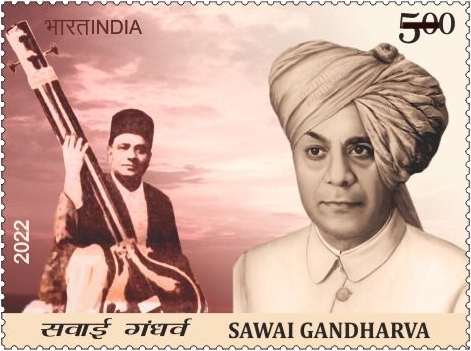
Sought him out in Bombay after 1944; illness cut the instruction short and Sawai Gandharva directed him to Sureshbabu Mane.
Basavaraj Rajguru — Wikipedia - Sureshbabu ManeTeacher
Taught Rajguru at Sawai Gandharva's instruction.
Basavaraj Rajguru — Wikipedia - Ustad Waheed KhanTeacher
Studied with him in the north-west of present-day Pakistan; Waheed Khan had also taught Panchakshara Gawai.
Basavaraj Rajguru — Wikipedia - Pandit Parameshwar HegdeDisciple
Studied with Rajguru for fifteen years until 1991 and took no other guru after him; presented a centenary lecture-demonstration on his guru's music in 2019.
The Hindu, 8 August 2019 - Ustad Latif KhanTeacher
Rajguru spent six months studying with him in Karachi.
Basavaraj Rajguru — Wikipedia 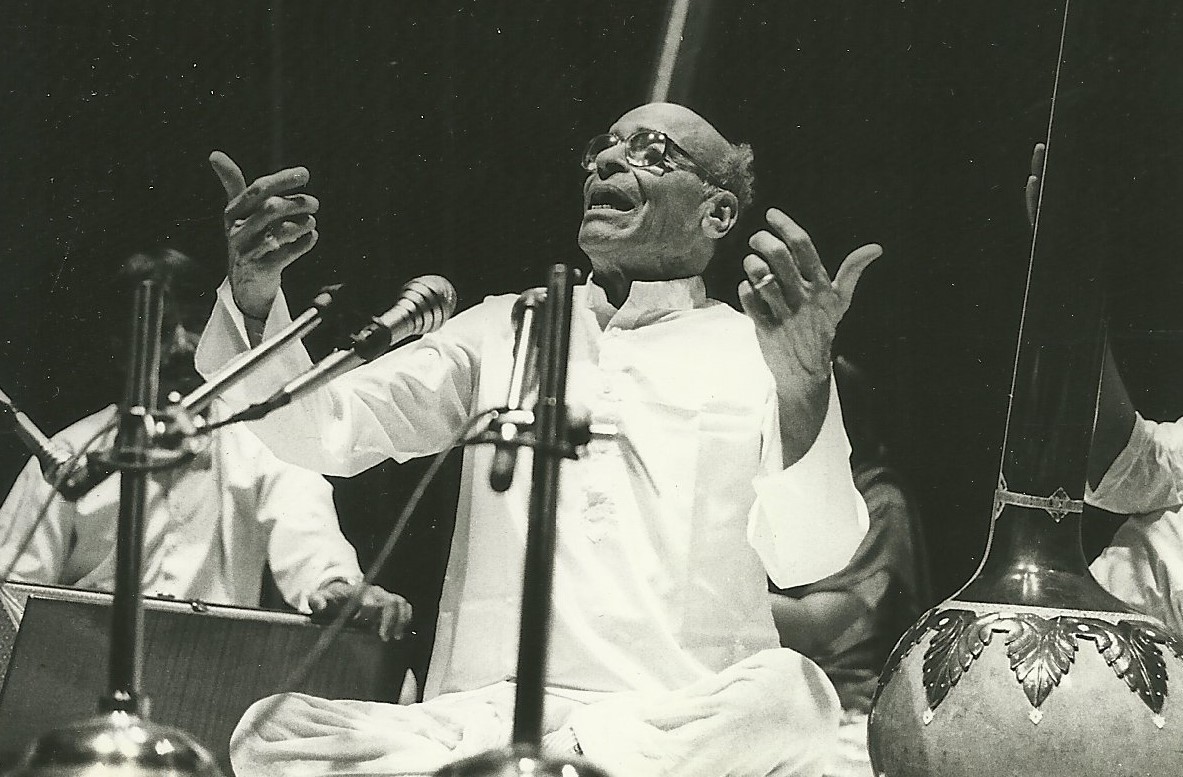 Pandit Mallikarjun MansurContemporary
Named with Bhimsen Joshi, Gangubai Hangal and Kumar Gandharva in the Dharwad district's line of Hindustani musicians to which Rajguru belonged.
Rajan P. Parrikar, Great Masters 26
Students and disciples
 Gangubai HangalFellow disciple
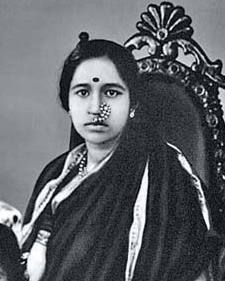
Both counted among Sawai Gandharva's disciples.
Sawai Gandharva — Wikipedia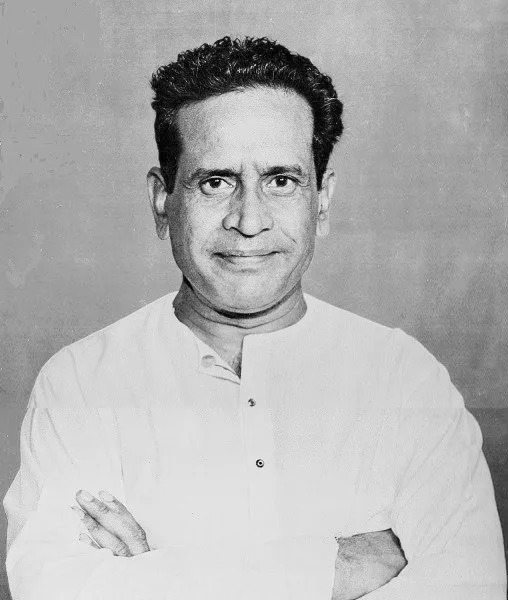 Pandit Bhimsen JoshiFellow disciple
Both counted among Sawai Gandharva's disciples.
Sawai Gandharva — Wikipedia
Other recorded connections
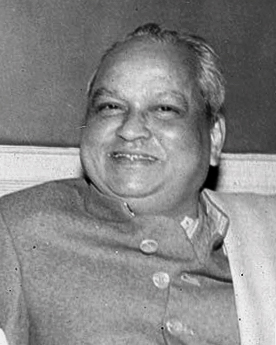 Pandit Kumar GandharvaContemporary
Named in the same Dharwad grouping of musicians.
Rajan P. Parrikar, Great Masters 26
Recognition
Honours and recognition
Highest national honour first, then by year.
- 1991Padma Bhushan
- 1975Padma Shri
- Sangeet Natak Akademi Award
- Honorary doctorate, Karnatak University, Dharwad
Community
Memories from the community
Personal recollections, not verified history
These are memories shared by listeners and musicians. They sit apart from the sourced biography above, and an editor reads each one before it appears.
- No memories have been shared yet.
Members can share a memory of Pandit Basavaraj Rajguru. Sign in or create an account.
Provenance
Sources and image credits
- Basavaraj Rajguru — Wikipedia
- Sawai Gandharva — Wikipedia
- Portrait photograph of Rajguru (CC BY-SA 3.0) — Wikimedia Commons
- Rajan P. Parrikar, "Great Masters 26: Pandit Basavraj Rajguru" — Rajan Parrikar Music Archive
- "His Master's Voice" (Parameshwar Hegde on his guru, centenary lecdem) — The Hindu, 8 August 2019
Photograph by Anupa4, courtesy Sh. Nachiketa Sharma; CC BY-SA 3.0, via Wikimedia Commons
Continue exploring