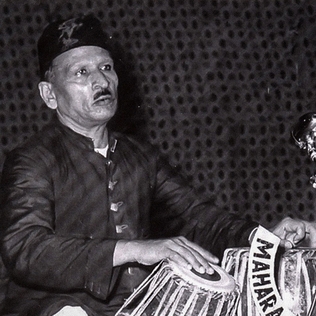
Hindustani classical · 1892–1976
Ustad Ahmed Jan Thirakwa
The tabla player who made the solo recital a concert form in its own right.
- Gharana
- Farrukhabad gharanaTrained across several tabla traditions; most closely associated with Farrukhabad
- Schools & gurukuls
- Bhatkhande Sanskriti VishwavidyalayaFaculty (historical)Sangit MahabharatiLaid the foundation stonePrayag Sangeet SamitiPerformed at the Samiti
- Born
- 1892, Moradabad, North-Western Provinces, British India
- Died
- 13 January 1976, Lucknow, Uttar Pradesh
Official website & social links
Explore Ustad Ahmed Jan Thirakwa's recordings and legacy on the pages kept in their name.
These destinations belong to Ustad Ahmed Jan Thirakwa or to those who look after their work, and are checked by an editor before they are listed. They leave the archive. Suggest a link or a correction.
Where to start
Begin listening
Start here
Teentaal — tabla solo
Akashvani AIR
A broadcaster-published tabla solo in teentaal from the All India Radio archive.
An archival performance
All India Radio archive promo
Prasar Bharati Archives
A short archival promo film about him from the national broadcaster's archive.
Recordings are embedded from official or authorised channels and never rehosted. Nothing plays on its own, and starting one closes another. Where an editor has added a note, it explains why that recording was chosen — not what happens inside it.
Biography
Life
Ahmed Jan Khan, known everywhere as Thirakwa, was born in Moradabad into a family of musicians. Sources disagree about the year: Wikipedia and Darbar give 1892, while the Rajan Parrikar Music Archive records 1891. Obituary writing that calls him "a near-centenarian" is hard to reconcile with either date, and the archive leaves the disagreement standing rather than choosing for you.
He came to the tabla sideways. His first lessons were in vocal music, and his father Hussain Bakhsh — a well-known sarangi player, as was his elder brother Mia Jan — taught him sarangi before concluding the tabla suited him better. He studied first with his uncles Sher Khan, Faiyaz Khan and Baswa Khan, and then, from about the age of twelve, was taken to Bombay and placed with Ustad Munir Khan of the Farrukhabad–Laliyana lineage. That tutelage is usually described as lasting twenty-five years, sustained by practice sometimes put at sixteen hours a day. The name "Thirakwa" was not his own: it came from his guru's father, Kale Khan, for the way his fingers seemed to dance.
He made his debut around sixteen in Khetwadi, Bombay, toured with Bal Gandharva's theatre company, and in 1936 was appointed a court musician at Rampur, a position he is said to have held for some thirty years. The court years put him in daily contact with vocalists and instrumentalists of the Agra, Jaipur, Gwalior and Patiala gharanas. He accompanied four generations of performers — among them Imdad Khan, Rajab Ali Khan, Mushtaq Hussain Khan, Bhaskarbuva Bakhale, Allauddin Khan, Hafiz Ali Khan and, much later, Rais Khan.
When princely patronage ended he moved into institutional teaching: a professorship at Bhatkhande Music College in Lucknow, where he became head of faculty and professor emeritus, and later visiting professor at the National Centre for the Performing Arts in Bombay, where he was also the inspiration behind Pandit Nikhil Ghosh's school of music. Disciples named in published accounts include Nikhil Ghosh, Lalji Gokhale, Bhai Gaitonde and Rashid Mustafa.
He received the Sangeet Natak Akademi Award in 1954 and the Padma Bhushan in 1970. He had returned from Bombay to Lucknow, the city he had said he would never leave, when he collapsed in a rickshaw on the way to Charbagh station on 13 January 1976 and died.
Musical contribution
What they brought to music
Thirakwa is credited with helping move the tabla out of the accompanist's seat and onto the concert platform as a solo instrument — a shift that shaped every tabla recital that followed. He was equally regarded in sangat, and contemporaries wrote about the two halves of his work as though they were one skill.
He is usually placed among the leading exponents of the Farrukhabad khula baaj, the open, resonant style whose strokes are allowed to ring. But because Munir Khan had gathered material from more than one lineage, Thirakwa carried several traditions at once, and is commonly described as commanding the repertoires of Delhi, Ajrada, Lucknow and Farrukhabad rather than a single house style.
His own view of the map was narrower than the textbook one. In a filmed interview from the mid-1960s he told his interviewer that there were essentially two gharanas — Purab, covering Lucknow and Farrukhabad, and Delhi — and declined to treat Punjab as a tabla gharana at all, calling it a pakhawaj tradition. That opinion is not the consensus today, and is recorded here as his, not as fact.
Little of his playing survives in authorised digital form, which is itself part of the story of how Indian classical recordings were kept — and not kept — in the twentieth century.
Life in dates
Timeline
1892
Born in Moradabad
Sources differ: the Rajan Parrikar Music Archive gives 1891.
1908
Performing life begins
The start of his documented years as a performer.
1954
Sangeet Natak Akademi Award
1970
Padma Bhushan
1976
Died in Lucknow
13 January 1976.
In pictures
Photographs
Lineage & company
Teachers, students and musical connections
In the documented teaching trees
Where the archive's lineage research places Ustad Ahmed Jan Thirakwa, and the teaching links recorded around them inside each tree.
Farrukhabad gharana (tabla)1892–1976
The most celebrated tabla soloist of the twentieth century.
Taught in this tree by: Munir Khan
People
Grouped by the kind of relationship the sources record — who taught this musician, who they taught, family, and the people they played with.
Teachers and gurus
- Ustad Munir KhanTeacher
Of the Farrukhabad–Laliyana lineage; Thirakwa studied with him from about the age of twelve.
Darbar — Ustad Ahmed Jan Thirakwa - Pandit Nayan Ghoshgave early guidance
Nayan Ghosh records receiving guidance from him as a young musician, through his father.
Nayan Ghosh — Biography (official site)
Students and disciples
- Pandit Lalji GokhaleDisciple
Named among his disciples; no profile on the archive yet.
Darbar — Ustad Ahmed Jan Thirakwa - Pandit Bhai GaitondeDisciple
Named among his disciples; no profile on the archive yet.
Darbar — Ustad Ahmed Jan Thirakwa - Ustad Rashid MustafaDisciple
Named among his disciples; no profile on the archive yet.
Darbar — Ustad Ahmed Jan Thirakwa - Ustad Munir KhanListed among his disciples
Aneesh Pradhan names Thirakwa among Munir Khan's prominent disciples.
Scroll.in — Munir Khan, pioneer of the Laliana gharana - Pandit Nikhil GhoshSelected documented student
Ghosh trained under Thirakwa, and Thirakwa later laid the foundation stone of Sangit Mahabharati's premises.
Sangit Mahabharati — founder
Collaborators and accompanists
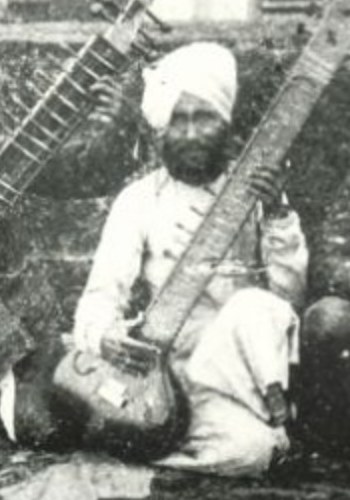 Ustad Imdad KhanAccompanied
Named among the four generations of soloists he accompanied, from the late nineteenth century onward.
Mohan Nadkarni, The Economic Times 1982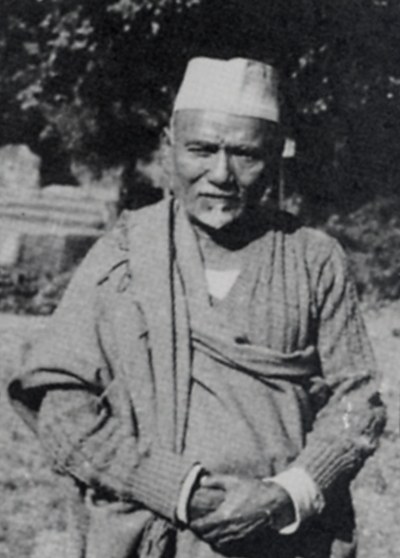 Ustad Allauddin KhanAccompanied
Named among the soloists he accompanied.
Mohan Nadkarni, The Economic Times 1982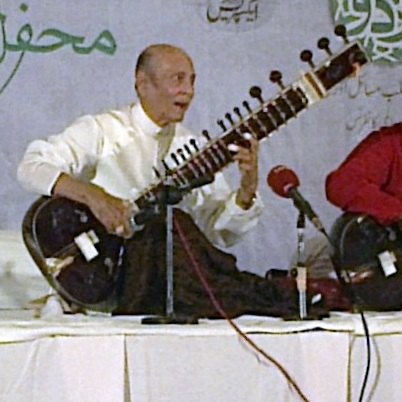 Ustad Rais KhanAccompanied
Named among the younger artists he accompanied late in his career.
Mohan Nadkarni, The Economic Times 1982
Schools, gurukuls and institutions
- Bhatkhande Sanskriti Vishwavidyalaya
Faculty (historical)
- Sangit Mahabharati
Laid the foundation stone
- Prayag Sangeet Samiti
Performed at the Samiti
Recognition
Honours and recognition
Highest national honour first, then by year.
- 1970Padma Bhushan
- 1954Sangeet Natak Akademi Award
Writing
From the journal
How accompaniment becomes a conversation
The tabla, sarangi and harmonium players beside the soloist are not keeping time. Here is what they are actually doing, and why their names took so long to appear on the poster.
How to listen to a tabla solo
A tabla solo is not a drum showcase but a suite of contrasting forms, held together by a repeating melodic line. Here is what is happening, in the order you are likely to hear it.
Community
Memories from the community
Personal recollections, not verified history
These are memories shared by listeners and musicians. They sit apart from the sourced biography above, and an editor reads each one before it appears.
- No memories have been shared yet.
Members can share a memory of Ustad Ahmed Jan Thirakwa. Sign in or create an account.
Provenance
Sources and image credits
- Thirakwa on the gharanas — filmed interview, translated (Tabla Abhi)
- Rajan Parrikar Music Archive — Ahmadjan Thirakhwa (Susheela Mishra)
- Mohan Nadkarni on Ahmed Jan Thirakwa, The Economic Times 1982 (Kamat archive)
- Mahindra Sanatkada Lucknow Festival — Ahmed Jan "Thirakwa"
- Wikipedia — Ahmed Jan Thirakwa
- Darbar — Ustad Ahmed Jan Thirakwa
- Scroll.in — Munir Khan, pioneer of the Laliana gharana
- Scroll.in — Tabla maestros of the Farrukhabad gharana
Photograph: Ahmed Jan Thirakwa at the tabla — archival photograph via Wikipedia
Continue exploring
- Farrukhabad gharanaThe lineage Ustad Ahmed Jan Thirakwa is associated with, and the other musicians documented within it.
- The tablaHow the instrument works, and who else in the archive plays it.
- The sarangiHow the instrument works, and who else in the archive plays it.
- Bhatkhande Sanskriti VishwavidyalayaThe school Ustad Ahmed Jan Thirakwa is connected to — what it teaches and where it is.
- All musiciansBrowse the archive by name, instrument or discipline.