Hindustani classical · Contemporary
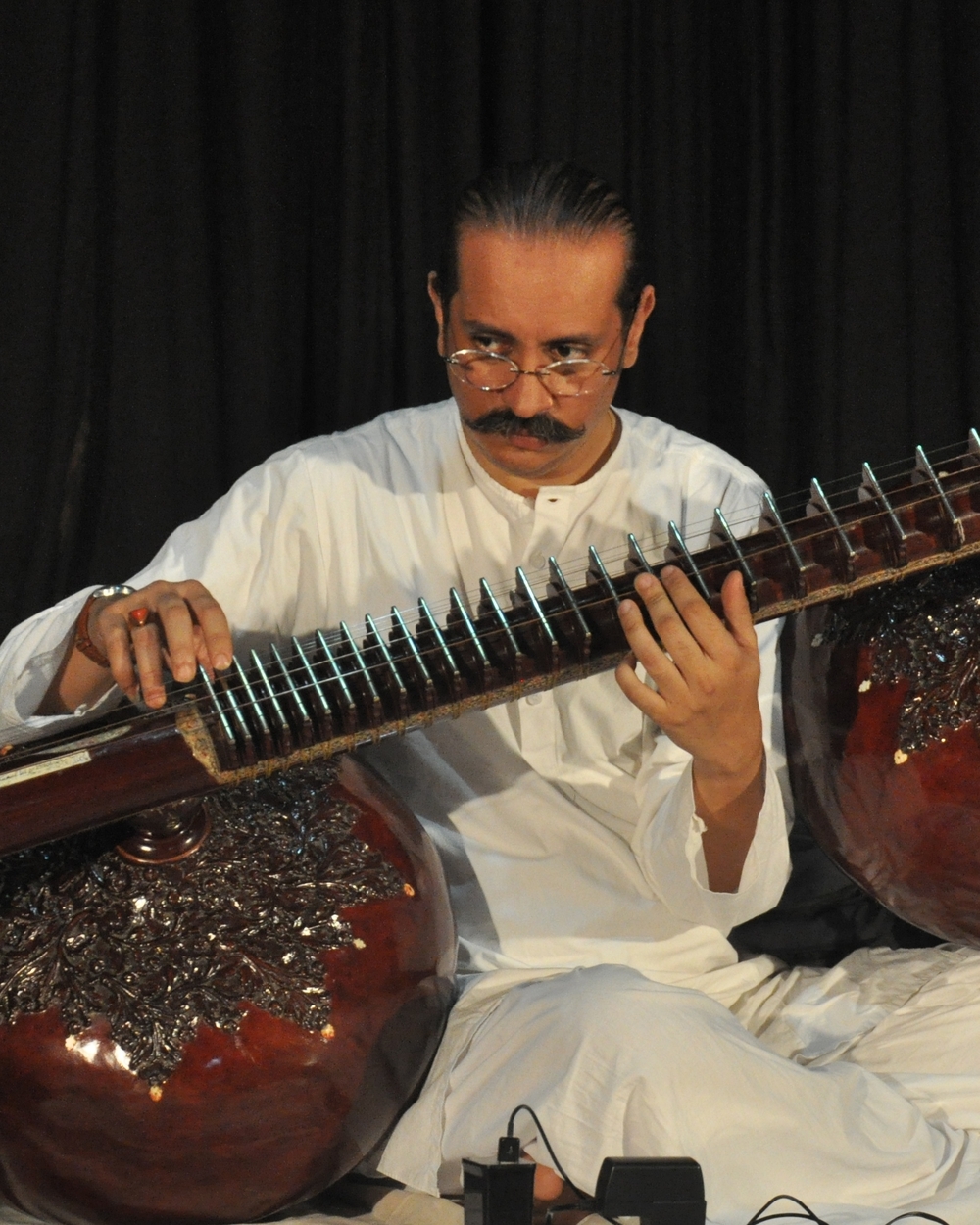
Ustad Mohi Bahauddin Dagar
Carries the Dagar rudra veena line into the present, often performing entirely without accompaniment.
- Instrument
- Rudra veena
- Gharana
- Dagar vani (Dagarbani)
- Schools & gurukuls
- Dhrupad Gurukul, PalaspeTeaches at the gurukul
- Born
- 1970
Official website & social links
Ustad Mohi Bahauddin Dagar's own pages elsewhere on the web.
- Official websiteUstad Mohi Bahauddin Dagar's own account
- Instagram · @mohibahauddindagarUstad Mohi Bahauddin Dagar's own account
- Facebook · @bahauddin.dagar.5Ustad Mohi Bahauddin Dagar's own account
- X · @bahauddindagarUstad Mohi Bahauddin Dagar's own account
These destinations belong to Ustad Mohi Bahauddin Dagar or to those who look after their work, and are checked by an editor before they are listed. They leave the archive. Suggest a link or a correction.
Where to start
Begin listening
Start here
Rudra veena recital — DD Sahyadri, Classical Instrument, episode 31
Pakhawaj: Manik Munde; tanpura: Bhupendra Pathak and Anuratan Karkar · 27:19 · DD Sahyadri
Broadcast recording published by the state broadcaster's own channel; accompanists are named in its description.
Watch on YouTubeUploaded 2022-02-19
Recordings are embedded from official or authorised channels and never rehosted. Nothing plays on its own, and starting one closes another. Where an editor has added a note, it explains why that recording was chosen — not what happens inside it.
Biography
Life
Bahauddin Dagar did not grow up expecting to be a musician. He has said he wanted to be a painter, that until sixteen his listening was rock and jazz from a Bombay school upbringing, and that although music filled the house he did not understand what alap was. He began the veena with his father at sixteen; his father died when he was twenty, and his uncle Zia Fariduddin Dagar mentored him from then on.
He describes his father's teaching as deliberately indirect: a student would be given a few key phrases holding the soul of a raga and asked to work at them until the raga opened of its own accord. He has spoken of the veena as an instrument that sets the pace rather than obeying one — once it is tuned to a raga's requirements there is no turning back, and "a beenkar must never be in a hurry".
He performs frequently without accompaniment, in the unhurried manner of dhrupad before amplified concert life, and teaches widely within the international veena community. In recent years he has performed at the Ravenna Festival in Italy in 2017 with the vocalist Pelva Naik, in a concert curated by Darbar marking seventy years of Indian independence, and gave a solo recital at the Darbar Festival in London's Purcell Room the following year.
He received the Sangeet Natak Akademi Award in 2012.
How his generation is counted varies with where the count begins: he is described as the twentieth generation of the Dagar line when it is traced to Nayak Haridas Dagar in the sixteenth century, and as the eighth when traced to Baba Gopal Das, who became Baba Imam Baksh on converting to Islam in the eighteenth century.
His own account of the training begins earlier than the veena. He started at seven on the sitar with his mother, Smt. Pramila Dagar, before turning to his father's instrument. The rhythmic clarity he brings to alap, jor and jhala he attributes to the Saadharani school reintroduced by his great-grandfather Ustad Zakiruddin Khan and his grandfather Ustad Ziauddin Khan, and to the joining of veena and voice. He held the Nana Shirgaokar Research Professorship at the University of Goa between 2013 and 2015, has designed the Ras Veena — an adaptation of the Saraswati veena for dhrupad — and teaches at the gurukul near Panvel that his father founded in 1982.
Musical contribution
What they brought to music
He has argued publicly that in the Dagar tradition beenkars stood on equal footing with singers, the instrument sharing the aesthetic values of the voice: in his words, the instrument "complements the voice, beautifies the swara phrases, brings about exactness". He is unhurried about change — belonging to an established musical family, he has said, brings the responsibility of retaining the essence of the tradition rather than licence to vary it drastically.
Life in dates
Timeline
1970
Born
c. 1986
Begins the rudra veena at sixteen
Under his father, Ustad Zia Mohiuddin Dagar.
1990
Father's death
Continued his training under his uncle, Ustad Zia Fariduddin Dagar.
2012
Sangeet Natak Akademi Award
2017
Ravenna Festival, Italy
With the vocalist Pelva Naik, in a Darbar-curated concert marking seventy years of Indian independence.
2018
Darbar Festival, London
Solo recital at the Purcell Room.
In pictures
Photographs
Lineage & company
Teachers, students and musical connections
Documented teaching lineage
Taught by Ustad Zia Mohiuddin Dagar
Began teaching him the rudra veena when he was sixteen.
Bahauddin Dagar — WikipediaTaught by Ustad Zia Fariduddin Dagar
Took over his training after 1990.
Bahauddin Dagar — Wikipedia
Teaching, family, collaboration and influence are recorded separately here; none is ever inferred from another.
In the documented teaching trees
Where the archive's lineage research places Ustad Mohi Bahauddin Dagar, and the teaching links recorded around them inside each tree.
Dagar vani (Dagarbani)born 1970
Son of Zia Mohiuddin Dagar and a leading rudra veena player today.
Taught in this tree by: Zia Mohiuddin Dagar
People
Grouped by the kind of relationship the sources record — who taught this musician, who they taught, family, and the people they played with.
Students and disciples
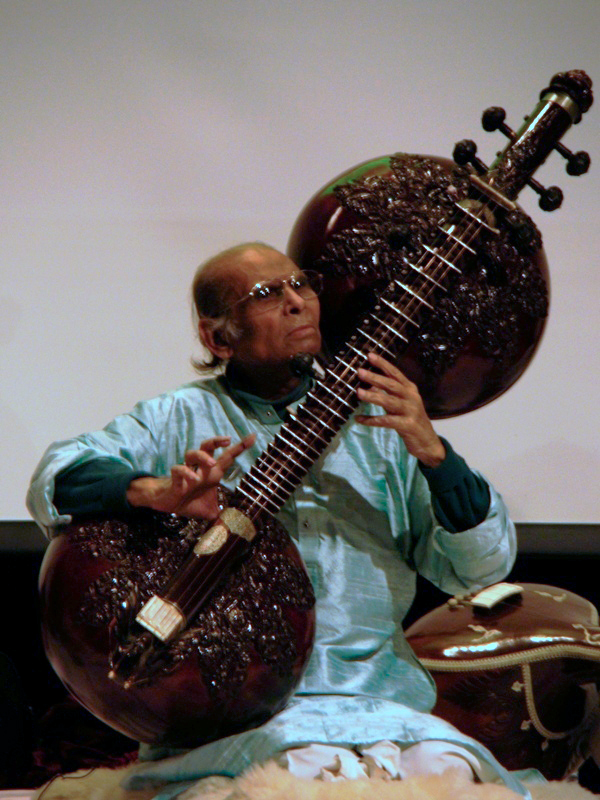 Ustad Asad Ali Khanfellow rudra veena player
Of the Jaipur beenkar gharana; Bahauddin Dagar has credited his work in creating awareness of the instrument, noting he found few students. A separate rudra veena lineage, not the Dagar line.
The Dagar-Dhrupad connect — The Hindu, 8 June 2017
Family
- Ustad Zia Mohiuddin Dagarfather and first teacher
Began the veena with him at sixteen; his father died four years later.
Bahauddin Dagar — Wikipedia - Ustad Zia Fariduddin Dagaruncle and teacher
Mentored him after his father's death in 1990, and taught alongside him at the Palaspe gurukul.
Bahauddin Dagar — Wikipedia - Pramila DagarMother and first teacher
Taught him sitar from the age of seven, before he took up his father's rudra veena.
Mohi Baha'ud-din Dagar — official website - Ustad Zakiruddin KhanGreat-grandfather
With Ustad Ziauddin Khan, reintroduced the Saadharani school whose rhythmic clarity he carries.
Mohi Baha'ud-din Dagar — official website
Collaborators and accompanists
- Pelva Naikconcert collaborator
Performed together at the Ravenna Festival, Italy, in 2017.
Ustad Bahauddin Dagar — Darbar
Schools, gurukuls and institutions
- Dhrupad Gurukul, Palaspe
Teaches at the gurukul
Recognition
Honours and recognition
- 2012Sangeet Natak Akademi AwardConferred by the Sangeet Natak Akademi, India's national academy for music, dance and drama.
Writing
From the journal
Community
Memories from the community
Personal recollections, not verified history
These are memories shared by listeners and musicians. They sit apart from the sourced biography above, and an editor reads each one before it appears.
- No memories have been shared yet.
Members can share a memory of Ustad Mohi Bahauddin Dagar. Sign in or create an account.
Provenance
Sources and image credits
- Bahauddin Dagar — Wikipedia
- Ustad Bahauddin Dagar — Darbar
- Veena is like an elephant: Ustad Mohi Bahauddin Dagar — The Hindu, 12 October 2018
- The Dagar-Dhrupad connect — The Hindu, 8 June 2017
- Biography — Mohi Baha'ud-din Dagar's official website
Photograph by Kannan Shanmugam, Shanmugam Studio, Kollam, via Wikimedia Commons — CC BY-SA 3.0 (cropped)
Continue exploring
- Dagar vani (Dagarbani)The lineage Ustad Mohi Bahauddin Dagar is associated with, and the other musicians documented within it.
- The rudra veenaHow the instrument works, and who else in the archive plays it.
- Dhrupad Gurukul, PalaspeThe school Ustad Mohi Bahauddin Dagar is connected to — what it teaches and where it is.
- All musiciansBrowse the archive by name, instrument or discipline.