Hindustani classical · 1924–1990
Ustad Inam Ali Khan
The Delhi baaj kept exactly as it was handed down.
- Instrument
- Tabla
- Gharana
- Delhi gharana (tabla)
- Born
- 1924, Delhi
- Died
- 1990
- On these dates
- Kippen's interview-based account gives 1924–1990; some secondary web sources give a death year of 2002. Unresolved.
Official website & social links
We have no checked official pages for Ustad Inam Ali Khan yet. Suggest an official link.
Where to start
Begin listening
Tabla solo — Delhi baaj, recorded Bombay, October 1971
Recorded 1971 · 15:20 · Sudev Sheth
Recorded by Robert Gottlieb for his study of the six tabla gharanas and issued as Solo Tabla Drumming of North India. The upload is by a researcher, not an official channel; the recording was identified in Aneesh Pradhan's 2016 Scroll.in survey of Delhi gharana recordings.
Tabla solo, Delhi gharana
S.S.C
A second solo, posted by a private collector; date and venue are not stated on the upload.
Recordings are embedded from official or authorised channels and never rehosted. Nothing plays on its own, and starting one closes another. Where an editor has added a note, it explains why that recording was chosen — not what happens inside it.
Biography
Life
Inam Ali Khan was born in Delhi in 1924, the only son of Ustad Gamay Khan (1883–1958), the outstanding Delhi tabla player of the earlier twentieth century, and he learned the family baaj from him. The household stood at the centre of the Delhi lineage in two directions at once: his father had married a daughter of Wali Bakhsh Khan, which placed Inam Ali within reach of the other great Delhi player of the age, Natthu Khan (1875–1940). After Gamay Khan's death he became khalifa, the acknowledged head of the gharana.
Much of what is now written about the Delhi lineage comes from him directly. In April 1984 the ethnomusicologist James Kippen recorded interviews in Delhi with Inam Ali Khan and with his uncle Ustad Munnu Khan, and the genealogy that scholars still cite — running back through Chote Khan, Muhammad Khan and Shitab Ali Khan towards the gharana's founder Sidhar Khan Dhadi — is the version the two men gave. Kippen notes plainly that such family trees are shaped as much by memory and precedence as by record, which is worth keeping in mind when reading any tabla genealogy.
His best-known disciple was Ustad Latif Ahmed Khan (1941–1990), who studied with both Gamay Khan and Inam Ali Khan, though the two later fell out. Of Inam Ali Khan's own sons, only Ghulam Haider Khan took up the tabla. Kippen's assessment, written from a distance, is that the performing tradition in its full Delhi form did not survive the deaths of Inam Ali Khan and Latif Ahmed Khan in the same year.
Dates and family details conflict across sources. Kippen's interview-based account gives 1924–1990 and names Gamay Khan as father and guru; some online tabla writing instead gives a death date of 2002 and names a different father, and at least one recent site wrongly lists Ustad Akram Khan of the Ajrara line among his disciples. The Kippen genealogy is followed here because it is the only account drawn directly from the family.
Accounts of his playing agree on two things: that he held to the Delhi baaj in its strict form — two-finger chaati playing, the weight of the solo in the peshkar and kayda rather than in display — and that he was an inventive thinker inside those limits. He is credited with a peshkar in rupak taal that begins from the khali, an unusual departure in a school whose expansion rules are the tightest in tabla.
He can be heard. In October 1971 the American scholar Robert Gottlieb recorded him in Bombay for his study of the six tabla gharanas; that solo, later issued as Solo Tabla Drumming of North India, is the clearest surviving record of the Delhi baaj as its last major khalifa played it.
On the tabla pages he kept in the 2000s, James Kippen added a few details that appear nowhere else. He places Inam Ali Khan as the maternal nephew of Natthu Khan (1875–1940) as well as the son of Gamay Khan, and names Faiyaz Khan (1934–2014) alongside Latif Ahmed Khan among his students. Kippen met and interviewed him several times in 1984 and recorded a little of his playing, but notes that ill health had by then effectively ended his performing. A small photograph of him stood on that page; the page itself survives in the web archive, the photograph does not.
Musical contribution
What they brought to music
Delhi playing is bandh baaj — a closed, contained style. The strokes are made mainly with the index and middle fingers near the kinar, the rim of the right-hand drum, and the bass drum is used sparingly. What a listener hears is not weight but exactness: each syllable separate, unhurried, and audible at a low dynamic, with long qayada expositions in which a single theme is turned over again and again. Aneesh Pradhan's survey of the gharana pairs recordings of Natthu Khan and Inam Ali Khan as the twentieth-century reference points for this sound.
Lineage & company
Teachers, students and musical connections
In the documented teaching trees
Where the archive's lineage research places Ustad Inam Ali Khan, and the teaching links recorded around them inside each tree.
Delhi gharana (tabla)1928–2013
A late keeper of the strict Delhi style.
Recorded as teaching: Latif Ahmed Khan
People
Grouped by the kind of relationship the sources record — who taught this musician, who they taught, family, and the people they played with.
Students and disciples
- Latif Ahmed KhanDisciple
Studied with both Gamay Khan and Inam Ali Khan; the relationship soured in later years.
James Kippen, Delhi tabla gharana genealogy - Ustad Faiyaz Khan (tabla, 1934–2014)Student
The Rajasthan-born tabla player, first trained by Ustad Hidayat Khan, also studied with Inam Ali Khan. Not the Agra vocalist of the same name, who is a separate figure in this archive.
Faiyaz Khan (tabla player) — Wikipedia
Family
- Gamay KhanFather and guru
Leading Delhi gharana tabla player, 1883–1958.
James Kippen, Delhi tabla gharana genealogy 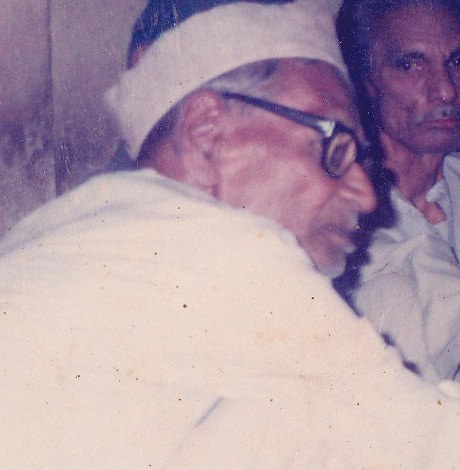 Ustad Munnu KhanUncle
Delhi gharana tabla player; Kippen's second informant in 1984.
James Kippen, Delhi tabla gharana genealogy- Ghulam Haider KhanSon
The only one of his sons to take up the tabla.
James Kippen, Delhi tabla gharana genealogy - Ustad Natthu KhanMaternal uncle
Kippen describes Inam Ali Khan as Natthu Khan's maternal nephew — the family link that joined the two leading Delhi branches.
James Kippen, tabla masters: Inam Ali Khan (archived)
Community
Memories from the community
Personal recollections, not verified history
These are memories shared by listeners and musicians. They sit apart from the sourced biography above, and an editor reads each one before it appears.
- No memories have been shared yet.
Members can share a memory of Ustad Inam Ali Khan. Sign in or create an account.
Provenance
Sources and image credits
- James Kippen, "Genealogical musings: a brief discussion of the Delhi tabla gharana" (University of Toronto, 1997/2003)
- Aneesh Pradhan, "Listen: Tabla performances by maestros of the Delhi gharana, where it all began", Scroll.in
- Delhi gharana (tabla) — Wikipedia
- Tabla Legacy — Gharana and baaj: the Delhi gharana
- James Kippen, tabla masters: Inam Ali Khan, 1924–90 (archived)
No photograph of this musician is published here yet; we use only images we are permitted to show, with credit.
Continue exploring