Hindustani classical · born 1955
Pandit Budhaditya Mukherjee
A metallurgist by training who made the sitar sing at speed.
- Instrument
- SitarSurbahar (also plays)
- Gharana
- Imdadkhani (Etawah) gharana
- Born
- 1955, Bhilai, Bhilai, Durg district (now Chhattisgarh)
Official website & social links
Pandit Budhaditya Mukherjee's own pages elsewhere on the web.
These destinations belong to Pandit Budhaditya Mukherjee or to those who look after their work, and are checked by an editor before they are listed. They leave the archive. Suggest a link or a correction.
Where to start
Begin listening
Start here
Raga Miyan ki Malhar, Darbar Festival
Miyan ki Malhar · 16:10 · darbarfestival
Explore further
Timeless Ragas: sitar recital
1:14:21 · Saregama Hindustani Classical
An archival performance
Live in Toronto, Raga Mishra Kafi
Mishra Kafi · 30:00 · First Edition Arts Channel
Recordings are embedded from official or authorised channels and never rehosted. Nothing plays on its own, and starting one closes another. Where an editor has added a note, it explains why that recording was chosen — not what happens inside it.
Biography
Life
Budhaditya Mukherjee was born in 1955 in Bhilai, the steel township in what is now Chhattisgarh, where his father worked as a senior official at the Bhilai Steel Plant. No source gives an exact day and month of birth.
His father, Acharya Pandit Bimalendu Mukherjee, was his only teacher. As a boy in Mymensingh in undivided Bengal, Bimalendu had assisted Ustad Enayet Khan and absorbed his teaching by listening in on lessons; after Enayet Khan's death in 1938 he studied further with Jitendra Mohan Sengupta, Niroda Kanta Lahiri Chowdhury and Birendra Kishore Roy Chowdhury. He played sitar, surbahar, sarod, rudra veena and sarangi, and sang.
Budhaditya was given a small sitar at five. Musicians passed through the house; he has recalled sitting on the lap of Ustad Bade Ghulam Ali Khan as a child. In 1970 he won two national music competitions, and in 1975 became a Grade-A artist of All India Radio. His Calcutta debut in 1976 drew praise from Satyajit Ray, and a radio broadcast prompted the veena player S. Balachander to call him "the sitar artist of the century".
He kept up his studies alongside all this, graduating first in his class with a gold medal in metallurgical engineering from what is now NIT Raipur in 1977.
He began touring internationally in 1979 and has since performed in more than twenty-five countries. On 30 June 1990 he became the first musician to perform at the House of Commons in London. He has taught as visiting sitar faculty at the Istituto Interculturale di Studi Musicali Comparati in Venice from 1983 and at the Rotterdam Conservatory from 1995. His son Bijoyaditya, born 1984, began sitar at five under his grandfather and father.
Musical contribution
What they brought to music
Mukherjee coined the term "Imdadkhani gharana" himself, to credit Ustad Imdad Khan rather than the town of Etawah. His playing is gayaki ang — modelled on the voice — carried by meends so deep that a single fret yields a bend of five and a half notes, and matched with an unusual clarity of articulation at very high speed. He has said the speed began as a practical necessity in his early years, before he had instruments that matched what he heard; he later spent some fifteen years researching sitar construction to get the tone he wanted.
The debt to Ustad Vilayat Khan's singing sitar is one he acknowledges openly, but his repertoire and phrasing draw as much on sarangi players — Ram Narayan, Gopal Mishra, Bundu Khan. During the 1970s he was, by most accounts, the first sitarist to present tappa on the instrument, an idea he credits to the vocalist Jagdish Prasad. From 1995 he turned seriously to the surbahar as a recording instrument, including an album in tribute to his father.
Life in dates
Timeline
1955
Born in Bhilai
Born into a musical family; no exact date is documented.
c. 1960
Begins the sitar
Starts training at five under his father, Bimalendu Mukherjee.
1970
Wins two national competitions
Early national recognition as a teenager.
1975
Grade-A artist, All India Radio
Promoted to the top grade in 1986.
1976
Calcutta debut
Praised by Satyajit Ray after the concert.
1977
Graduates in metallurgy
First class first with a gold medal, NIT Raipur.
Lineage & company
Teachers, students and musical connections
In the documented teaching trees
Where the archive's lineage research places Pandit Budhaditya Mukherjee, and the teaching links recorded around them inside each tree.
Imdadkhani (Etawah) gharanaborn 1955
Known for precision and for combining the gharana's lyricism with fast, exact work.
Taught in this tree by: Bimalendu Mukherjee
People
Grouped by the kind of relationship the sources record — who taught this musician, who they taught, family, and the people they played with.
Teachers and gurus
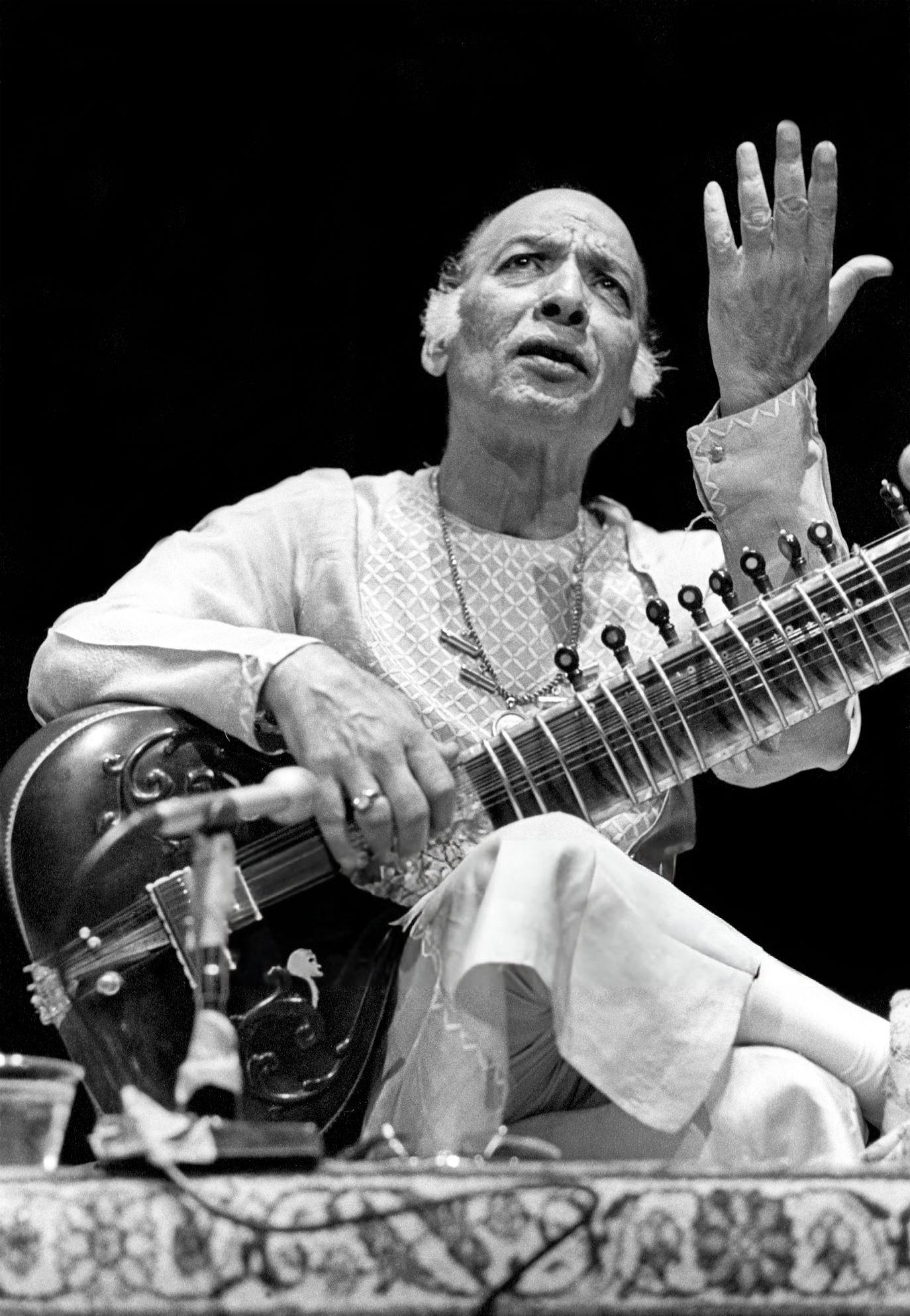 Ustad Vilayat KhanAcknowledged influence
Not a teacher; Mukherjee credits his tone and articulation.
Scroll.in — From Bhilai to Padma Bhushan
Family
- Bijoyaditya MukherjeeSon and student
Born 1984; began sitar at five.
Budhaditya Mukherjee — Wikipedia - Pandit Bimalendu MukherjeeFather and teacher
Taught him from the age of five in Bhilai.
Scroll.in — Bhilai music oasis
Collaborators and accompanists
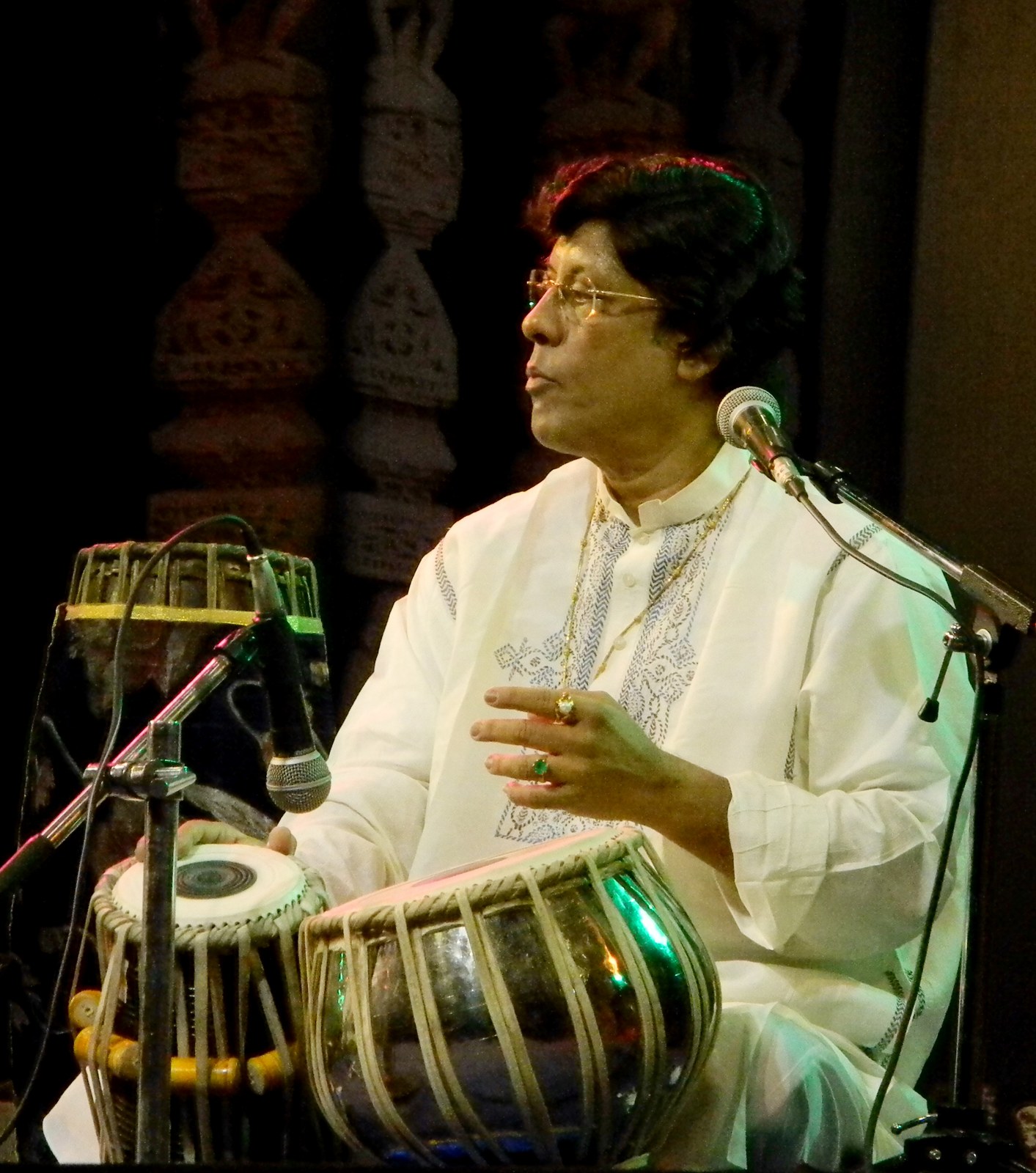 Pandit Anindo ChatterjeeAccompanied by
Named among the tabla players who have accompanied him.
Wikipedia — Anindo Chatterjee
Other recorded connections
 Ustad Imdad KhanGharana founder
The lineage Mukherjee named the Imdadkhani gharana.
Budhaditya Mukherjee — Wikipedia
Recognition
Honours and recognition
Highest national honour first, then by year.
- 2019Padma Bhushan
- 2010Sangeet Natak Akademi AwardReported by institutional biographies; not confirmed against the Akademi's own list.
Community
Memories from the community
Personal recollections, not verified history
These are memories shared by listeners and musicians. They sit apart from the sourced biography above, and an editor reads each one before it appears.
- No memories have been shared yet.
Members can share a memory of Pandit Budhaditya Mukherjee. Sign in or create an account.
Provenance
Sources and image credits
- Budhaditya Mukherjee — Wikipedia
- Biography — budhaditya.com
- From Bhilai to Padma Bhushan — Scroll.in
- Pandit Budhaditya Mukherjee — Darbar
No photograph of this musician is published here yet; we use only images we are permitted to show, with credit.
Continue exploring