Hindustani classical · 1911–1960
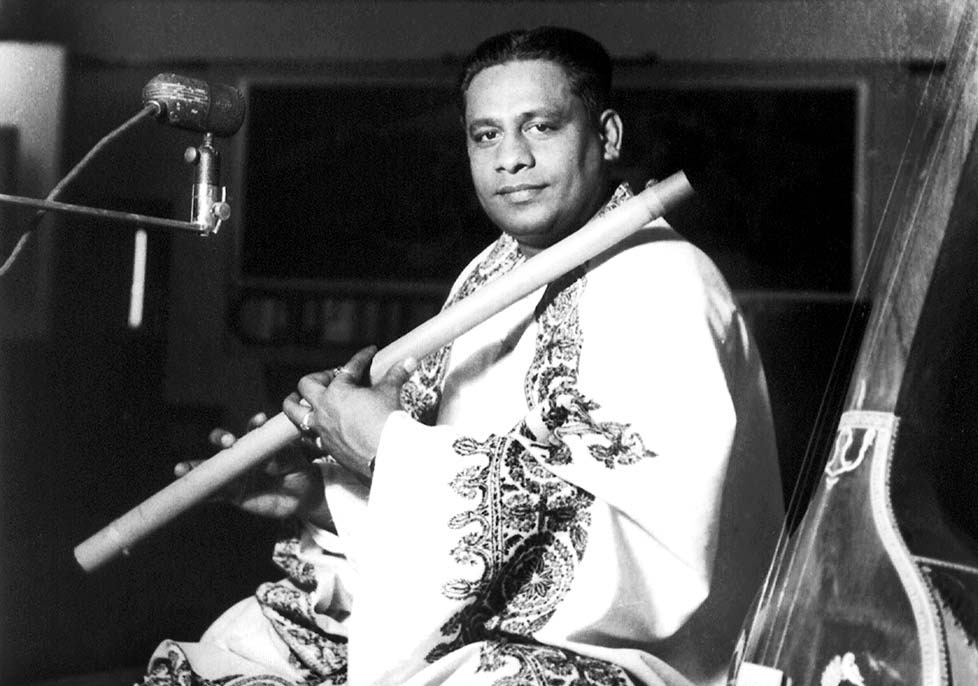
Pandit Pannalal Ghosh
The man who lengthened the bamboo flute until it could hold a raga.
- Instrument
- Bansuri
- Born
- 24 July 1911, Barisal, Barisal, Bengal Presidency (now Bangladesh)
- Died
- 20 April 1960, New Delhi, New Delhi
Official website & social links
Explore Pandit Pannalal Ghosh's recordings and legacy on the pages kept in their name.
These destinations belong to Pandit Pannalal Ghosh or to those who look after their work, and are checked by an editor before they are listed. They leave the archive. Suggest a link or a correction.
Where to start
Begin listening
Start here
Raga Deepawali — flute
Pt. Pannalal Ghosh - Topic
A label-distributed recording of Deepawali, a raga associated with him.
Recordings are embedded from official or authorised channels and never rehosted. Nothing plays on its own, and starting one closes another. Where an editor has added a note, it explains why that recording was chosen — not what happens inside it.
Biography
Life
Amal Jyoti Ghosh, known as Pannalal, was born in Barisal on 24 July 1911, into a musical household: his father played the sitar and his grandfather sang dhrupad. He began on the sitar, but the bamboo flute took hold of him early.
In 1928 he moved to Calcutta, where he worked in theatre and film while continuing to study. He took lessons from Khurshid Ahmad Khan, and later from the vocalist Girija Shankar Chakravorty, who helped him translate vocal phrasing onto a wind instrument.
He moved to Bombay in 1940 and worked in the film industry, composing and playing for studios including Bombay Talkies. His wife, Parul Ghosh, was a well-known playback singer; his younger brother, Nikhil Ghosh, was a tabla player.
In 1947 he became a disciple of Ustad Allauddin Khan at Maihar, which grounded his flute playing in the slow, dhrupad-derived raga development of that tradition.
In 1956 he moved to Delhi to conduct the national orchestra, Vadya Vrinda, at All India Radio. He died there on 20 April 1960, aged forty-eight.
The flute reached him by accident before it reached him by choice. At nine, swimming in the Kirtankhola near the family house, he found a bamboo stick that was half walking stick and half flute, longer than any flute he knew, and began practising on it. At eleven, by an account repeated in most tellings, a holy man carrying a conch and a flute asked him to play, then blessed him and said music would be his salvation. He was married in 1924, at thirteen, to Parul Biswas, sister of his friend Anil Biswas; she became a well-known playback singer. In 1928 he joined the independence movement, learning boxing and stick fighting at a gymnasium, and moved to Calcutta at seventeen when the authorities began watching him.
His redesign of the instrument was deliberate engineering. Wanting a pitch and sonority that could carry classical weight, he tried metal and several woods before settling on bamboo and a flute thirty-two inches long. He added the teevra-madhyam or dhruva-madhyam hole, set off the line of the finger holes at the foot of the flute, so that the sharp fourth of the lower octave — and the meend from madhyam to pancham that Puriya, Darbari and Bihag ask for — became playable; his disciple Nityanand Haldipur has explained that even the way the flute is held had to change for the little finger to reach it. For ragas needing sustained work in the lower octave he built a four-hole bass flute of forty to forty-two inches.
He came to Bombay in 1940, scoring Sneh Bandhan that year as an independent composer, and shared the background score of Aandhiyan (1952) with Ali Akbar Khan and Ravi Shankar. From 1956 until his death he directed the National Orchestra of All India Radio in Delhi. His brother Nikhil Ghosh was a Padma Bhushan tabla player; his daughter Shanti-Sudha married his disciple Devendra Murdeshwar.
Sources differ on his teachers' names and dates: Darbar names Khurshid Ahmad Khan and Girija Shankar Chakravorty before Allauddin Khan, while Wikipedia gives his first guru as the harmonium player Ustad Khushi Mohammed Khan, taken under ganda bandhan for two years in the early 1930s, followed by Girija Shankar Chakraborty. Both agree the systematic lessons with Allauddin Khan began in 1947.
Musical contribution
What they brought to music
The bansuri Pannalal Ghosh inherited was a short, high folk flute, suited to pastoral melody and little else. He made it longer and thicker — instruments of over thirty inches — to reach the lower octave, where the slow unmetered alaap of Hindustani music lives, and to give the tone the body it had lacked. He is also credited with adding a seventh hole, which made the sharp fourth and fuller chromatic movement available.
With the instrument rebuilt, he set about proving what it could do: sustained meend, the vocal gamak, the full three-octave development of a raga. His Maihar training gave the playing its architecture. Every classical flautist since — Hariprasad Chaurasia among them — works on the instrument he designed.
Life in dates
Timeline
1911
Born in Barisal
Born on 24 July into a musical family in the Bengal Presidency.
1928
Moves to Calcutta
Works in theatre and film while continuing to study music.
1940
Moves to Bombay
Joins the film industry as composer and flautist, including at Bombay Talkies.
1947
Becomes a disciple of Allauddin Khan
Trains at Maihar, grounding his playing in that tradition.
1956
Joins All India Radio, Delhi
Conducts the national orchestra, Vadya Vrinda.
1960
Dies in New Delhi
Dies on 20 April, aged forty-eight.
In pictures
Photographs
Lineage & company
Teachers, students and musical connections
Documented teaching lineage
Taught Pandit V. G. Karnad
Accepted as a disciple in Bombay; senior disciple of the Pannalal Ghosh flute line.
Tribute to Pannababu, Radio and Music, 2011
Teaching, family, collaboration and influence are recorded separately here; none is ever inferred from another.
In the documented teaching trees
Where the archive's lineage research places Pandit Pannalal Ghosh, and the teaching links recorded around them inside each tree.
Bansuri concert lineage1911–1960
Lengthened the flute and made it a solo classical instrument.
Taught in this tree by: Allauddin Khan
Recorded as teaching: Devendra Murdeshwar
Maihar (Senia-Maihar) gharana1911–1960
Made the bamboo flute a solo classical instrument.
Taught in this tree by: Allauddin Khan
People
Grouped by the kind of relationship the sources record — who taught this musician, who they taught, family, and the people they played with.
Teachers and gurus
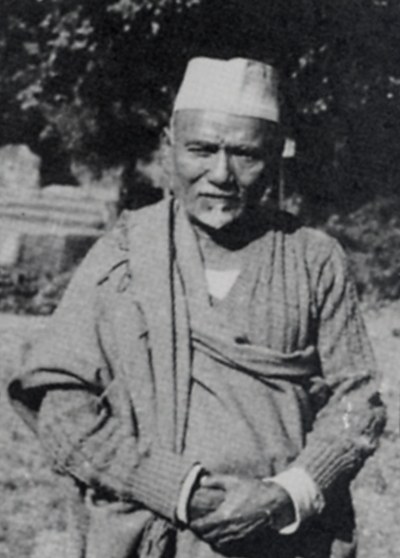 Ustad Allauddin KhanTeacher
Took him as a disciple at Maihar in 1947.
Pannalal Ghosh — Wikipedia- Girija Shankar ChakravortyTeacher
Vocalist who helped him carry vocal phrasing onto the flute.
Pandit Pannalal Ghosh — Darbar - Girija Shankar Chakrabortyteacher
Vocalist and musicologist under whom he studied in Calcutta.
Pannalal Ghosh — Wikipedia
Students and disciples
- Devendra MurdeshwarStudent
Flautist; also his son-in-law.
Pannalal Ghosh — Wikipedia 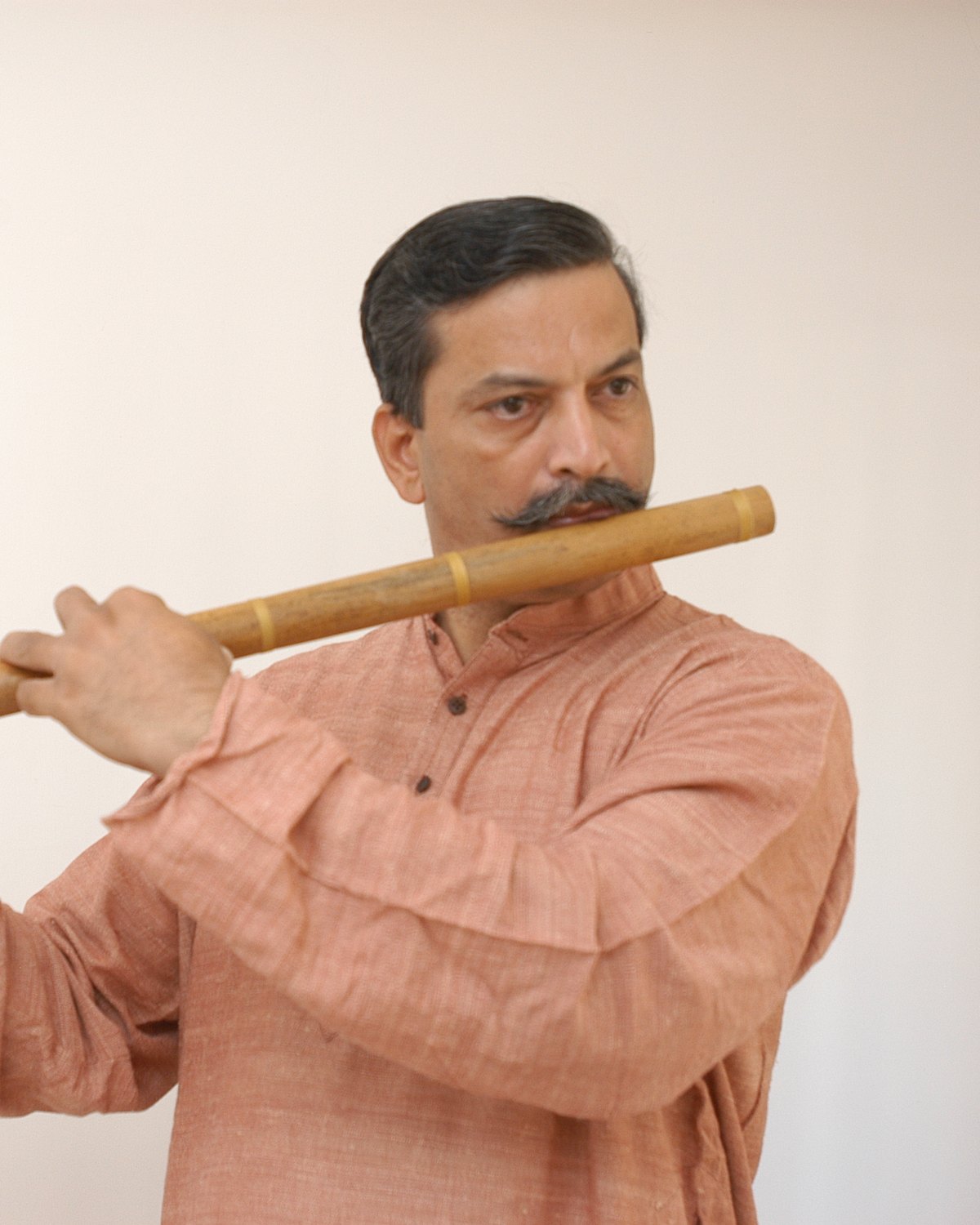 Nityanand Haldipurstudent
Direct disciple; has documented the teevra-madhyam hole of his flute.
Pannalal Ghosh — Wikipedia- V. G. KarnadDisciple
Senior disciple; among the last surviving flautists trained by him.
V.G. Karnad — Wikipedia - Raghunath SethDisciple
Seth studied with him in Mumbai from the age of nineteen.
Raghunath Seth — Wikipedia - Pandit Nityanand HaldipurDiscipleNityanand Haldipur — Ali Akbar Khan Centennial
- Annapurna DeviFellow disciple
Both named by the Annapurna Devi Foundation among the musicians formed by Allauddin Khan's teaching at Maihar.
Annapurna Devi Foundation
Family
- Nikhil GhoshBrother
Tabla player and teacher.
Pannalal Ghosh — Wikipedia - Pandit Nikhil GhoshYounger brother
The tabla player, teacher and founder of Sangit Mahabharati.
Nikhil Ghosh — Wikipedia - Akshay Kumar Ghoshfamily
Father, a sitarist, and his first teacher.
Pannalal Ghosh — Wikipedia - Parul Ghoshfamily
Wife, married 1924; playback singer and sister of Anil Biswas.
Pannalal Ghosh — Wikipedia - Anil Biswascollaborator
Friend and brother-in-law; film composer.
Pannalal Ghosh — Wikipedia - Pandit Nayan Ghoshnephew
Son of his younger brother Pandit Nikhil Ghosh.
Nayan Ghosh — Biography (official site) - Pandit Dhruba Ghoshnephew
Son of his younger brother Pandit Nikhil Ghosh.
Dhruba Ghosh — Wikipedia - Ishaan GhoshGrand-nephew
Family connection through the Ghosh line; no teaching relationship.
Ishaan Ghosh — Wikipedia
Collaborators and accompanists
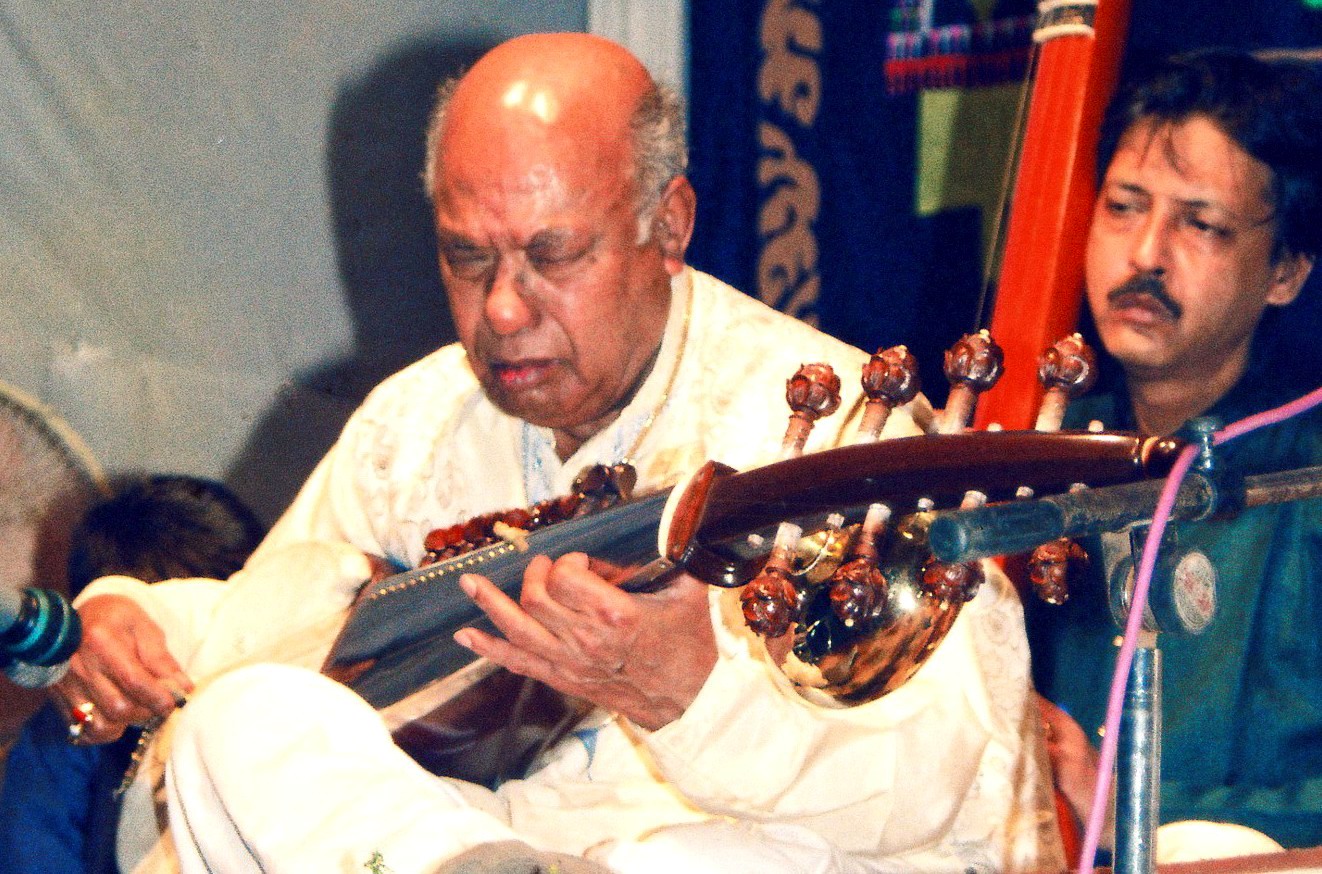 Ali Akbar Khancollaborator
Shared the background score of Aandhiyan (1952) with him and Ravi Shankar.
Pannalal Ghosh — Wikipedia
Recognition
Honours and recognition
- 2011Commemorative postage stampIssued by India Post for his birth centenary.
Writing
From the journal
Community
Memories from the community
Personal recollections, not verified history
These are memories shared by listeners and musicians. They sit apart from the sourced biography above, and an editor reads each one before it appears.
- No memories have been shared yet.
Members can share a memory of Pandit Pannalal Ghosh. Sign in or create an account.
Provenance
Sources and image credits
Photograph via Wikimedia Commons, CC BY-SA 4.0
Continue exploring