Hindustani classical · 1780–1826
Pandit Ram Sahai
The player who redesigned the tabla hand and founded the Benares baaj.
- Instrument
- Tabla
- Gharana
- Benares gharana (tabla)
- Born
- 1780, Kashi (Varanasi)
- Died
- 1826
- On these dates
- Birth and death years (1780–1826) are consistent across sources but derive largely from the same lineage literature. His Lucknow teacher is given as Modhu Khan by Wikipedia and Mativetsky and as Makkhu Khan by Aneesh Pradhan; his age at the Wazir Ali Khan debut is given as both seventeen and twenty-one.
Official website & social links
We have no checked official pages for Pandit Ram Sahai yet. Suggest an official link.
Biography
Life
Ram Sahai was born in 1780 in Kashi, now Varanasi, into a family with roots in Gopalpur village in Jaunpur; his father Prakash Sahai and grandfather Siya Sahai were musicians, and an uncle, Prayag Sahai, served at the court of the Nawab of Ayodhya and later in Lucknow. His siblings Janki, Gauri and Ishwari Sahai were kathak dancers, which places the family squarely in the performing world of the city rather than in tabla alone.
He began tabla with his father at about five. At nine he was sent to Lucknow as a disciple of Modhu Khan of the Lucknow gharana. Sources disagree on the teacher's name: the Wikipedia account and Shawn Mativetsky's Benares lineage page both give Modhu Khan, while Aneesh Pradhan, writing for Scroll.in, records the teacher as Makkhu Khan and notes that some accounts place Ram Sahai in a different Lucknow lineage altogether. The disagreement is about the name, not about the Lucknow training.
The story every account repeats is his court debut. Wazir Ali Khan, newly installed as Nawab, asked to hear him; Modhu Khan agreed on condition that the young player not be interrupted. Ram Sahai is said to have played for seven consecutive nights. His age at the time is given as seventeen in most retellings and as twenty-one in the sleeve notes to Pandit Sharda Sahai's recording The Art of the Benares Baj, reproduced on Mativetsky's page.
He returned to Benares, and after a period of performing there withdrew into roughly six months of seclusion to rebuild his playing. What emerged was a style conceived around versatility: one hand capable of a full solo recital, of the softness khayal singing needs, and of the heavier attack that dhrupad and kathak dance call for. The technical centre of the change was the Na stroke, played with a curved ring finger on the dahina so that the drum rings for as long as possible — still the audible signature of a Benares player.
Ram Sahai composed extensively in the established forms — gat, tukra, paran — and is credited with introducing forms now specific to this gharana: the uthan (an opening piece), the Benarsi theka, and the fard. He died in 1826, in his mid-forties.
The tradition continued through his family, including his son Bhairav Sahai, and through teaching lines that reached beyond it. Later summaries describe two branches — a family or "pure Benares" line, and a line shaped by Kanthe Maharaj that became closely tied to kathak accompaniment. Family descent and teaching succession are not the same thing here, and the gharana's best-known twentieth-century soloists, among them Anokhelal Mishra, Samta Prasad and Kishan Maharaj, entered it as students rather than as relatives.
The sleeve notes to Pandit Sharda Sahai's The Art of the Benares Baj, by Bob Becker, Neil Craig and Dr Frances Shepherd, fill in what the new style actually changed. Ram Sahai's teacher Modhu Khan is described there as a grandson of Sidhar Khan of Delhi and a musician at the court of Nawab Asafuddaula, and the apprenticeship as lasting twelve years — long enough to carry away both a large repertoire and the art of improvising at length on a given theme. The style he built afterwards rested on the position of the hand on the drum and a more efficient use of the fingers, above all a curved ring finger for the stroke Na so that the dahina rings freely. To the existing forms he added compositions of his own and new types altogether: the uthan, the Benarsi theka and the fard. The aim was breadth — a baj delicate enough for khyal and weighty enough to stand in for the pakhawaj behind dhrupad and kathak.
His teaching passed down inside the family. Frances Shepherd's account, given on Shawn Mativetsky's lineage page, records that when Ram Sahai fell ill he handed his disciples to his brother Janaki Sahai and went on teaching only the five-year-old Bhairav Sahai, who after his death completed his training with Janaki. The relationship is recorded differently in different places — the Becker notes list Bhairav Sahai as his son, Shepherd as his nephew, the son of another brother, Gaori Sahai — and both readings are left standing here.
Musical contribution
What they brought to music
The Benares baaj as Ram Sahai left it is an open, resonant style. The Na is taken with a curved ring finger on the lao so the right drum rings; Din is similarly favoured; runs that Delhi players take with alternating single fingers are often played full-handed, which gives the phrase more body. Solo playing is unusually developed, drawing on more than twenty compositional types, several of which — uthan, Benarsi theka, fard — are attributed to him directly.
Lineage & company
Teachers, students and musical connections
In the documented teaching trees
Where the archive's lineage research places Pandit Ram Sahai, and the teaching links recorded around them inside each tree.
Benares gharana (tabla)1780–1826
Founder of the Benares tabla style.
People
Grouped by the kind of relationship the sources record — who taught this musician, who they taught, family, and the people they played with.
Teachers and gurus
- Modhu KhanTeacher
Lucknow gharana; Ram Sahai went to him at nine. Aneesh Pradhan gives the name as Makkhu Khan.
Ram Sahai — Wikipedia - Pandit Baldev SahaiGharana descendant
His grandson in the Sahai line, through Bhairav Sahai; teacher of Kanthe Maharaj, Bikku Mishra, Bhagvati Sahai and Durga Sahai.
Benares Gharana Lineage Chart — Shawn Mativetsky - Pandit Sharda SahaiGharana descendant
Sixth generation of the Sahai family, and the teacher through whom much of this history was written down.
Benares Gharana Lineage Chart — Shawn Mativetsky
Students and disciples
- Pandit Samta PrasadGharana descendant
Twentieth-century soloist of the tradition Ram Sahai founded; not a personal student.
Benares gharana — Wikipedia 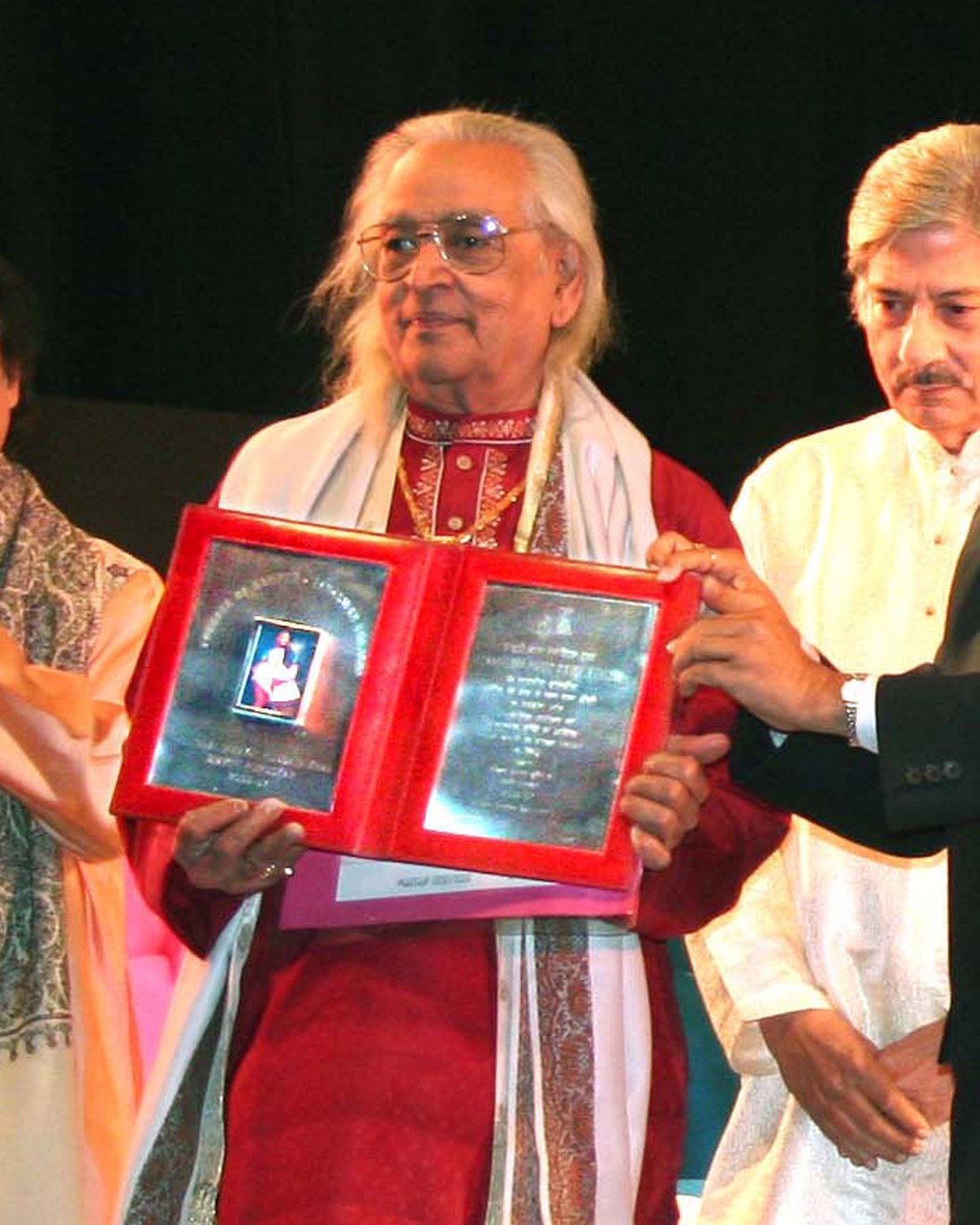 Pandit Kishan MaharajGharana descendant
Twentieth-century soloist of the tradition Ram Sahai founded; not a personal student.
Benares gharana — Wikipedia
Family
- Prakash SahaiFather
His first tabla teacher, from about age five.
Ram Sahai — Wikipedia - Pandit Bhairav SahaiNephew and disciple
Son of Ram Sahai's brother Gaori Sahai; became his disciple at the age of five and, when Ram Sahai fell ill, was the only student he continued to teach himself. Carried the family line of the gharana.
Benares Gharana Lineage Chart — Shawn Mativetsky - Janaki SahaiBrother and disciple
Took over Ram Sahai's other disciples when he fell ill, and completed Bhairav Sahai's training after his death.
Benares Gharana Lineage Chart — Shawn Mativetsky - Gaori SahaiBrother and disciple
Father of Bhairav Sahai in Frances Shepherd's account of the family.
Benares Gharana Lineage Chart — Shawn Mativetsky - Ishwari SahaiBrother and disciple
Named among his disciples in the sleeve notes to The Art of the Benares Baj.
Benares Gharana Lineage Chart — Shawn Mativetsky
Named on other pages
Musicians whose own pages record a connection with this one, in the words their sources use.
- Pandit Kanthe MaharajTheir page records: Founder of his gharana
Kanthe Maharaj trained in the Ram Sahai family line through Baldev Sahai.
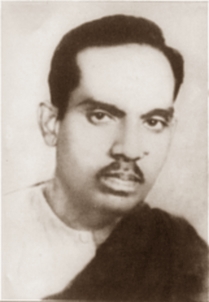 Pandit Anokhelal MishraTheir page records: Founder of his gharana
Shaped the Benares baaj in the early nineteenth century; the tradition he inherited, not a personal teacher.
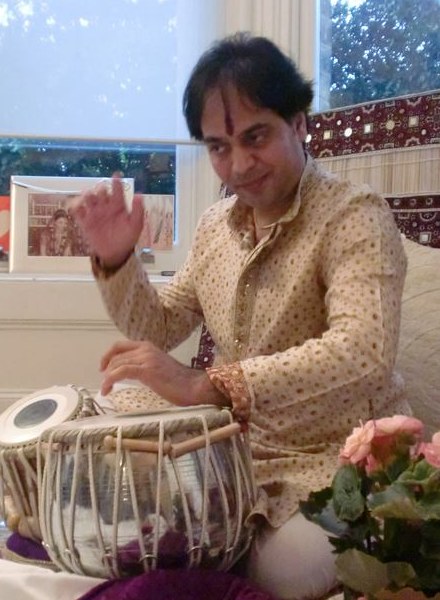 Pandit Sanju SahaiTheir page records: Founder of his gharana
Direct ancestor; Sanju Sahai is the sixth generation of the family line.
Writing
From the journal
Community
Memories from the community
Personal recollections, not verified history
These are memories shared by listeners and musicians. They sit apart from the sourced biography above, and an editor reads each one before it appears.
- No memories have been shared yet.
Members can share a memory of Pandit Ram Sahai. Sign in or create an account.
Provenance
Sources and image credits
- Ram Sahai (tabla player) — Wikipedia
- Benares Gharana Lineage Chart and Tabla Player Biographies — Shawn Mativetsky
- Aneesh Pradhan, "Listen: Maestros of the resonant Banaras style of tabla playing" — Scroll.in, 3 Dec 2016
No photograph of this musician is published here yet; we use only images we are permitted to show, with credit.
Continue exploring