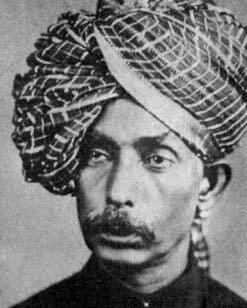
Hindustani classical · 1872–1937
Ustad Abdul Karim Khan
The voice that gave the Kirana gharana its shape, and the first Hindustani singer to study the Carnatic system closely.
- Instrument
- Khayal vocalSarangi
- Gharana
- Kirana gharana
- Born
- 11 November 1872, Kirana, Shamli district, Uttar Pradesh
- Died
- 27 October 1937, Singaperumalkoil, Madras Presidency
Official website & social links
We have no checked official pages for Ustad Abdul Karim Khan yet. Suggest an official link.
Where to start
Begin listening
Piya Bin Nahin Aawat Chain
Saregama Hindustani Classical
A thumri from the label's archive of his early discs.
Recordings are embedded from official or authorised channels and never rehosted. Nothing plays on its own, and starting one closes another. Where an editor has added a note, it explains why that recording was chosen — not what happens inside it.
Biography
Life
Abdul Karim Khan was born on 11 November 1872 at Kirana in the Shamli district of present-day Uttar Pradesh, into a family of hereditary musicians whose line was traced to the brothers Ghulam Ali and Ghulam Maula. His first training came from his father, Kale Khan, and from his uncles Abdullah Khan and Nanhe Khan; alongside voice he learned sarangi, been, sitar and tabla, and the sarangi player's ear for a continuously bending line never left his singing. He began his public life as an instrumentalist before turning to vocal music.
Singing with his brother Abdul Haq, he came to the notice of the court at Baroda and was appointed a court musician there. At Baroda he met Tarabai Mane, of the Mane family; their marriage cost him his position, and the couple settled in Bombay. Tarabai left him in 1922, and writers on his music associate the quieter, more inward quality of his later singing with that separation.
Invitations to the Mysore court brought him into regular contact with Carnatic musicians, and he became, by most accounts, the first Hindustani singer to study that system seriously — his sargam singing and his use of ragas such as Abhogi and Hamsadhwani come directly from those years. Mysore conferred on him the title Sangeet Ratna. Travelling south, he would break the journey at Dharwad, where he taught the disciple who became best known of all, Sawai Gandharva. In 1913 he founded the Arya Sangeet Vidyalaya at Poona. He spent his last years at Miraj and died on 27 October 1937 at Singaperumalkoil railway station while returning from a concert tour of the south. Commemorative concerts are still held at Miraj each year.
Musical contribution
What they brought to music
What distinguishes his singing is the unhurried opening of a raga in vilambit laya: a slow, note-by-note approach in which the melodic shape is allowed to declare itself before any display of speed. He cultivated a light, sweet voice deliberately and kept it that way through disciplined practice. His thumri stands apart from both the Purab and Punjabi manners, moving at the same leisurely pace as his khayal. Among the earliest Hindustani musicians to record commercially, he left discs that still define what Kirana singing is expected to sound like.
Life in dates
Timeline
1872
Born at Kirana
Born on 11 November into a family of hereditary musicians in the Shamli district of present-day Uttar Pradesh.
1890s
Court musician at Baroda
Appointed at Baroda while singing with his brother Abdul Haq; he left after his marriage to Tarabai Mane.
1900
Taught Kesarbai Kerkar
Eight months of training given to the young Kesarbai Kerkar.
1901
Accepted Sawai Gandharva as a disciple
Taught at Dharwad on his journeys to the Mysore court.
1913
Founded the Arya Sangeet Vidyalaya
A teaching institution established at Poona.
1937
Died at Singaperumalkoil
Died on 27 October while returning from a concert tour of the south.
Lineage & company
Teachers, students and musical connections
In the documented teaching trees
Where the archive's lineage research places Ustad Abdul Karim Khan, and the teaching links recorded around them inside each tree.
Kirana gharana1872–1937
The voice that defined Kirana singing on early recordings and carried it across western India.
Taught in this tree by: Kale Khan
Recorded as teaching: Sawai Gandharva, Sureshbabu Mane
People
Grouped by the kind of relationship the sources record — who taught this musician, who they taught, family, and the people they played with.
Teachers and gurus
- Kale KhanTeacher
His father; the source states that he received training from his father Kale Khan and his uncle Abdullah Khan.
Wikipedia — Abdul Karim Khan - Abdullah KhanTeacher
His uncle, named in the same passage as a teacher.
Wikipedia — Abdul Karim Khan
Students and disciples
- Sawai GandharvaDisciple
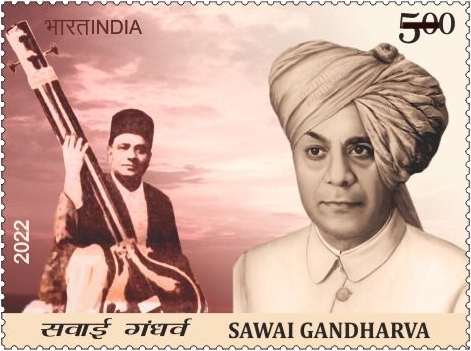
"On the way to Mysore, he used to stay with his brother in Dharwad where he taught his most famous disciple Sawai Gandharva."
Wikipedia — Abdul Karim Khan 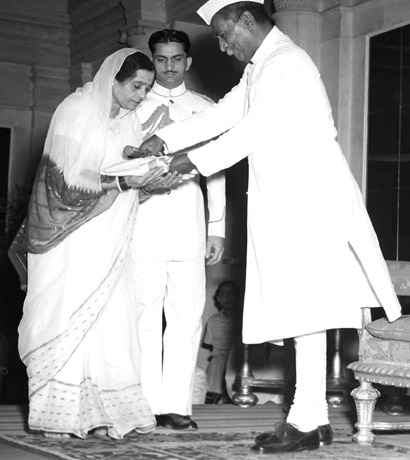 Kesarbai KerkarDisciple
"In 1900, for eight months he taught Kesarbai Kerkar."
Wikipedia — Abdul Karim Khan- Sureshbabu ManeDisciple
Named in the article's list of his disciples.
Wikipedia — Abdul Karim Khan - Balkrishnabuwa KapileshwariDisciple
Named in the article's list of his disciples.
Wikipedia — Abdul Karim Khan - Roshan Ara BegumDisciple
Named in the article's list of his disciples.
Wikipedia — Abdul Karim Khan - Pandit Sawai GandharvaDiscipleWikipedia — Sawai Gandharva
- Pandit Sureshbabu ManeDisciple (child)Wikipedia — Sureshbabu Mane
Family
- Abdul Wahid KhanCousin and co-founder of the gharana
Described as his cousin and, with him, founder of the Kirana gharana; not a teaching relationship.
Wikipedia — Abdul Karim Khan
Other recorded connections
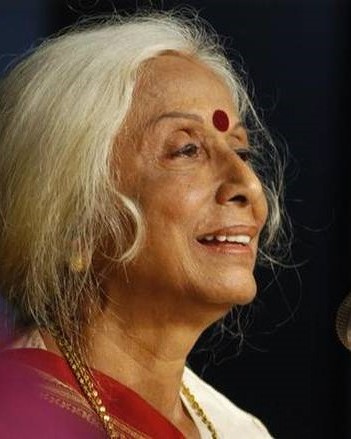 Dr Prabha AtreLater exponent of his gayaki
She learned from two of his children, Sureshbabu Mane and Hirabai Barodekar, and carried a stream of Kirana gayaki descended directly from him.
The Hindu — Prabha Atre's unconventional thinking gave her music a rare depth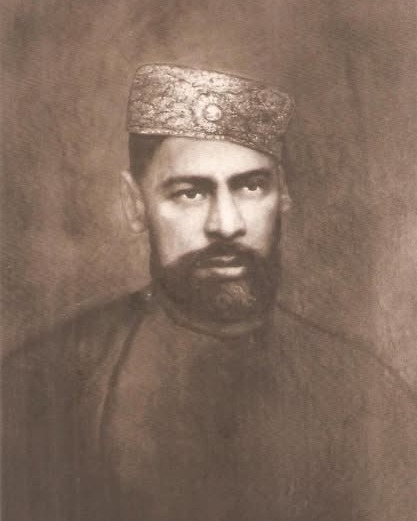 Ustad Bande Ali KhanRelative in the Kirana line
Kirana's wider reputation grew from Bande Ali Khan's standing at the Gwalior and Indore courts, after which his relatives, Abdul Karim Khan among them, took the gharana name.
Wikipedia: Kirana gharana
Named on other pages
Musicians whose own pages record a connection with this one, in the words their sources use.
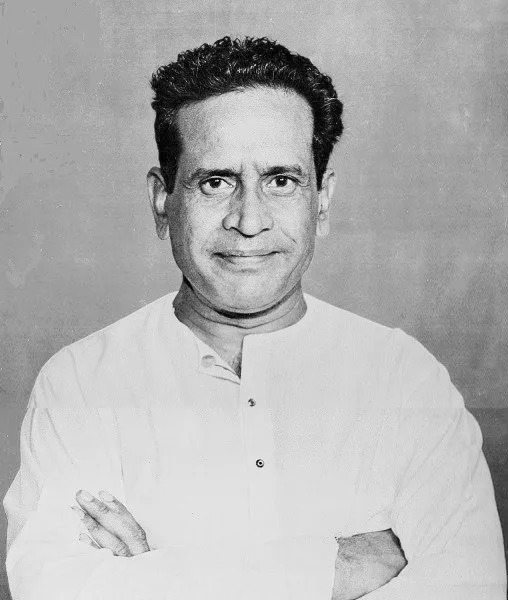 Pandit Bhimsen JoshiTheir page records: Gharana lineage
Founder figure of the Kirana gharana, his guru's teacher.
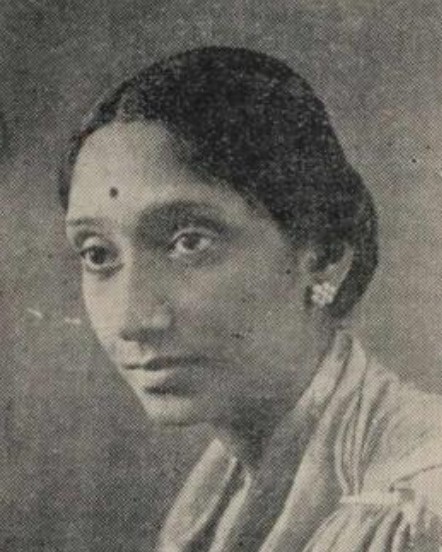 Vidushi Hirabai BarodekarTheir page records: Father
Her article states she received only limited musical lessons from her father, after her parents separated in 1922.
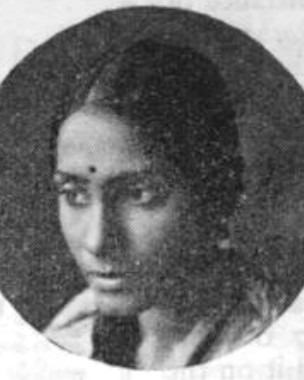 Vidushi Saraswati RaneTheir page records: Father
Her father, who had separated from her mother; the sources do not describe him teaching her.
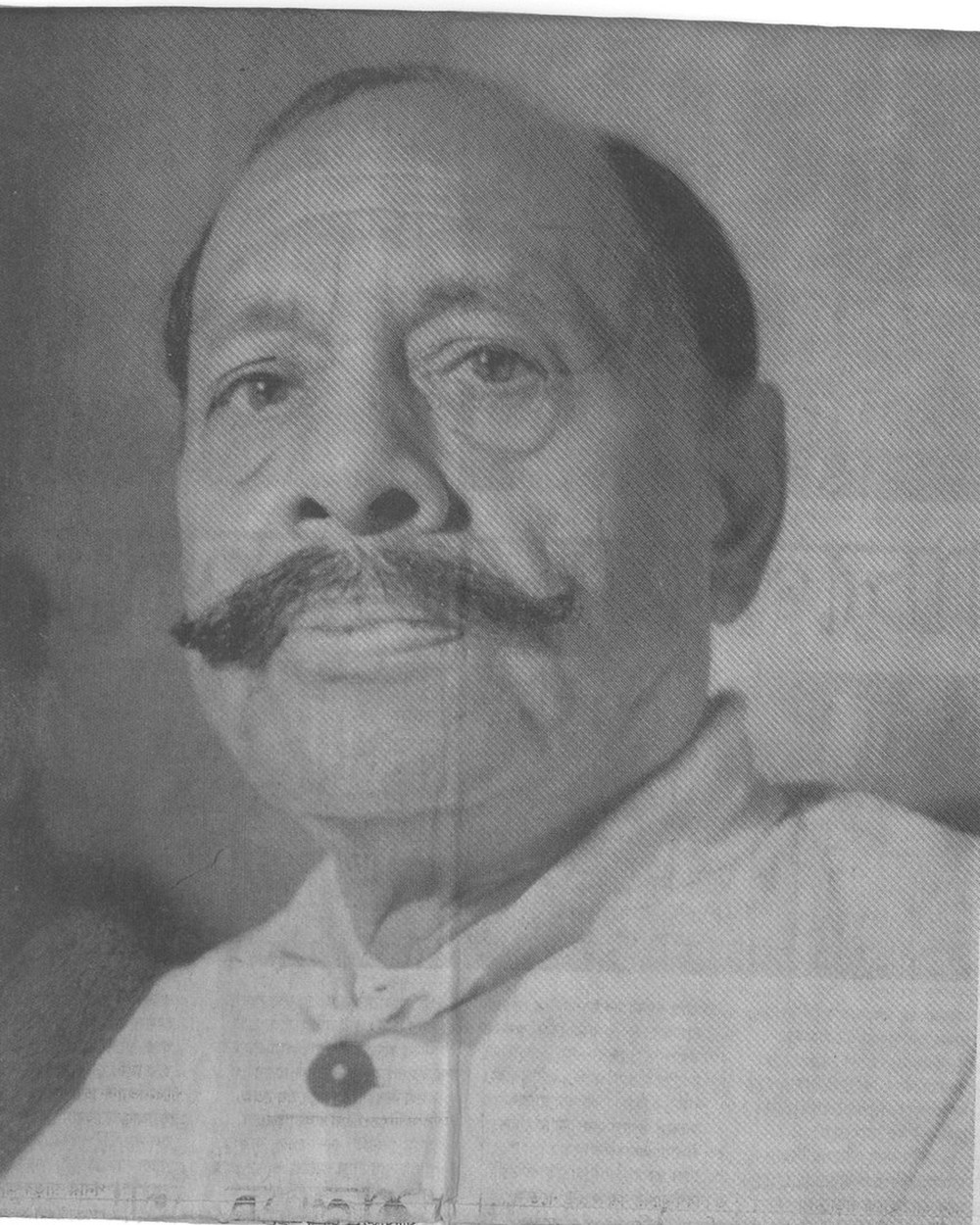 Faiyaz KhanTheir page records: A singer he admired, of the Kirana gharana
Recognition
Honours and recognition
- Sangeet RatnaConferred by the Mysore court.
Community
Memories from the community
Personal recollections, not verified history
These are memories shared by listeners and musicians. They sit apart from the sourced biography above, and an editor reads each one before it appears.
- No memories have been shared yet.
Members can share a memory of Ustad Abdul Karim Khan. Sign in or create an account.
Provenance
Sources and image credits
- Wikipedia — Abdul Karim Khan (retrieved 15 September 2026)
- Darbar Festival — Ustad Abdul Kareem Khan (retrieved 15 September 2026)
Photograph: Unknown photographer, before 1938 — public domain, via Wikimedia Commons
Continue exploring
- Kirana gharanaThe lineage Ustad Abdul Karim Khan is associated with, and the other musicians documented within it.
- The khayal vocalHow the instrument works, and who else in the archive plays it.
- The sarangiHow the instrument works, and who else in the archive plays it.
- All musiciansBrowse the archive by name, instrument or discipline.