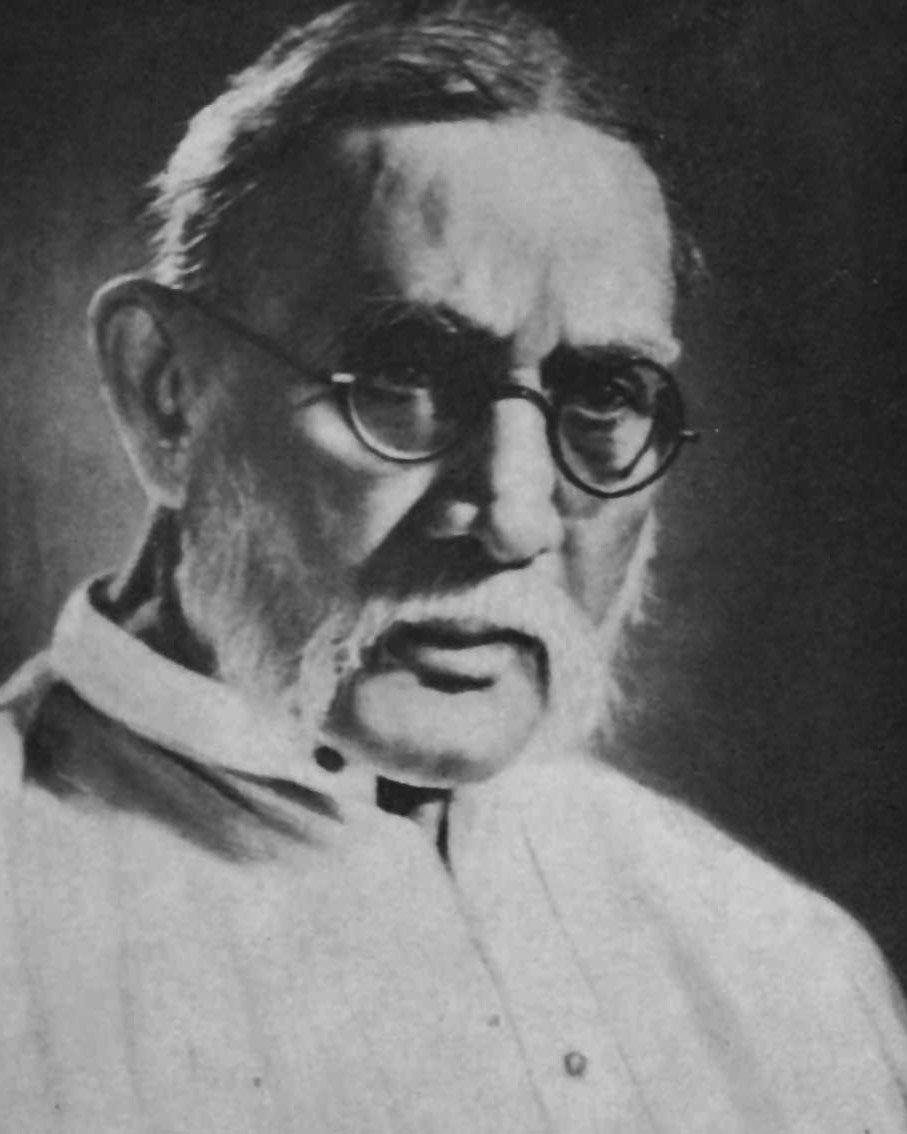
Hindustani classical · 1855–1946
Ustad Alladiya Khan
The singer who built the Jaipur-Atrauli gayaki out of a damaged voice, and never allowed it to be recorded.
- Instrument
- Khayal vocal
- Gharana
- Jaipur-Atrauli gharana
- Born
- 10 August 1855, Uniara, Tonk, Rajasthan
- Died
- 16 March 1946, Bombay
Official website & social links
We have no checked official pages for Ustad Alladiya Khan yet. Suggest an official link.
Biography
Life
Alladiya Khan was born on 10 August 1855 at Uniara, a small place in Tonk in what was then Jaipur State, into a family of musicians. His father Ahmed Khan died early in his life, and his uncle Jehangir Khan of Jaipur taught him dhrupad for five years and then khayal for eight more. He is said to have kept up six hours of palta practice daily well into his fifties.
He served in the courts of several rulers in Rajasthan and travelled to Bihar, Patna, Allahabad, Nepal and Baroda to sing for princely patrons. In his late thirties he lost his voice for nearly two years after overextending it at a patron's request, and although it returned, it is said never to have recovered its earlier ease. The manner of singing he devised within those limits became the Jaipur gayaki.
From 1895 he settled in Kolhapur as court musician to Shahu Maharaj. When the ruler died he moved to Bombay in 1922, where he taught a large number of disciples and sang in the city's mehfils until his death on 16 March 1946. His account of his life, narrated to his grandson Azizuddin Khan, was published in English translation as My Life (Thema, Kolkata, 2000).
In his late thirties Khan lost his voice for nearly two years, the result of overextending it at a patron's request; the voice that returned never recovered its earlier sensitivity, and the Jaipur gayaki as it is now known was conceived within those limits. He was born Ghulam Ahmad Khan, and claimed descent from Nath Vishwambhar, an ancestor of Swami Haridas, his family having converted to Islam in the Mughal era.
Much of his repertoire came out of the haveli sangeet of northern Rajasthan, where he grew up: he brought its rare ragas onto the concert platform and built bandishes from its dhrupads, among them the Nayaki Kanada "Mero Piya Rasiya" and the Bihagda "Ae Pyaari pag hole". He revived or composed Nat Kamod, Bhoop Nat, Kaunsi Kanada, Sampoorna Malkauns, Basanti Kedar, Shuddha Nat, Malavi, Savani Kalyan and DhavalaShree. He never allowed his voice to be recorded.
His eldest son Nasiruddin "Badeji" Khan (1886-1966) could not sing professionally because of ill health, so the gayaki passed through Manji Khan and Bhurji Khan. Manji Khan began teaching Mallikarjun Mansur in 1935 but died in 1937; it was Bhurji Khan who carried the style forward to Mansur, Wamanrao Sadolikar and Dhondutai Kulkarni. His account of his own life, narrated to his grandson Azizuddin Khan, was published in English as My Life (Thema, Kolkata, 2000), introduced by Amlan Dasgupta and Urmila Bhirdikar.
Musical contribution
What they brought to music
His singing is remembered for long, intricately structured phrases and for a repertoire of uncommon and compound ragas — among them Nat Kamod, Bhoop Nat, Kaunsi Kanada, Sampoorna Malkauns, Basanti Kedar, Shuddha Nat, Malavi, Savani Kalyan and DhavalaShree. He drew bandishes out of the Haveli Sangeet tradition of his Rajasthan childhood and brought them onto the concert platform, including the Nayaki Kanada composition "Mero Piya Rasiya". He never allowed his voice to be recorded, so the gayaki survives only through his students.
Life in dates
Timeline
1855
Born at Uniara
Born on 10 August in Tonk, then part of Jaipur State.
c. 1890s
Lost his voice
A loss of voice in his late thirties led to the manner of singing that became the Jaipur gayaki.
1895–1922
Court musician at Kolhapur
In the service of Shahu Maharaj.
1922
Moved to Bombay
Where he taught and sang in mehfils until his death.
1946
Died in Bombay
Died on 16 March.
Lineage & company
Teachers, students and musical connections
In the documented teaching trees
Where the archive's lineage research places Ustad Alladiya Khan, and the teaching links recorded around them inside each tree.
Jaipur-Atrauli gharana1855–1946
Founder of the gharana and court musician at Kolhapur.
Taught in this tree by: Jehangir Khan
Recorded as teaching: Kesarbai Kerkar, Mogubai Kurdikar
People
Grouped by the kind of relationship the sources record — who taught this musician, who they taught, family, and the people they played with.
Teachers and gurus
- Jehangir KhanTeacher
"Khan's uncle, Jehangir (of Jaipur), taught him dhrupad for 5 years and then khyal for another 8 years."
Wikipedia — Alladiya Khan - Jehangir Khan of Jaipurteacher
His uncle, who taught him dhrupad for five years and khayal for eight.
Alladiya Khan — Wikipedia
Students and disciples
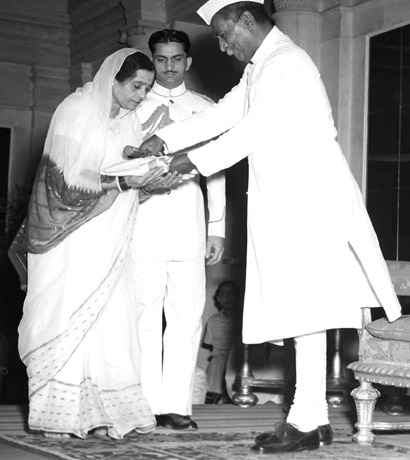 Kesarbai KerkarDisciple
Listed among his disciples apart from the members of his family.
Wikipedia — Alladiya Khan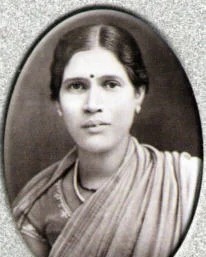 Mogubai KurdikarDisciple
Listed in the same passage among his disciples.
Wikipedia — Alladiya Khan- Bhaskarbuwa BakhaleDisciple
Listed in the same passage among his disciples.
Wikipedia — Alladiya Khan - Gulubhai JasdanwallaDisciple
Listed in the same passage among his disciples.
Wikipedia — Alladiya Khan - Azmat Hussain Khanstudent
Named among his major disciples.
Alladiya Khan — Wikipedia - Tanibai Ghorpadestudent
Among his earliest disciples outside the family.
Alladiya Khan — Wikipedia - Govindrao Shaligramstudent
Among his early disciples.
Alladiya Khan — Wikipedia
Family
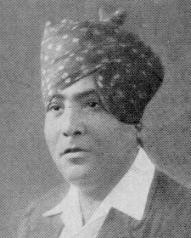 Manji KhanSon and disciple
Named among his major disciples: "his own sons, Manji Khan and Bhurji Khan."
Wikipedia — Alladiya Khan- Bhurji KhanSon and disciple
Named in the same passage among his major disciples.
Wikipedia — Alladiya Khan - Haider KhanYounger brother and disciple
"his own younger brother Haider Khan (also spelled Hyder Khan)" is listed among his major disciples.
Wikipedia — Alladiya Khan - Azizuddin KhanGrandson and disciple
Named among his major disciples; he also narrated his grandfather's autobiography.
Wikipedia — Alladiya Khan - Nasiruddin "Badeji" Khanfamily
Eldest son (1886-1966); ill health kept him from a singing career.
Alladiya Khan — Wikipedia
Named on other pages
Musicians whose own pages record a connection with this one, in the words their sources use.
- Kishori AmonkarTheir page records: Lineage
Founder of the Jaipur-Atrauli gharana and her mother's teacher.
Community
Memories from the community
Personal recollections, not verified history
These are memories shared by listeners and musicians. They sit apart from the sourced biography above, and an editor reads each one before it appears.
- No memories have been shared yet.
Members can share a memory of Ustad Alladiya Khan. Sign in or create an account.
Provenance
Sources and image credits
- Wikipedia — Alladiya Khan (retrieved 15 September 2026)
- Wikipedia — Jaipur-Atrauli gharana (retrieved 15 September 2026)
- Ajrara/Jaipur context: My Life, as told to Azizuddin Khan (Thema, 2000)
Photograph c. 1920, unknown photographer, public domain, via Wikimedia Commons
Continue exploring