Hindustani classical · Twentieth century
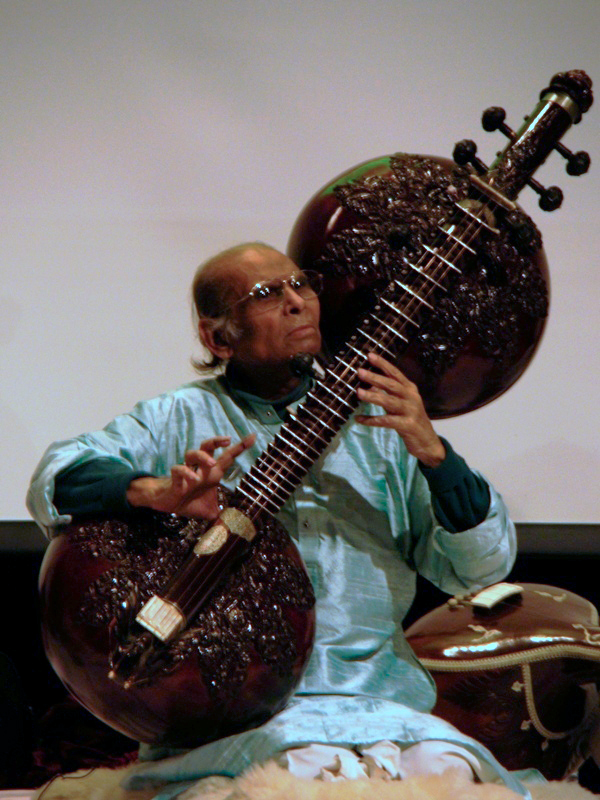
Ustad Asad Ali Khan
The last widely recognised master of the khandarbani rudra veena, and a teacher whose students were mostly from outside India.
- Instrument
- Rudra veenaSitar
- Gharana
- Jaipur beenkar gharana (Khandarbani)A hereditary beenkar family lineage rather than a khayal singing gharana.
- Born
- 1 December 1937, Alwar, Rajasthan
- Died
- 14 June 2011, New Delhi
Official website & social links
We have no checked official pages for Ustad Asad Ali Khan yet. Suggest an official link.
Where to start
Begin listening
Raga Shri — rudra veena, Amsterdam 2003
Shri · 43:34 · Carsten Wicke
Concert recording published by rudra veena maker Carsten Wicke; date and venue as given by the channel.
Raga Multani — rudra veena, Amsterdam 2003
Multani · 1:08:38 · Carsten Wicke
From the same Amsterdam concert series as given by the channel.
Raga Darbari — rudra veena, with Gopal Das Panse on pakhawaj
Darbari · 29:09 · Carsten Wicke
Pakhawaj accompaniment credited to Gopal Das Panse in the channel's own title.
Recordings are embedded from official or authorised channels and never rehosted. Nothing plays on its own, and starting one closes another. Where an editor has added a note, it explains why that recording was chosen — not what happens inside it.
Biography
Life
Asad Ali Khan was born at Alwar in Rajasthan on 1 December 1937, into a family that had supplied veena players to the courts of Jaipur, Alwar and Rampur. His training was with his father, Ustad Sadiq Ali Khan, and ran for about fifteen years and covered voice as well as the veena; Darbar's account gives the starting age as six.
For most of his working life he was one of very few musicians performing publicly on the rudra veena, and published accounts describe him as the last surviving master of the khandar bani. He worked with All India Radio, taught at the Bharatiya Kala Kendra in New Delhi from the 1960s to the 1980s, and taught for seventeen years in the Faculty of Music and Fine Arts at the University of Delhi. His obituarist and student Carsten Wicke records that for lack of veena students his institutional classes were mostly in music theory and in sitar played in veena style, and that his private rudra veena students were almost exclusively foreigners - a situation Khan spoke about publicly, saying he feared his Western students would one day have to return the tradition to India.
He performed in Australia, the United States, Afghanistan, Italy and other European countries, taught courses in the United States, and played regularly for SPIC MACAY, which takes classical music into Indian schools and colleges. He died on 14 June 2011 at the All India Institute of Medical Sciences in New Delhi.
Musical contribution
What they brought to music
Wicke describes a playing style in which strict formal grammar was combined with devotional expression: exact and unhurried in the design of a raga, yet directed throughout at bhakti rasa. Khan preferred a small group of ragas whose character suited the veena - darbari, lalit, todi, multani, marwa, shri, puriya and chandrakauns among them, with lyrical readings of yaman, bihag, bageshri and khamaj - and his recitals typically built towards a jor-jhala that held the stillness of a single note against rhythmic momentum. He was a practising Shia Muslim who spoke of the veena as an instrument of Shiva and saw no difficulty in expressing his own devotion through dhrupad.
Life in dates
Timeline
1937
Born at Alwar
Born on 1 December into the seventh generation of veena players in his family.
1960s-1980s
Teaching at Bharatiya Kala Kendra
Taught at the Bharatiya Kala Kendra in New Delhi during these decades.
1977
Sangeet Natak Akademi Award
2008
Padma Bhushan
2011
Death in New Delhi
Died on 14 June at the All India Institute of Medical Sciences.
Lineage & company
Teachers, students and musical connections
Documented teaching lineage
Taught by Ustad Sadiq Ali Khan
Father and sole principal teacher; about fifteen years of training in veena and voice. Sadiq Ali Khan served the Alwar court and the Nawab of Rampur.
Asad Ali Khan - WikipediaTaught Zaki Haidar
Son and student; also named in press accounts as Ali Zaki Hader.
Asad Ali Khan - WikipediaTaught Bikramjeet Das
Rudra veena player based in Kolkata.
Asad Ali Khan - WikipediaTaught Madhumita Ray
Vocalist.
Asad Ali Khan - WikipediaTaught Heikel Ben Mlouka
French-Tunisian rudra veena player.
Ustad Asad Ali Khan - DarbarTaught Jyoti Hegde
Rudra veena player; has performed at the Darbar Festival.
Ustad Asad Ali Khan - DarbarTaught Carsten Wicke
German rudra veena player and instrument maker; wrote his teacher's obituary.
Carsten Wicke, obituary (India Instruments, 2011)
Teaching, family, collaboration and influence are recorded separately here; none is ever inferred from another.
Named on other pages
Musicians whose own pages record a connection with this one, in the words their sources use.
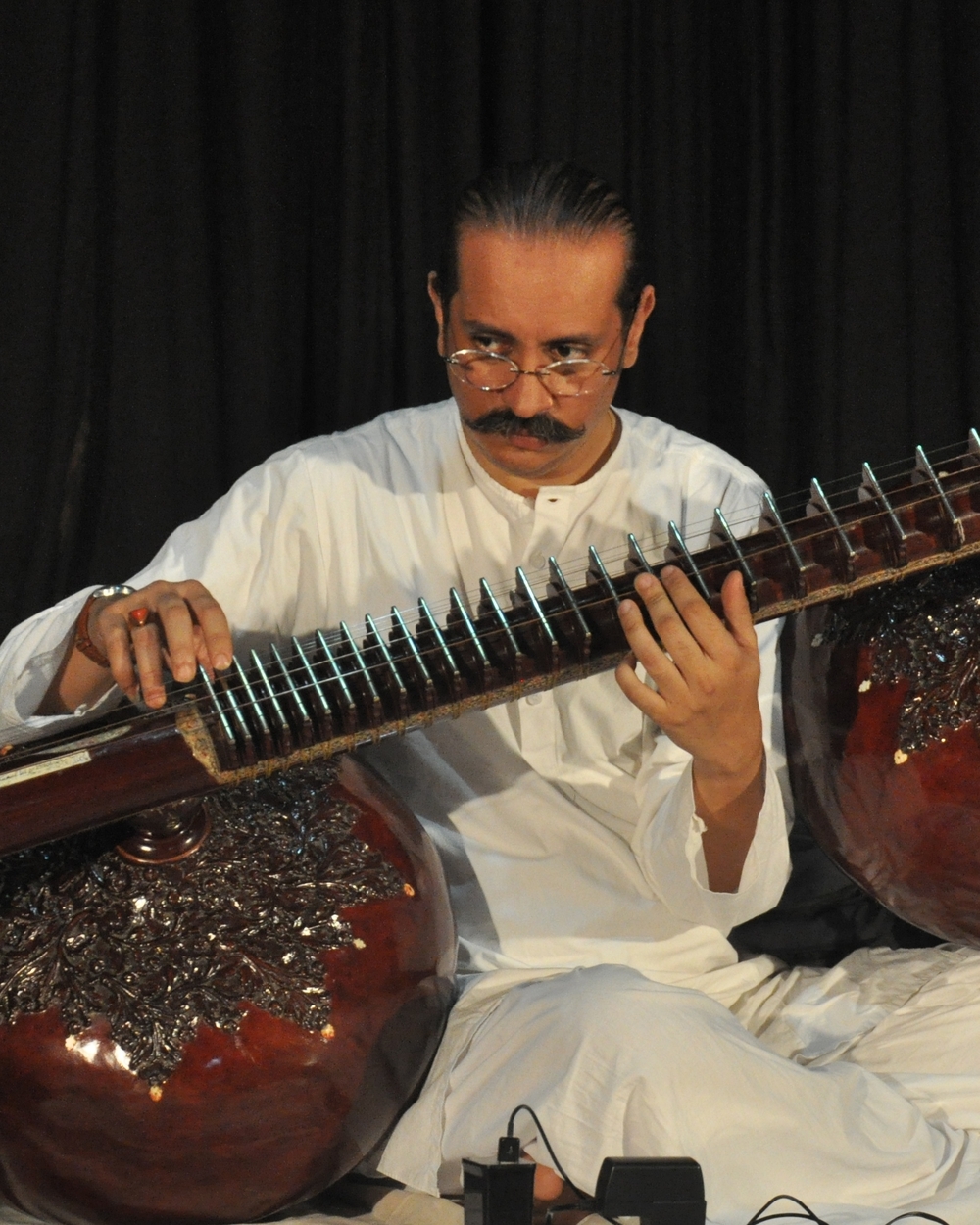 Ustad Mohi Bahauddin DagarTheir page records: fellow rudra veena player
Of the Jaipur beenkar gharana; Bahauddin Dagar has credited his work in creating awareness of the instrument, noting he found few students. A separate rudra veena lineage, not the Dagar line.
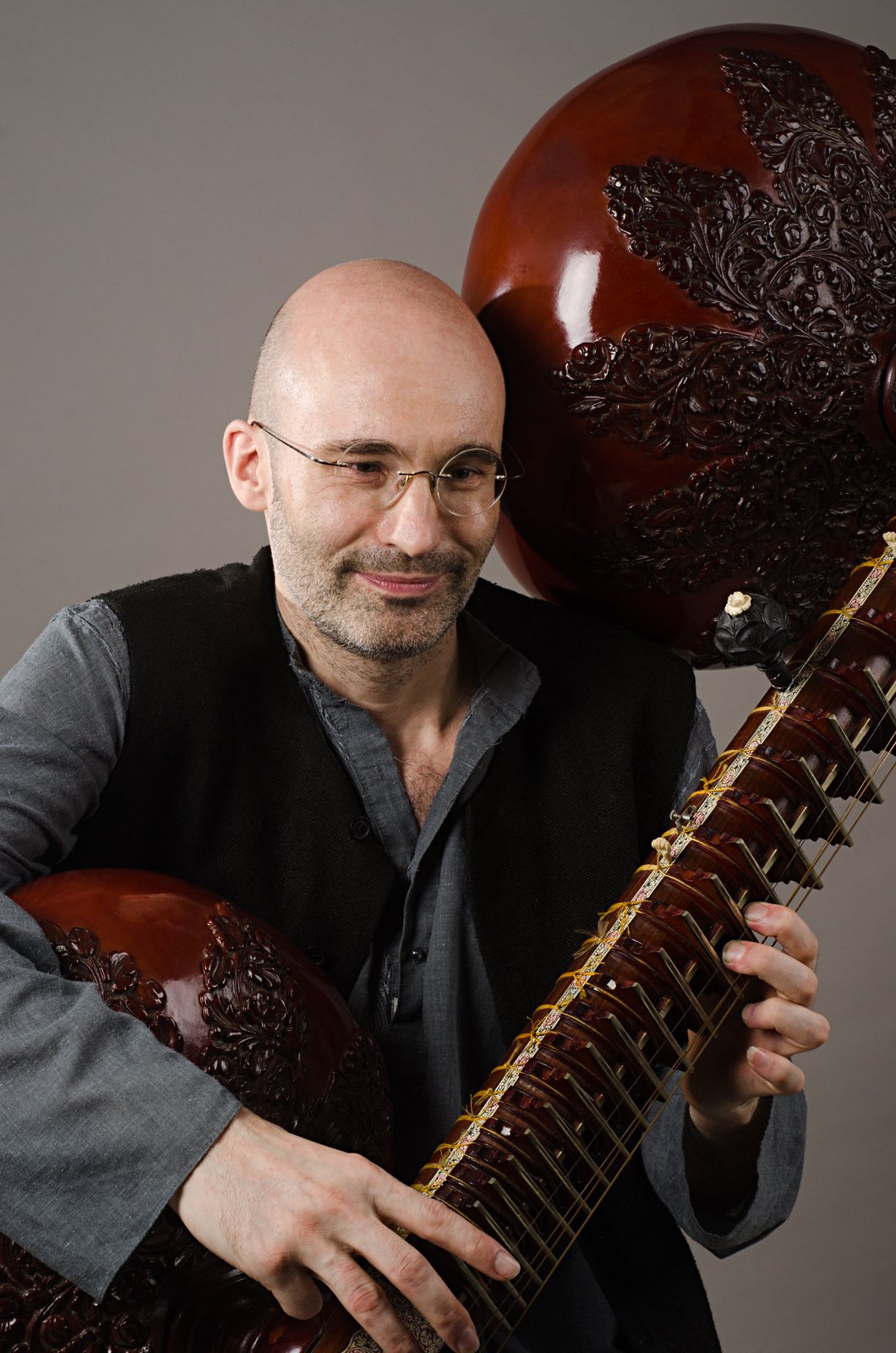 Carsten WickeTheir page records: Teacher
Accepted him as one of his few rudra veena disciples and taught him in the khandar bani.
Recognition
Honours and recognition
Highest national honour first, then by year.
- 2008Padma BhushanPresented by President Pratibha Patil.
- 1977Sangeet Natak Akademi Award
Writing
From the journal
Teachers, students, and musical lineages
How to read the lineage sections in this archive — and why a teacher, a father, an influence and a gharana are four different things.
The instrument she was told not to play: Jyoti Hegde and the rudra veena
She heard the rudra veena at a lecture-demonstration, and her own teacher refused to teach it to her. What followed is one of the better-documented stories of persistence in recent Hindustani music.
Community
Memories from the community
Personal recollections, not verified history
These are memories shared by listeners and musicians. They sit apart from the sourced biography above, and an editor reads each one before it appears.
- No memories have been shared yet.
Members can share a memory of Ustad Asad Ali Khan. Sign in or create an account.
Provenance
Sources and image credits
- Asad Ali Khan - Wikipedia
- Carsten Wicke, "Asad Ali Khan - A Life for the Rudra Veena" (obituary, India Instruments, August 2011)
- Ustad Asad Ali Khan - Darbar
- "The Distress Sale of Ustad Asad Ali Khan's rudra veena and the story of a lost legacy", The Indian Express, 27 November 2022
Photograph by Vamsidhar Reddy, 2009 (derivative by Hekerui) — CC BY-SA 4.0 via Wikimedia Commons
Continue exploring
- Jaipur beenkar gharana (Khandarbani)The lineage Ustad Asad Ali Khan is associated with, and the other musicians documented within it.
- The rudra veenaHow the instrument works, and who else in the archive plays it.
- The sitarHow the instrument works, and who else in the archive plays it.
- All musiciansBrowse the archive by name, instrument or discipline.