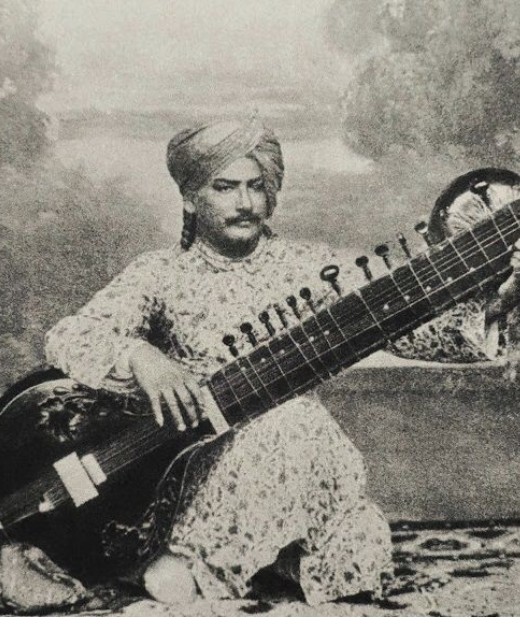
Photograph: Studio photograph, 1920s; public domain by age. Reproduced in Michael Kinnear, Etawah Gharana Discography
Hindustani classical · 1894–1938
Ustad Enayat Khan
The sitar player who standardised the instrument and passed the Etawah style to its best-known generation.
- Gharana
- Imdadkhani (Etawah) gharana
- On these dates
- Only the years 1894 and 1938 are documented in the source read; exact dates are not established.
Official website & social links
We have no checked official pages for Ustad Enayat Khan yet. Suggest an official link.
Where to start
Begin listening
Alap in Bageshri, surbahar
Megaphone Records (JNG-25)
A 78 rpm side issued as by "Professor Enayat Khan"; the transfer is hosted on Michael Kinnear's Etawah discography page.
Raga Bageshri, surbahar
Tushar Dabral
A collector's transfer of one of his 1930s Megaphone sides.
Bhairavi and Piloo, sitar
Ram L Kapur
A collector's transfer of his 78 rpm sitar sides.
Recordings are embedded from official or authorised channels and never rehosted. Nothing plays on its own, and starting one closes another. Where an editor has added a note, it explains why that recording was chosen — not what happens inside it.
Biography
Life
Enayat Khan was born in 1894 in the North-Western Provinces of British India, the son of Ustad Imdad Khan, who taught him sitar and surbahar in the family manner known as the Imdadkhani or Etawah gharana. He married Bashiran Begum, daughter of the khayal singer Bande Hussain.
The family lived in Calcutta, where his father trained him and his brother Wahid Khan; between the two brothers the sitar went to Enayat and the surbahar to Wahid. After Imdad Khan's death at Indore in 1920, Enayat Khan returned to Calcutta and made his career there.
Bengal shaped the second half of his short career. Banglapedia records that he was engaged at twenty-eight as household musician to Birendra Kishore Raychowdhury, the zamindar of Gouripur, and that although he was not a Bengali he settled permanently at Gouripur, where he popularised the sitar-surbahar tradition developed by his father. He taught widely there and in Kolkata; among the students named are his patron Birendra Kishore Raychowdhury, Bimalakanta Raychowdhury, Birendra Mitra, Srinibas Nug, Jitendramohan Sengupta, Jyotishchandra Chowdhury, Dhrubatara Joshee, John Gomes and Renuka Saha. The same account describes him as at home in dhrupad, khayal and thumri as well as on his own instruments.
He died in 1938, aged forty-three. His sons Vilayat Khan and Imrat Khan continued the line, as did his grandson Rais Khan, and some of his recordings were later reissued on the Great Gharanas: Imdadkhani compilation in RPG/EMI's Chairman's Choice series.
Musical contribution
What they brought to music
He developed further the gayaki ang — the sitar line modelled on a singing voice — that he had received from his father, and he was known for rapid multi-stroke taan work that his own son is said to have deliberately left alone. He also changed the instrument: he standardised the sitar's dimensions and added the upper resonating gourd now common on concert instruments, though his own descendants have not used it.
The account kept by his descendants credits him with a distinct baaj: the jhala developed into an independent movement within raga exposition rather than a closing flourish, careful placement of tihais in the mukhda and in amad, a vocal model for taan patterns, and the surbahar established as an integral first half of a surbahar-and-sitar recital. That page also describes his particular role in drawing the Bengal aristocracy into music as students rather than only as patrons. It is a family source and is cited here as such.
Rabindranath Tagore was a musical collaborator and friend.
In pictures
Photographs
Lineage & company
Teachers, students and musical connections
In the documented teaching trees
Where the archive's lineage research places Ustad Enayat Khan, and the teaching links recorded around them inside each tree.
Imdadkhani (Etawah) gharana1894–1938
Developed the family style further and recorded extensively.
Taught in this tree by: Imdad Khan
People
Grouped by the kind of relationship the sources record — who taught this musician, who they taught, family, and the people they played with.
Students and disciples
- Birendra Kishore RaychowdhuryPatron and disciple
Zamindar of Gouripur; engaged Enayat Khan as household musician when the musician was twenty-eight and also learned from him.
Banglapedia: Khan, Ustad Enayet - Bimalakanta RaychowdhuryDisciple
Named among his students at Gouripur and Kolkata.
Banglapedia: Khan, Ustad Enayet - Pandit Bimalendu MukherjeeImdadkhani training
Described as a student in the Imdadkhani line of Enayat Khan; accounts vary on direct tuition.
Bimalendu Mukherjee — Wikipedia
Family
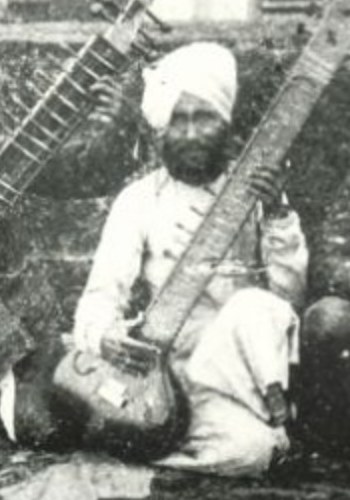 Ustad Imdad KhanFather and teacher
He taught him sitar and surbahar in the family style.
Enayat Khan — Wikipedia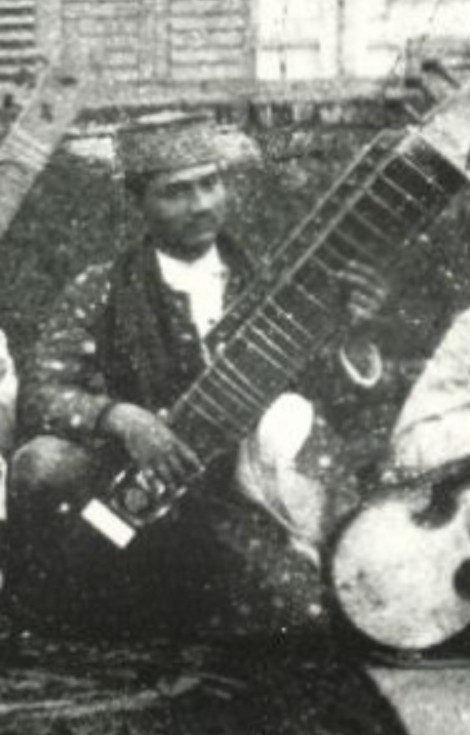 Ustad Wahid KhanBrother
Trained alongside him by their father; Enayat took the sitar, Wahid the surbahar.
Wahid Khan — Wikipedia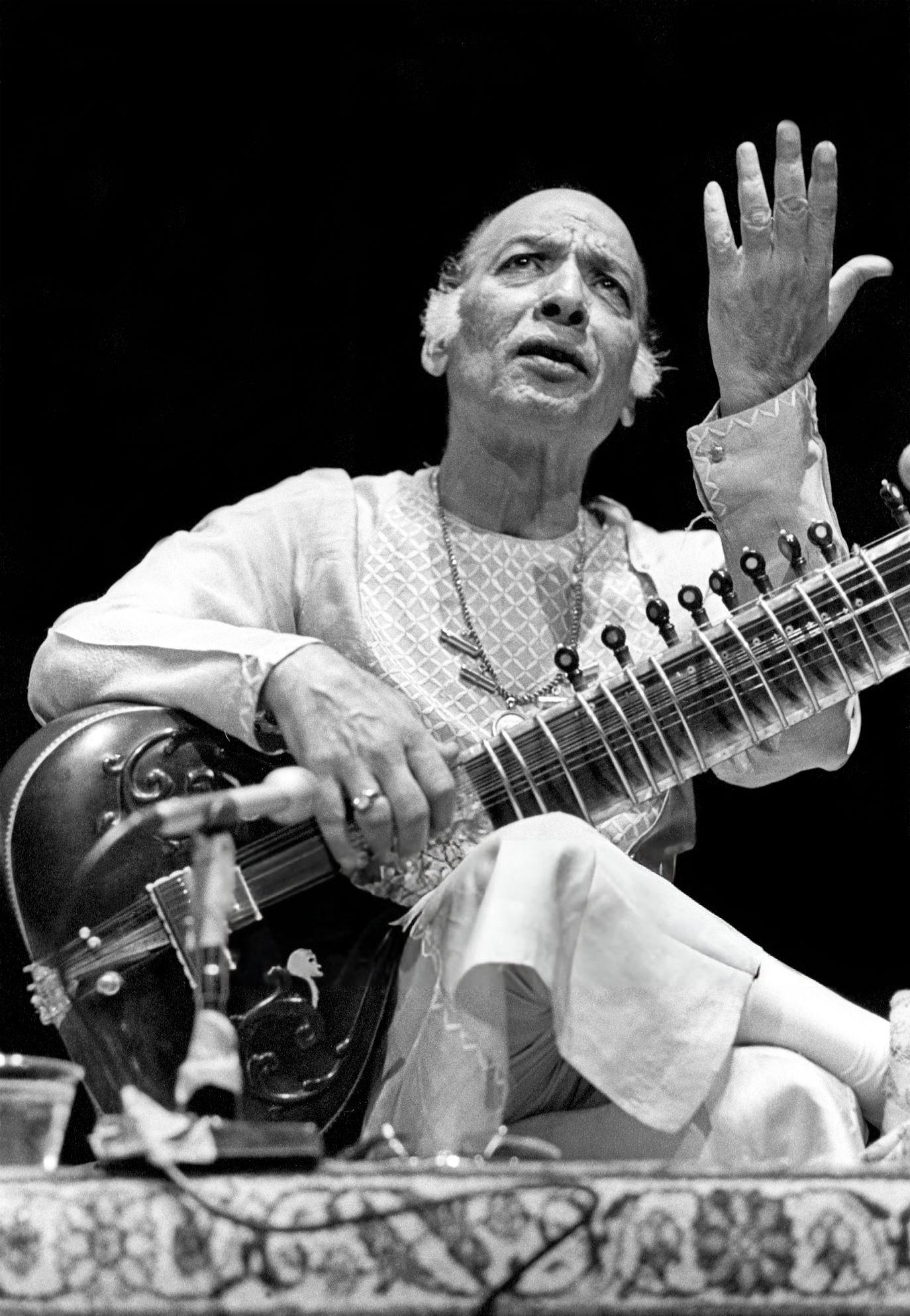 Ustad Vilayat KhanSon and student
His son, who continued the line.
Enayat Khan — Wikipedia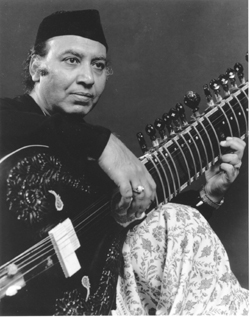 Ustad Imrat KhanSon
Surbahar and sitar player.
Wahid Khan — Wikipedia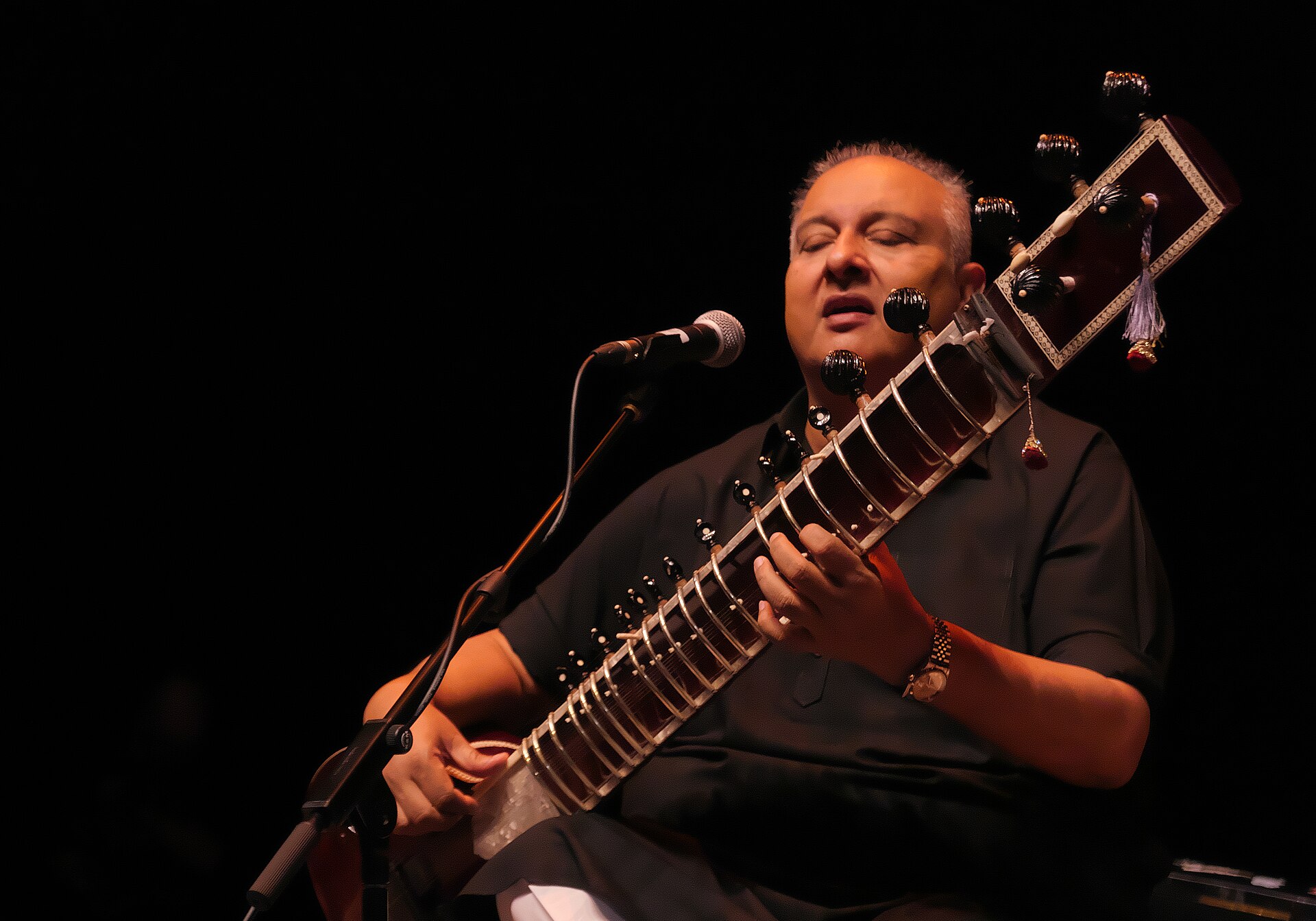 Ustad Shujaat Husain KhanGrandson
Sitar player of the seventh generation of the line.
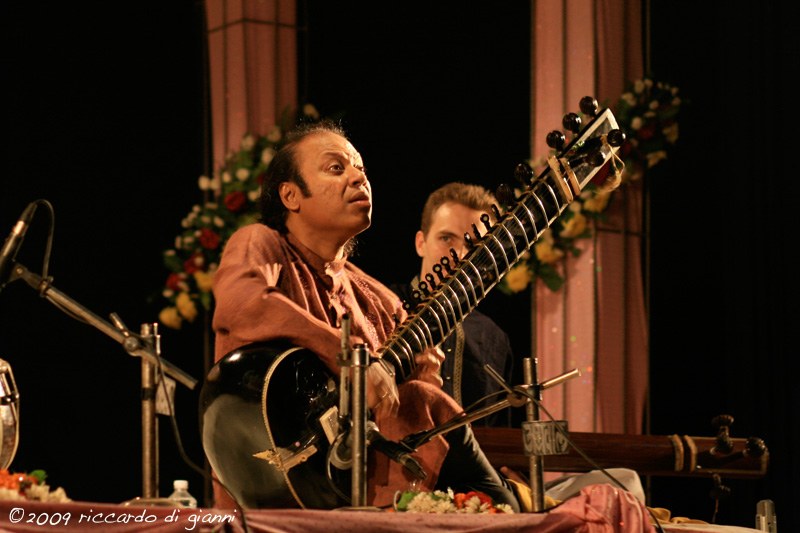
Shujaat Khan — Wikipedia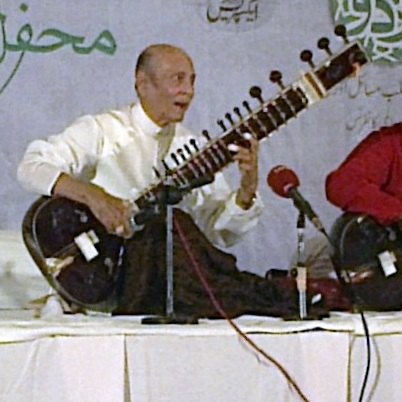 Ustad Rais KhanGrandson
Named with Vilayat Khan and Imrat Khan as carrying the line forward.
Banglapedia: Khan, Ustad Enayet- Bashiran BegumWife
Daughter of the khayal singer Bande Hussain.
Wikipedia: Enayat Khan
Named on other pages
Musicians whose own pages record a connection with this one, in the words their sources use.
 Ustad Nishat KhanTheir page records: Grandfather
Family line of the Imdadkhani gharana.
Community
Memories from the community
Personal recollections, not verified history
These are memories shared by listeners and musicians. They sit apart from the sourced biography above, and an editor reads each one before it appears.
- No memories have been shared yet.
Members can share a memory of Ustad Enayat Khan. Sign in or create an account.
Provenance
Sources and image credits
- Enayat Khan — Wikipedia
- Banglapedia: Khan, Ustad Enayet
- Ustad Enayat Khan — legacy page, Hidayat Husain Khan (family source)
Photograph: Studio photograph, 1920s; public domain by age. Reproduced in Michael Kinnear, Etawah Gharana Discography
Continue exploring
- Imdadkhani (Etawah) gharanaThe lineage Ustad Enayat Khan is associated with, and the other musicians documented within it.
- The sitarHow the instrument works, and who else in the archive plays it.
- The surbaharHow the instrument works, and who else in the archive plays it.
- All musiciansBrowse the archive by name, instrument or discipline.