Hindustani classical · 1941–1990
Ustad Latif Ahmed Khan
The Delhi baaj carried onto the international stage.
- Instrument
- Tabla
- Gharana
- Delhi gharana (tabla)
- On these dates
- Dates conflict. James Kippen's family-derived Delhi genealogy gives 1941–1990; Sudhir Kumar Misra's Art and Science of Playing Tabla gives a birth year of 1942 and a death on 29 August 1989 at the age of 48 (itself internally inconsistent). Both accounts are given on the page; neither has been independently corroborated.
Official website & social links
We have no checked official pages for Ustad Latif Ahmed Khan yet. Suggest an official link.
Where to start
Begin listening
Tabla performance
ASIAN MUSIC CIRCUIT
Filmed performance held by the Asian Music Circuit, the London organisation that presented him in Britain.
Music / Sangam — with Don Cherry
Europa Records · Discogs release listing
His best-known international record, a duo with the American trumpeter Don Cherry. Catalogue listing only; no authorised stream located.
Rags Malkauns and Megh — with Viram Jasani and Gurdev Singh
Discogs release listing
One of his British accompaniment records. Catalogue listing only; no authorised stream located.
Recordings are embedded from official or authorised channels and never rehosted. Nothing plays on its own, and starting one closes another. Where an editor has added a note, it explains why that recording was chosen — not what happens inside it.
Biography
Life
Latif Ahmed Khan was the leading Delhi gharana tabla player of his generation, and the last to carry the full Delhi baaj to a wide international audience. He was born in Delhi into a musical family — his father, Mohammad Baksh Khan, was a sarangi player who died in 1952 — and was known within the family as "Allah havala". He began tabla training in about 1953 under Ustad Gamay Khan, then khalifa (head) of the Delhi gharana, and after Gamay Khan's death continued with the khalifa's younger brother Ustad Munnu Khan and his son Ustad Inam Ali Khan. This threefold training inside one household is the reason his playing is usually described as Delhi baaj in its undiluted form.
He began performing young. Sudhir Kumar Misra's account dates his breakthrough to a solo recital in Mumbai in 1958, given before Inam Ali Khan, Ustad Allah Rakha, Pandit Samta Prasad, Ustad Amir Khan and Ustad Abdul Halim Jaffar Khan, and records that he accompanied Pandit Ravi Shankar the following year. He went on to accompany musicians including Ustad Altaf Hussain Khan, Ustad Vilayat Hussain Khan, Ustad Chand Khan and Ustad Umrao Bundu Khan, and was one of the few tabla players equally at home behind vocal music, instrumental music and Kathak dance — a breadth that the closed, low-dynamic Delhi style does not obviously suit, and which he is credited with achieving without abandoning it. All India Radio is reported to have granted him top-grade status without an audition; he played the Akashvani Sangeet Sammelan solo in 1974, and his last performance was a solo at the same series in Patna.
His first overseas tour took him to London in 1967, after which he travelled repeatedly to the United States, Europe, Africa and the Middle East, and taught as a guest lecturer at Dartington College of Arts in England. He had taught at the Bharatiya Kala Kendra in Delhi before leaving that post to concentrate on performance. Outside the classical circuit he played with the jazz trumpeter Don Cherry and formed an ensemble called Drums of India. He devised a tal of five and a quarter matras known as Latif tal, preserved on a recording made in Switzerland, and his tabla was used on the soundtracks of the Hindi films Bawarchi, Prem Rog and Bhai Ho Toh Aisa. A number of his solo and accompaniment recordings circulate, including a Teental solo widely available online.
His relationship with Inam Ali Khan, his principal surviving teacher, soured in later years, a rift recorded in Kippen's interviews with the family. Kippen's assessment is that the Delhi performing tradition in its full form did not survive the deaths of the two men. His sons Akbar Latif and Babar Latif continued as tabla players.
His dates are not settled in the available literature. The Archive records 1941–1990, the span also used in the Delhi gharana discussions on the Chandra & David Courtney forum; many discographies and radio archives, including NTS and Discogs, give 1942–1989 instead. Both are kept in view here rather than resolved. In 1996 the Archives Internationales de Musique Populaire at the Musée d'ethnographie in Geneva issued Inde/India. Tabla Solo: Hommage à Latif Ahmed Khan (Disques VDE-Gallo CD-909), recorded by Jean-Luc Meylan and Paul Meyer with notes by Bruno Caillat and a thirty-four page booklet of commentary, transcriptions and photographs; it was reviewed in the Yearbook for Traditional Music.
Musical contribution
What they brought to music
Delhi bandh baaj as he played it stays close to the rim of the dayan and uses the bass drum sparingly, with the index and middle fingers carrying most of the work. Sources emphasise clarity of individual syllables and long qayada development rather than volume. His own addition to the repertoire was Latif tal, a cycle of five and a quarter matras.
Lineage & company
Teachers, students and musical connections
In the documented teaching trees
Where the archive's lineage research places Ustad Latif Ahmed Khan, and the teaching links recorded around them inside each tree.
Delhi gharana (tabla)1941–1990
Widely regarded as the finest Delhi gharana player of his generation.
Taught in this tree by: Inam Ali Khan
People
Grouped by the kind of relationship the sources record — who taught this musician, who they taught, family, and the people they played with.
Teachers and gurus
- Gamay KhanTeacher
Then khalifa of the Delhi gharana; first teacher from about 1953 until his death.
Sudhir Kumar Misra, Art and Science of Playing Tabla 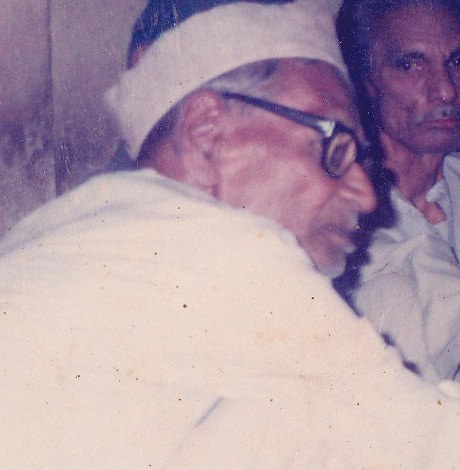 Ustad Munnu KhanTeacher
Gamay Khan's younger brother; continued his training.
Sudhir Kumar Misra, Art and Science of Playing Tabla- Ustad Inam Ali KhanTeacher
Gamay Khan's son and later khalifa; the two fell out in later years (Kippen).
Sudhir Kumar Misra, Art and Science of Playing Tabla
Family
- Babar Latif KhanSon
Tabla player.
Sudhir Kumar Misra, Art and Science of Playing Tabla - Akbar Latif KhanSon
Tabla player.
Sudhir Kumar Misra, Art and Science of Playing Tabla
Collaborators and accompanists
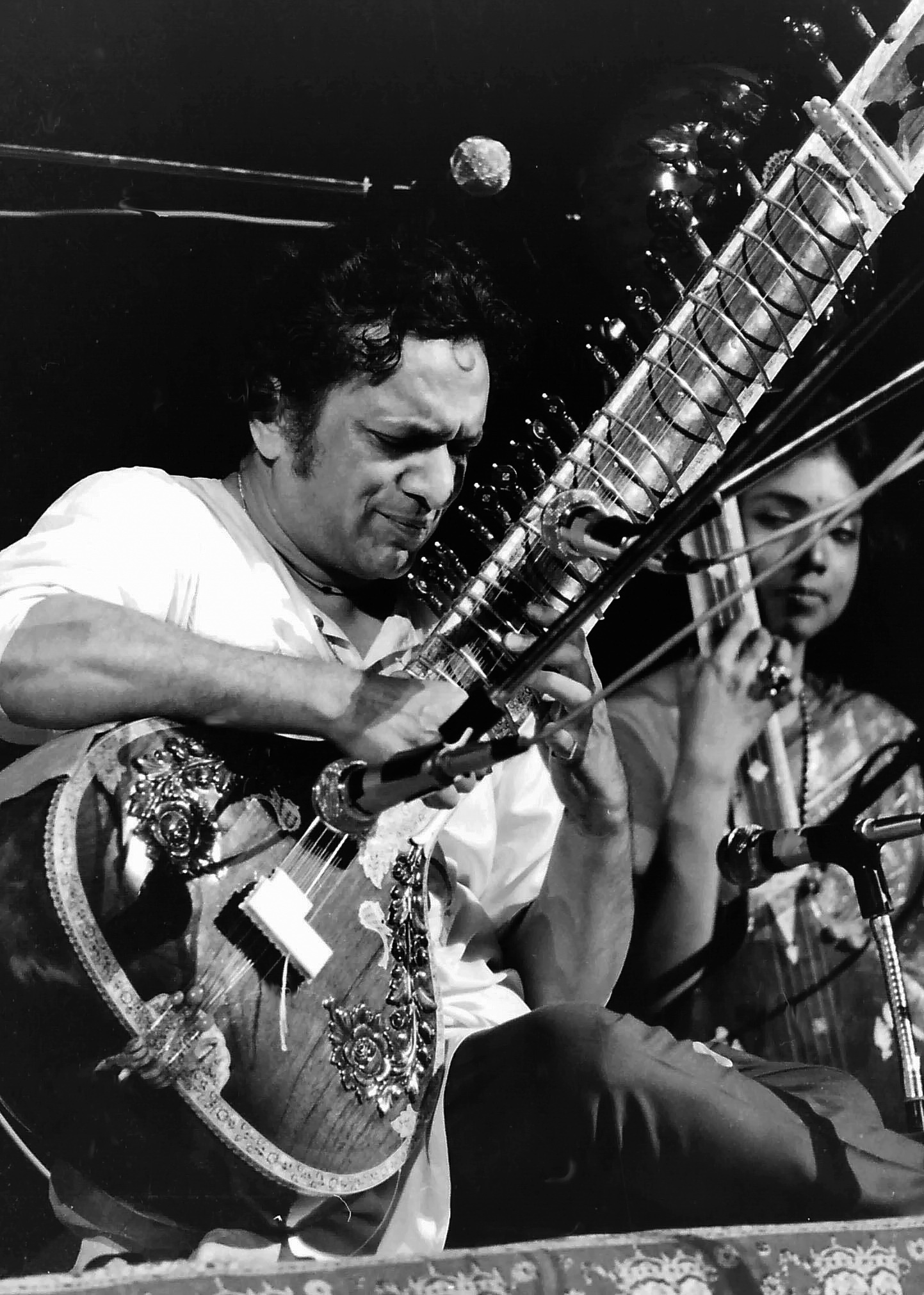 Pandit Ravi ShankarAccompanied
Accompanied him in 1959 according to Misra's account.
Sudhir Kumar Misra, Art and Science of Playing Tabla- Don CherryCollaborator
Played with the jazz trumpeter outside the classical circuit.
Sudhir Kumar Misra, Art and Science of Playing Tabla
Community
Memories from the community
Personal recollections, not verified history
These are memories shared by listeners and musicians. They sit apart from the sourced biography above, and an editor reads each one before it appears.
- No memories have been shared yet.
Members can share a memory of Ustad Latif Ahmed Khan. Sign in or create an account.
Provenance
Sources and image credits
- Sudhir Kumar Misra, Art and Science of Playing Tabla (biographical entry, pp. 300–302)
- James Kippen, Delhi tabla gharana genealogy (interviews with the family, 1984)
- Latif Ahmed Khan — Tabla Solo, Teental (recording)
- Gregory D. Booth, review of Inde/India. Tabla Solo: Hommage à Latif Ahmed Khan (AIMP, Musée d'ethnographie Genève, 1996), Yearbook for Traditional Music vol. 29
No photograph of this musician is published here yet; we use only images we are permitted to show, with credit.
Continue exploring