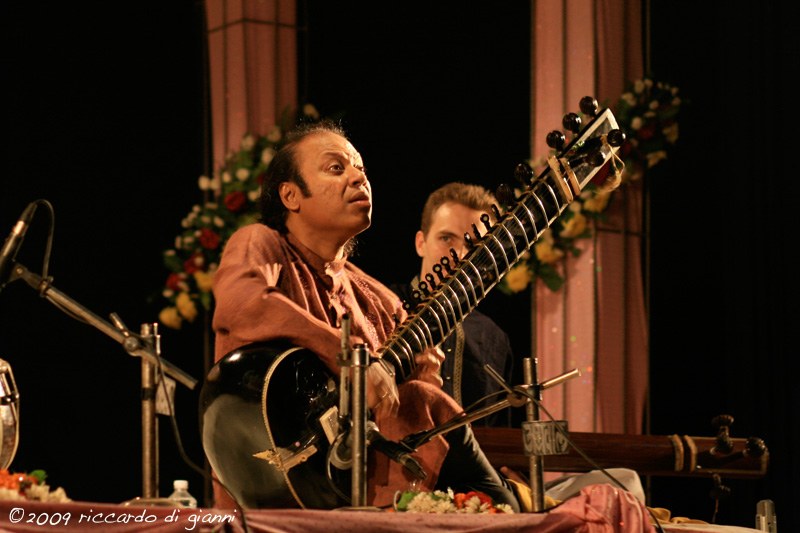
Hindustani classical · 1967–present
Ustad Nishat Khan
An Imdadkhani sitarist whose classical career runs alongside decades of cross-genre collaboration.
- Instrument
- Sitar
- Gharana
- Imdadkhani (Etawah) gharana
- Born
- 25 October 1960, Kolkata, India
Official website & social links
Ustad Nishat Khan's own pages elsewhere on the web.
These destinations belong to Ustad Nishat Khan or to those who look after their work, and are checked by an editor before they are listed. They leave the archive. Suggest a link or a correction.
Where to start
Begin listening
Sitar recital, Harivallabh Sangeet Sammelan 2023 (Part 1)
Performed 2023 · 1:08:28 · Harivallabh Sangeet Sammelan Official
Official festival channel; performance at the 2023 sammelan, uploaded a year later.
Watch on YouTubeUploaded 2024-12-09
Recordings are embedded from official or authorised channels and never rehosted. Nothing plays on its own, and starting one closes another. Where an editor has added a note, it explains why that recording was chosen — not what happens inside it.
Biography
Life
Nishat Khan was born on 25 October 1960 in the Park Circus area of Kolkata, on a road named after his grandfather Enayat Khan. He is the son of the sitar and surbahar player Ustad Imrat Khan, who was also his guru, and the nephew of Ustad Vilayat Khan, whose concerts and post-concert analysis he describes as a form of training in itself.
He began the sitar at three and gave his first concert at seven in Kolkata; he was thirteen when he first played on All India Radio. His first international appearance came in 1977 at the Queen Elizabeth Hall in London, performing with his father.
Alongside classical touring he has worked with John McLaughlin — first in a duet in Italy in 1986 — and with Philip Glass, Paco Peña, Evelyn Glennie and Django Bates. His sitar concerto "Gate of the Moon" was premiered with the BBC National Orchestra of Wales at the Proms in 2013.
Musical contribution
What they brought to music
Khan's classical playing belongs to the gayaki ang associated with his family: the sitar is made to follow the phrasing of a singer, with long meend and shaped ornament before the rhythmic sections. He is also known for speed and clarity in fast passages. In his collaborative work the same technique is applied to written and improvised material from outside Hindustani music, which he keeps separate from his raga recitals.
In pictures
Photographs
Lineage & company
Teachers, students and musical connections
In the documented teaching trees
Where the archive's lineage research places Ustad Nishat Khan, and the teaching links recorded around them inside each tree.
Imdadkhani (Etawah) gharanaborn 1960
Son of Imrat Khan, active in cross-tradition collaborations.
People
Grouped by the kind of relationship the sources record — who taught this musician, who they taught, family, and the people they played with.
Family
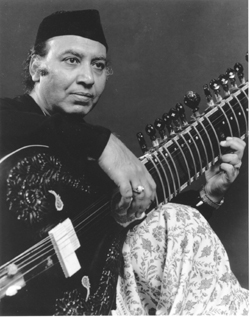 Ustad Imrat KhanFather and guru
His main teacher; they performed together in London in 1977.
Nishat Khan — Wikipedia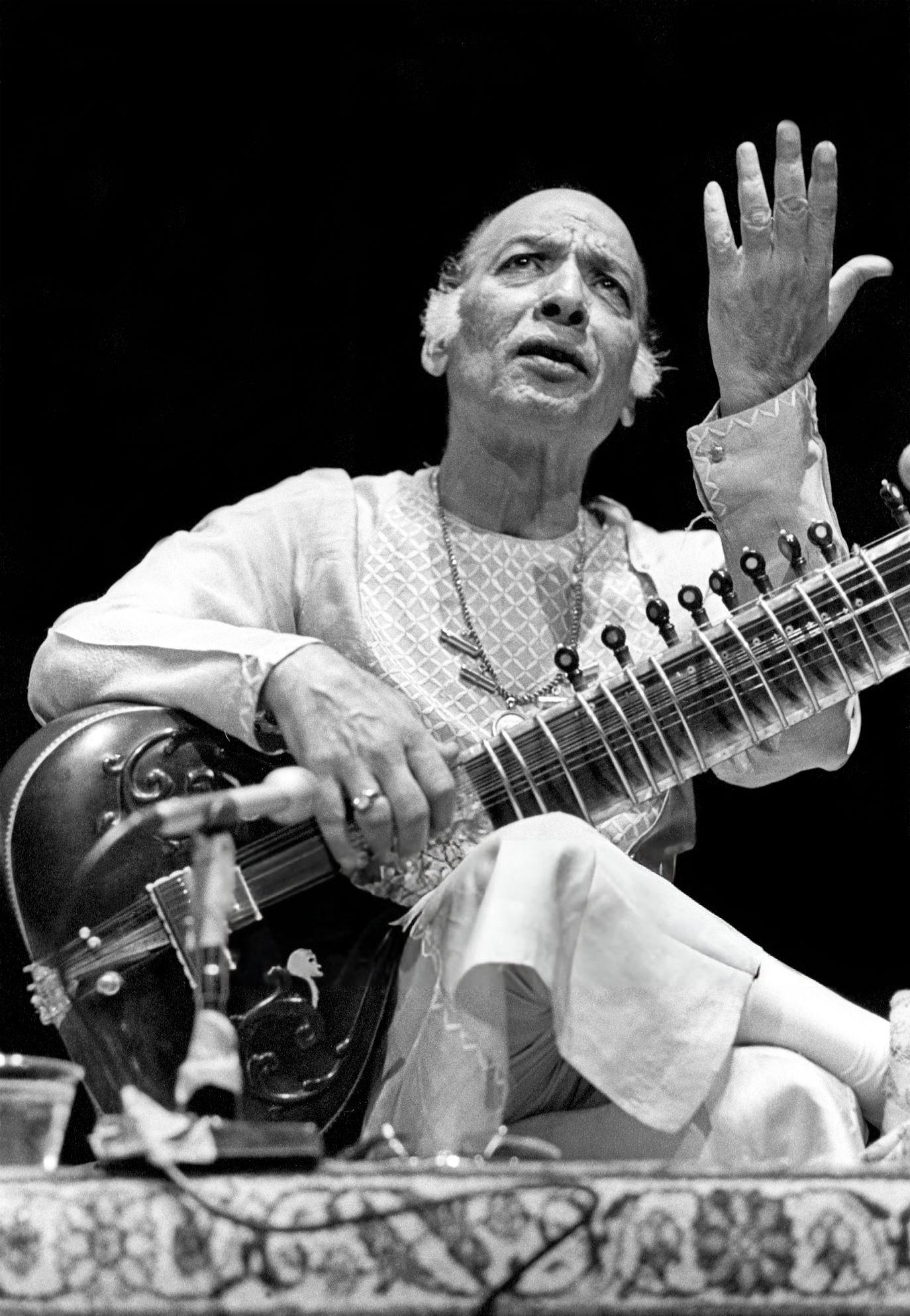 Ustad Vilayat KhanUncle and influence
Paternal uncle; a strong influence, though not his formal teacher.
Nishat Khan — Wikipedia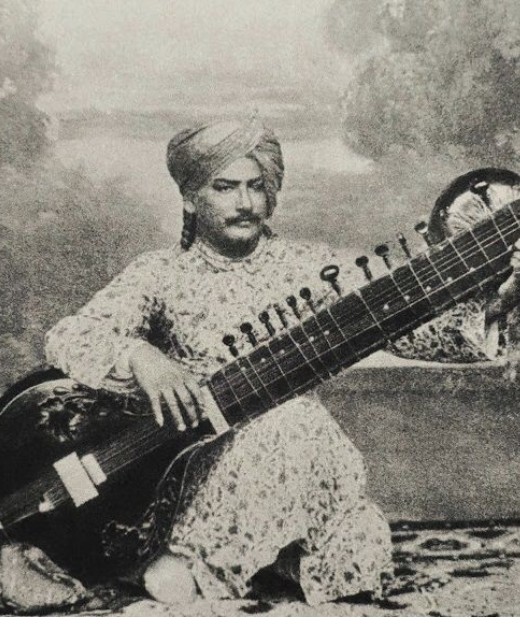 Ustad Enayat KhanGrandfather
Family line of the Imdadkhani gharana.
Nishat Khan — Wikipedia
Collaborators and accompanists
- Ishaan GhoshCollaborator
Has performed with him.
Ishaan Ghosh — official site
Community
Memories from the community
Personal recollections, not verified history
These are memories shared by listeners and musicians. They sit apart from the sourced biography above, and an editor reads each one before it appears.
- No memories have been shared yet.
Members can share a memory of Ustad Nishat Khan. Sign in or create an account.
Provenance
Sources and image credits
Photograph by Riccardo Di Gianni, CC BY-SA 2.0, via Wikimedia Commons
Continue exploring