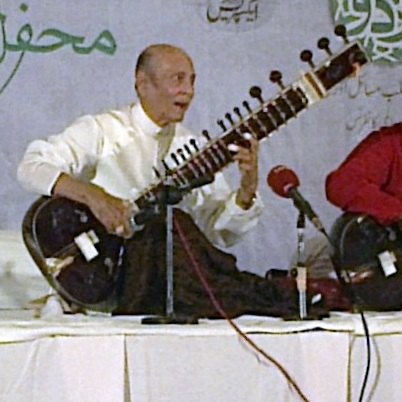
Photograph: Bhaur, via Wikimedia Commons (CC BY-SA 3.0)
Hindustani classical · 1948–2017
Ustad Rais Khan
A sitarist of extraordinary fluency who carried his art from Bombay to Karachi.
- Instrument
- Sitar
- Gharana
- Family tradition of Mohammed Khan; associated with Mewati and Indore beenkar lineages
- Born
- 25 November 1939, Indore, Indore, Indore State, British India
- Died
- 6 May 2017, Karachi, Pakistan
Official website & social links
We have no checked official pages for Ustad Rais Khan yet. Suggest an official link.
Where to start
Begin listening
Raga Charukeshi — live at the Bengal Classical Music Festival
Charukeshi · Performed 2013 · 48:09 · Bengal Foundation
Festival organiser's own channel. The title gives the performance year as 2013 (BCMF); the upload is from 2020.
Watch on YouTubeUploaded 2020-05-07
Hans Dhuni — Coke Studio Pakistan, Season 7
Recorded 2014 · 4:13 · Coke Studio Pakistan
A studio production rather than a classical recital — included as a documented later phase of his work in Pakistan. Produced by Strings, Season 7 Episode 7.
Watch on YouTubeUploaded 2014-11-22
Recordings are embedded from official or authorised channels and never rehosted. Nothing plays on its own, and starting one closes another. Where an editor has added a note, it explains why that recording was chosen — not what happens inside it.
Biography
Life
Rais Khan was born in Indore in 1939 into a family with a long line of instrumentalists. His father, Mohammed Khan, was a rudra veena player and sitarist, and began teaching him as a small child on a miniature coconut-shell sitar. The family moved to Bombay, where Rais Khan grew up and gave his first public performance while still a boy.
In 1955 he was chosen to represent India at the International Youth Festival in Warsaw, where he was awarded a first prize. From then on he performed steadily in India and abroad, and became widely known outside the concert hall through his sitar work in Hindi film music, notably for compositions by Madan Mohan.
In 1979 he met the Pakistani singer Bilqees Khanum, whom he later married, and in 1986 he moved to Pakistan and took Pakistani citizenship. He continued to perform almost until his death in Karachi in 2017. Reference sources place his family within the Mewati gharana and connect his father's playing to the beenkar approach associated with Indore; his exact affiliation is described differently in different accounts, and this archive does not assign him to the Imdadkhani (Etawah) gharana on the basis of family connections alone. He was also often described as a relative of Ustad Vilayat Khan, an association he himself discussed in interviews.
Musical contribution
What they brought to music
Rais Khan was known for a wide, singing meend and for closing recitals by singing — often the film song "Ghungroo toot gaye" — to show listeners how close instrumental phrasing is to the voice. Commentators describe his alap, gatkari and gamak work as distinct in pacing and technique from the Imdadkhani manner with which he is sometimes grouped.
In pictures
Photographs
Lineage & company
Teachers, students and musical connections
People
Grouped by the kind of relationship the sources record — who taught this musician, who they taught, family, and the people they played with.
Family
- Ustad Mohammed KhanFather and teacher
A rudra veena player and sitarist who began his son's training in early childhood.
Rais Khan — Wikipedia 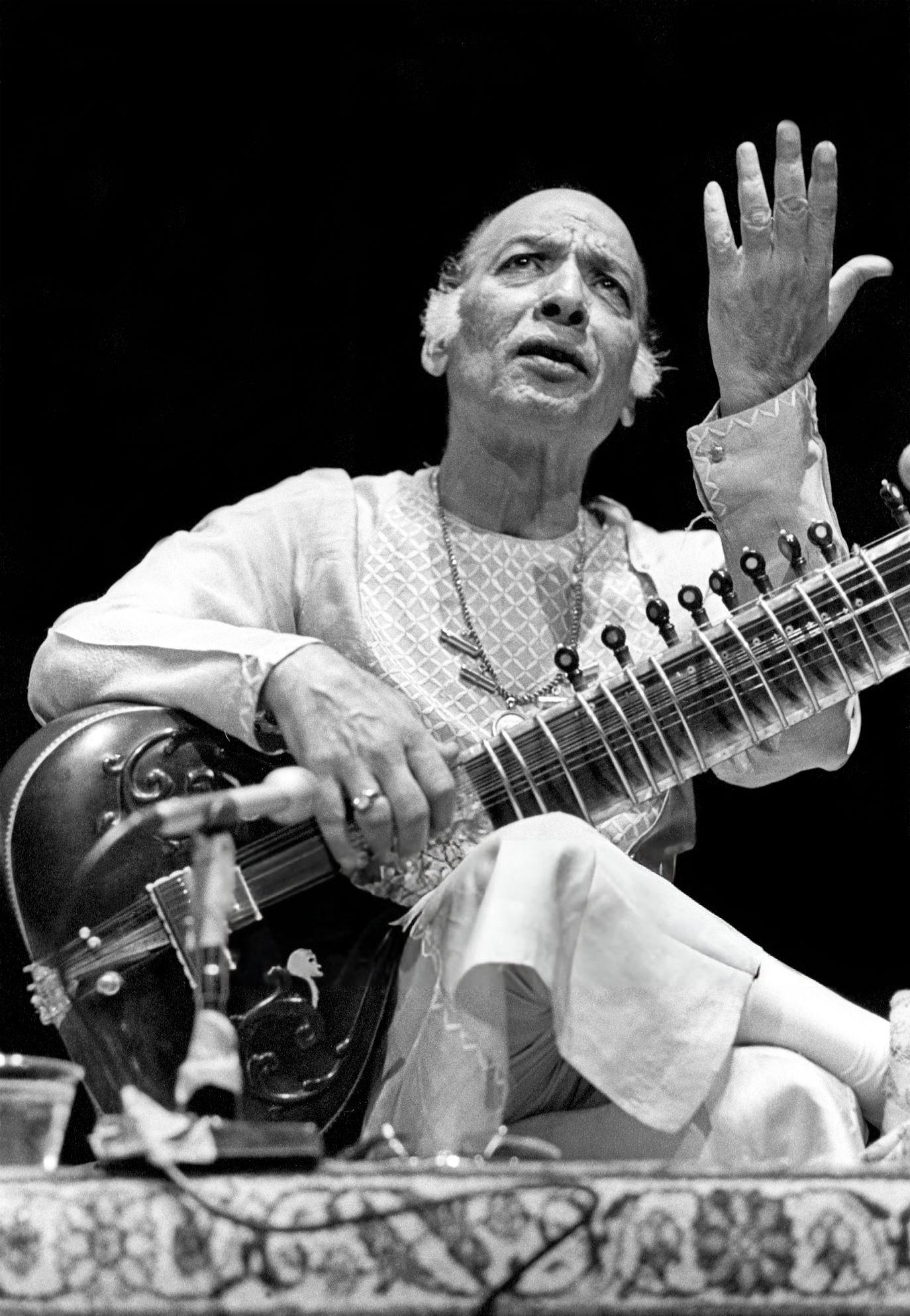 Ustad Vilayat KhanFamily connection
Described in reference accounts as a relative of Rais Khan; not a teaching relationship.
Rais Khan — Wikipedia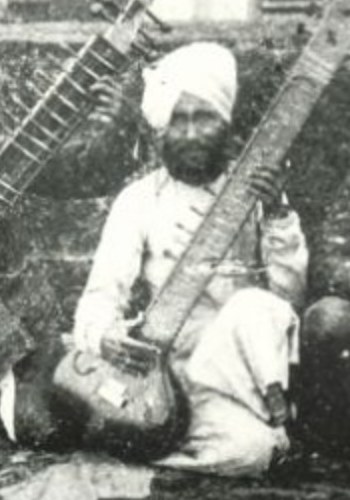 Ustad Imdad KhanAncestral family line
Sources trace his family's sitar line back to Imdad Khan; the exact descent is described differently in different accounts.
Rais Khan — Wikipedia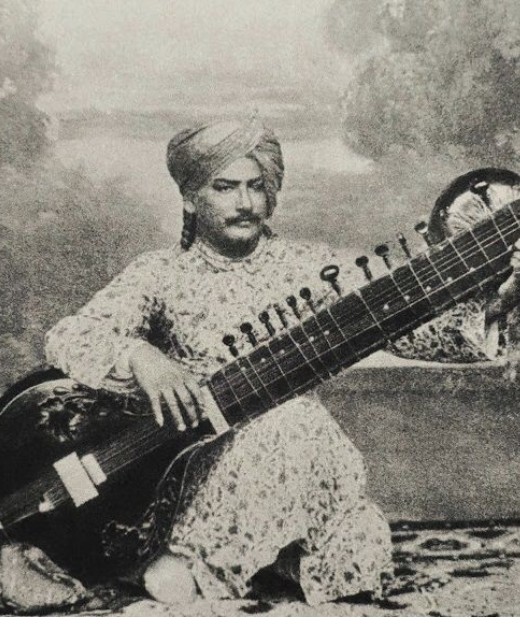 Ustad Enayat KhanGrandfather
Named in Banglapedia among the descendants who carried the Imdadkhani line.
Banglapedia: Khan, Ustad Enayet
Collaborators and accompanists
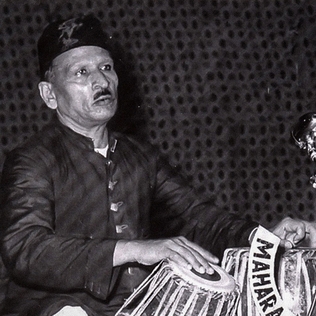 Ustad Ahmed Jan ThirakwaAccompanied by
Thirakwa is named among the tabla players who accompanied him.
Mohan Nadkarni, The Economic Times 1982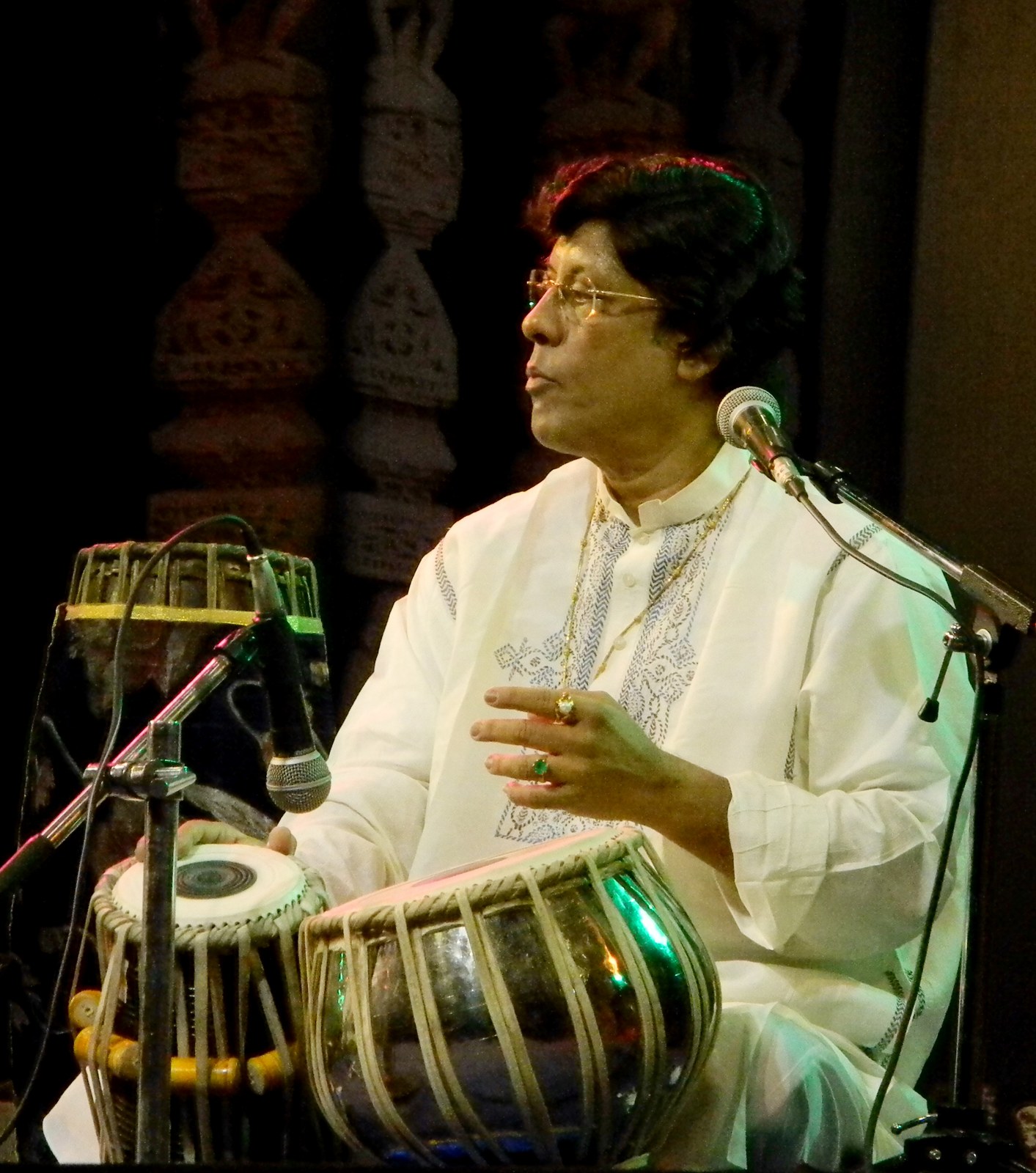 Pandit Anindo ChatterjeeAccompanied by
Named among the tabla players who have accompanied him.
Wikipedia — Anindo Chatterjee
Recognition
Honours and recognition
Highest national honour first, then by year.
- 2005Pride of Performance (Government of Pakistan)
- 2017Sitara-i-Imtiaz (Government of Pakistan)Pakistan's third highest civilian honour.
Community
Memories from the community
Personal recollections, not verified history
These are memories shared by listeners and musicians. They sit apart from the sourced biography above, and an editor reads each one before it appears.
- No memories have been shared yet.
Members can share a memory of Ustad Rais Khan. Sign in or create an account.
Provenance
Sources and image credits
- Rais Khan — Wikipedia
- Ustad Rais Khan — Kalavant Center for Music and Dance
- A rich legacy — The Hindu (obituary, 2017)
Photograph: Bhaur, via Wikimedia Commons (CC BY-SA 3.0)
Continue exploring