
Hindustani classical · 1909–1997
Pandit Jnan Prakash Ghosh
The guru who made Kolkata a capital of tabla.
- Instrument
- Tabla
- Schools & gurukuls
- Sangit MahabharatiTeacher of the founder
- Born
- 8 May 1909, Kolkata, Kolkata
- Died
- 18 February 1997
Official website & social links
We have no checked official pages for Pandit Jnan Prakash Ghosh yet. Suggest an official link.
Biography
Life
Jnan Prakash Ghosh — also transliterated Gyan Prakash Ghosh — was born in Kolkata on 8 May 1909, the grandson of Dwarkanath Ghosh, who founded the harmonium makers Dwarkin in 1875. He graduated from Scottish Church College of the University of Calcutta, and came to music after an eye injury ended his painting and much of his sport.
He learned vocal music from Girija Shankar Chakrabarty, Mohammed Sagir Khan and Mohammed Dabir Khan, and took tabla from Masit Khan of the Farrukhabad gharana, becoming his senior disciple. He went on to study with Ustad Feroz Khan of the Punjab gharana, and is credited with bringing Punjab gharana compositions into circulation in Kolkata.
He founded the Sourav Academy of Music and was closely associated with the Sangeet Research Academy. He worked for years as a producer at All India Radio, scored Bengali films including Jadubhatta, Andhare Alo and Rajlakshmi o Srikanta (1958), and wrote music for the Oscar-nominated animated short Bead Game.
His teaching is his largest legacy. Kanai Dutta, Shyamal Bose and Shankar Ghosh were his senior tabla disciples; Nikhil Ghosh, Anindo Chatterjee and Abhijit Banerjee also studied with him, Anindo Chatterjee for some three decades. Vocalists including Ajoy Chakrabarty and Arun Bhaduri were among his students as well. He received the Sangeet Natak Akademi Fellowship in 1974 and the Padma Bhushan in 1984, and died on 18 February 1997.
He spent some fifteen years at All India Radio as a producer of music, and composed across classical, light and devotional forms as well as writing lyrics — one reason his influence reached singers and instrumentalists who were not tabla players at all.
The teaching is what he is remembered for. Shankar Ghosh, interviewed by The Hindu shortly before his death in 2016, described living in his guru's Calcutta house and being called after dinner, near midnight, to take down compositions from dictation — and noted that he had learned from Firoz Khan of the Punjab tradition, one of Gyan Babu's own gurus, so that the Purab and Punjab repertoires reached him from both directions. Through Shankar Ghosh, Anindo Chatterjee, Kanai Dutta, Shyamal Bose, Nikhil Ghosh and the vocalist Ajoy Chakrabarty, that transmission runs through most of the Kolkata tabla world today. He died on 18 February 1997.
Musical contribution
What they brought to music
Ghosh sat at a junction of traditions rather than inside one. His tabla was rooted in Masit Khan's Farrukhabad, with its singing, melodic bayan and long gat compositions; his later training with Feroz Khan added the weightier, pakhawaj-inflected Punjab repertoire.
He was also a serious harmonium player and composer, and taught vocalists as readily as drummers — which is why his students tend to describe learning phrasing and musical shape from him, not only strokes.
Lineage & company
Teachers, students and musical connections
People
Grouped by the kind of relationship the sources record — who taught this musician, who they taught, family, and the people they played with.
Teachers and gurus
- Ustad Masit KhanTeacher
Farrukhabad khalifa; Ghosh became his senior tabla disciple.
Wikipedia - Ustad Feroz KhanTeacher
Punjab gharana master with whom he trained after his Farrukhabad taleem.
The Hindu - Pandit Shankar GhoshDisciple
One of three senior disciples, with Kanai Dutta and Shyamal Bose; lived in his guru's Kolkata house.
The Hindu - Pandit Nayan GhoshEarly guidance
Recorded in the archive on Nayan Ghosh's profile as early guidance, not formal discipleship.
Students and disciples
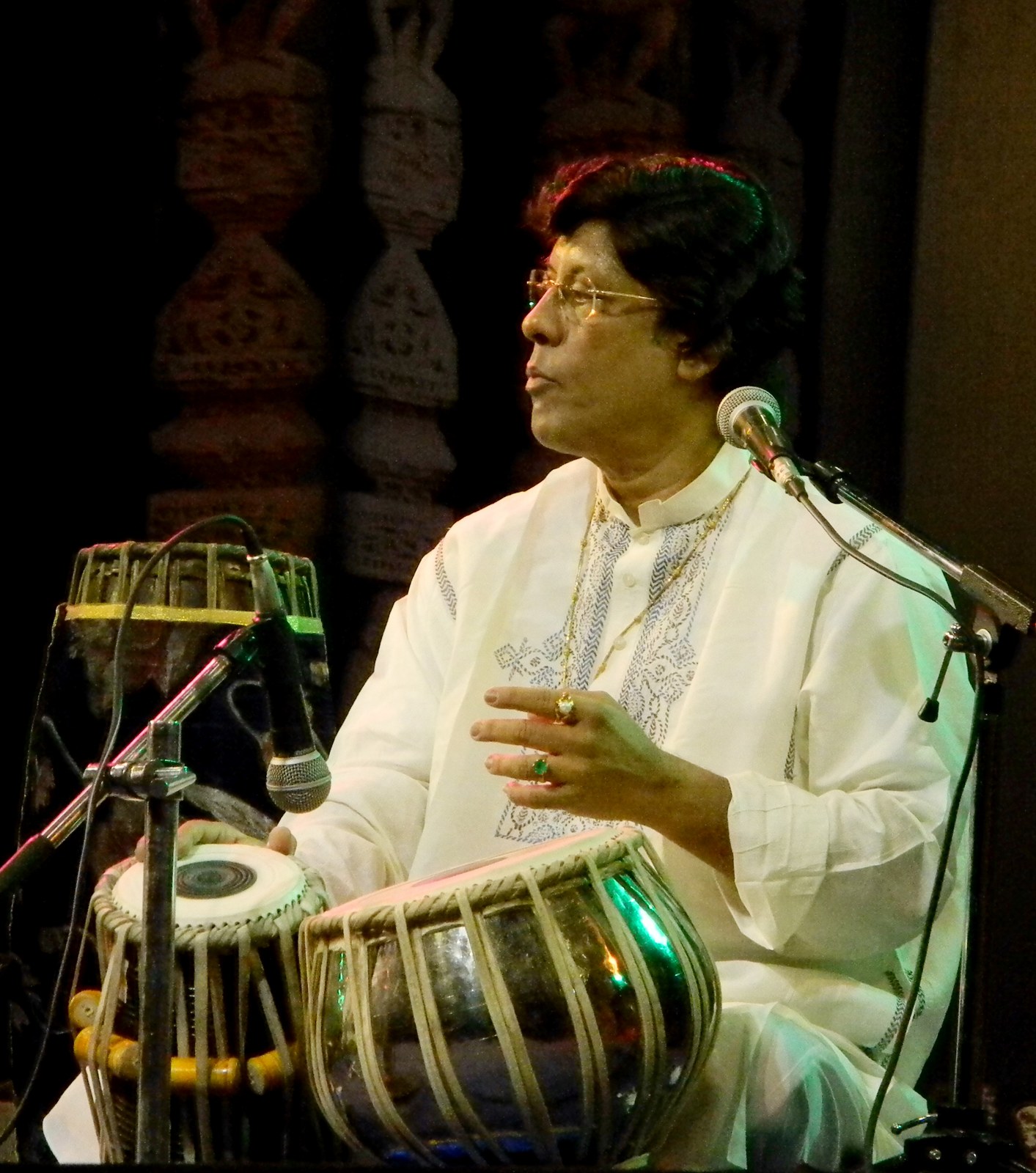 Pandit Anindo ChatterjeeDisciple
Studied with him for roughly three decades.
Everything Explained (Anindo Chatterjee)- Pandit Kanai DuttaDisciple
Senior tabla disciple.
The Hindu - Pandit Shyamal BoseDisciple
Senior tabla disciple.
The Hindu - Pandit Nikhil GhoshDisciple
Tabla student; later founder of Sangit Mahabharati in Bombay.
Tabla Dhriti newsletter  Pandit Ajoy ChakrabartyStudent
Among the vocalists who studied with him.
Tabla Dhriti newsletter
Collaborators and accompanists
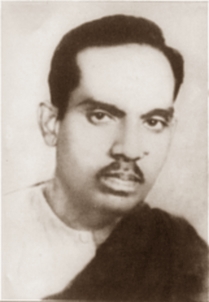 Pandit Anokhelal MishraCollaborator
Accompanied Anokhelal Mishra on harmonium in the teentaal solo recorded on 26 December 1957.
Anokhelal Mishra — Wikipedia
Other recorded connections
- All India RadioInstitution
Worked about fifteen years as a producer of music at All India Radio.
Jnan Prakash Ghosh — Wikipedia
Schools, gurukuls and institutions
- Sangit Mahabharati
Teacher of the founder
Recognition
Honours and recognition
Highest national honour first, then by year.
- 1984Padma BhushanYear reported by secondary sources; open to correction against a government citation.
- 1974Sangeet Natak Akademi FellowshipFellowship recorded on Wikidata; year reported by secondary sources.
Community
Memories from the community
Personal recollections, not verified history
These are memories shared by listeners and musicians. They sit apart from the sourced biography above, and an editor reads each one before it appears.
- No memories have been shared yet.
Members can share a memory of Pandit Jnan Prakash Ghosh. Sign in or create an account.
Provenance
Sources and image credits
- Jnan Prakash Ghosh — Wikipedia
- Pt. Shankar Ghosh recalls his tutelage under stalwarts — The Hindu
- The uncrowned king deserved better — The Hindu
- Jnan Prakash Ghosh — Wikidata
- Krishnaraj Iyengar, "Pt. Shankar Ghosh recalls his tutelage under stalwarts" — The Hindu, 6 April 2017
- Jnan Prakash Ghosh — Wikipedia
Photograph by Wikimedia Commons user Parryblade; CC BY-SA 4.0, via Wikimedia Commons
Continue exploring
- Farrukhabad gharanaThe lineage Pandit Jnan Prakash Ghosh is associated with, and the other musicians documented within it.
- Punjab gharana (tabla)The lineage Pandit Jnan Prakash Ghosh is associated with, and the other musicians documented within it.
- The tablaHow the instrument works, and who else in the archive plays it.
- Sangit MahabharatiThe school Pandit Jnan Prakash Ghosh is connected to — what it teaches and where it is.
- All musiciansBrowse the archive by name, instrument or discipline.